
Outdoor adventures often take riders beyond smooth roads and familiar paths. Whether you enjoy exploring wooded trails, traveling along dirt roads, riding across gravel, or reaching remote outdoor destinations, having the right electric bike can make the experience more convenient and enjoyable. For these types of activities, an electric fat tire bike is worth considering.
With wider tires, electric motor assistance, and designs intended for different riding conditions, fat tire electric bikes offer a combination of traction, stability, and riding comfort. They can also be useful for hunters who need to travel across suitable outdoor routes while carrying essential equipment.
However, not every electric bike is designed for the same purpose. Battery range, motor performance, tire dimensions, suspension, braking systems, and carrying capacity can all influence how a bike performs outdoors.
If you are considering an electric fat tire bike for hunting or off-road adventures, understanding these features will help you make a more informed purchasing decision.
- Understand Why Fat Tire Electric Bikes Are Suitable for Outdoor Riding
One of the main differences between a fat tire electric bike and a standard electric bicycle is the width of its tires. Fat tires typically measure around four inches wide, although dimensions vary between models.
The wider tire design provides a larger contact area with the riding surface. When used with appropriate tire pressure, this can help improve traction and stability on loose or uneven terrain.
For outdoor enthusiasts, these characteristics can be useful in several situations:
- Gravel roads: Wider tires can provide a more stable riding experience on loose gravel.
- Dirt trails: Suitable tire pressure and tread patterns can help maintain traction on packed dirt.
- Sandy surfaces: Lower tire pressure, within the manufacturer’s recommendations, can help distribute weight over a larger area.
- Snow-covered paths: Fat tires may provide additional flotation on suitable snow conditions.
- Uneven outdoor routes: Wider tires can help absorb some surface irregularities.
Fat tire electric bikes are not automatically suitable for every trail or weather condition. Deep mud, steep technical terrain, and extremely loose surfaces still require appropriate riding skills and equipment.
Before choosing a model, consider the types of outdoor environments you expect to encounter most often.
- Choose the Right Motor Power and Torque
Motor performance is another important consideration when selecting an electric hunting bike or an off-road model.
When riding outdoors, you may encounter slopes, uneven paths, loose surfaces, and additional weight from equipment. A suitable motor can provide assistance when pedaling becomes more demanding.
Two specifications are particularly important: motor power and torque.
Motor Power
Motor power is commonly measured in watts. It indicates the motor’s rated or advertised power output, depending on how the manufacturer specifies it.
A higher-powered motor may offer stronger assistance, but motor wattage alone does not determine overall performance. Controller settings, battery output, motor design, gearing, and rider weight also influence how a bike performs.
When comparing electric fat tire bikes, check whether the advertised figure represents continuous rated power or peak output.
Torque
Torque is measured in Newton-meters (Nm). It describes the rotational force produced by the motor.
Higher torque can be helpful when starting from a stop, climbing hills, or riding with additional cargo. For hunting and off-road applications, this can be particularly relevant when routes include inclines or uneven ground.
However, good traction, suitable gearing, and controlled acceleration are equally important. Strong motor output cannot compensate for poor tire grip or inappropriate riding conditions.
- Look for a Battery That Supports Longer Outdoor Trips
Battery capacity is one of the most important features to evaluate when buying an electric bike for hunting or long-distance outdoor riding.
Outdoor routes do not always provide convenient charging opportunities. If you plan to spend several hours exploring trails or traveling between destinations, you should choose a battery that supports your expected riding distance.
Battery capacity is generally measured in watt-hours (Wh), which can be calculated by multiplying voltage (V) by amp-hour capacity (Ah).
For example, a 48V 17.5Ah battery provides approximately 840Wh of nominal energy.
When comparing batteries, consider:
- Battery voltage and amp-hour capacity.
- Manufacturer’s estimated riding range.
- Charging time.
- Battery protection and certification information.
- Whether the battery is removable.
- Availability of replacement batteries.
Understand Real-World Riding Range
Manufacturers often advertise maximum ranges under specific testing conditions. However, actual distance can vary depending on rider weight, terrain, temperature, tire pressure, wind, speed, and pedal-assist settings.
Riding on hilly trails or carrying additional equipment can use more battery power than riding on flat roads.
If you regularly plan longer outdoor trips, choose a bike with enough battery capacity to provide a comfortable reserve beyond your expected journey. Avoid planning trips around the maximum advertised range alone.
- Consider Suspension for Rough and Uneven Terrain
Outdoor routes can include tree roots, rocks, potholes, loose gravel, and other obstacles. Suspension can help reduce the impact of these surfaces and improve riding comfort.
Many off-road electric bikes feature front suspension, while some models include both front and rear suspension.
Front Suspension
Front suspension helps absorb impacts through the front wheel and fork. It can make riding over uneven paths more comfortable and improve front-wheel control.
Full Suspension
Full-suspension electric bikes have suspension systems at both the front and rear. This design can help reduce the impact of rough surfaces and provide a more controlled riding experience.
For hunters carrying equipment or outdoor enthusiasts spending extended periods on uneven trails, suspension deserves careful consideration.
Look at the suspension design, adjustability, travel, and maintenance requirements rather than assuming every suspension system offers the same performance.
- Check the Braking System Before Buying
Braking performance is especially important when riding a heavy electric bike on outdoor routes.
The combined weight of the rider, bicycle, battery, and equipment can affect stopping distance. Downhill sections, wet conditions, and loose surfaces may make braking more challenging.
Disc brakes are commonly found on electric fat tire bikes. Hydraulic disc brakes use fluid pressure to operate the braking system, while mechanical disc brakes use cables.
When comparing braking systems, consider:
- Consistent stopping performance.
- Brake rotor size.
- Ease of adjustment and maintenance.
- Replacement part availability.
- Performance under your expected riding conditions.
It is also important to inspect your brakes regularly and learn how to control braking on loose surfaces. Avoid sudden braking when traction is limited.
- Evaluate Carrying Capacity and Storage Options
For hunting and outdoor activities, carrying capacity can be just as important as motor power or battery range.
You may need to transport a backpack, water, food, tools, clothing, and other essential supplies. Before choosing a model, check its maximum load capacity.
Remember that the maximum load rating generally includes the rider and all carried equipment, not just the cargo.
Useful features to consider include:
- Rear cargo racks.
- Front or rear storage accessories.
- Secure mounting points.
- Frame-mounted storage options.
- Comfortable seating for longer rides.
If you plan to carry heavier equipment, distribute the load evenly and secure everything properly. Keep weight away from the wheels, brakes, and moving components where possible.
For hunting activities, use designated trails and follow applicable hunting, wildlife, and land-access regulations. An electric bike should be used for lawful transportation and outdoor access, not to pursue or disturb wildlife.
- Choose a Frame That Matches Your Riding Preferences
Frame design affects comfort, handling, and ease of mounting.
Step-through frames have a lower opening that makes getting on and off the bike easier. They may be particularly useful for riders who prefer a more accessible frame design or frequently stop during outdoor trips.
Step-over frames have a traditional higher top tube and may suit riders who prefer that frame geometry.
When comparing electric hunting bikes, check:
- Recommended rider height.
- Seat height and adjustment range.
- Handlebar position.
- Frame material.
- Overall bike weight.
- Maximum load capacity.
An electric fat tire bike can be considerably heavier than a conventional bicycle. Consider whether you may need to lift it onto a vehicle, transport it, or maneuver it in limited storage spaces.
Choosing the right frame size is important for comfort and control, particularly during longer rides.
- Consider AipasBike for Hunting and Off-Road Adventures
Once you understand the features that matter, you can begin comparing models designed for outdoor riding.
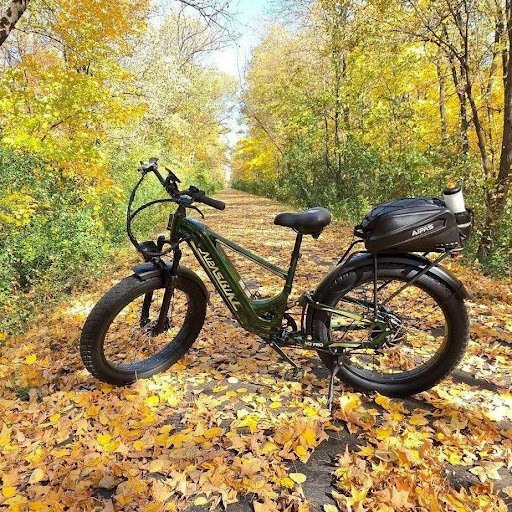
AipasBike offers electric bikes across several categories, including fat tire, off-road, commuter, folding, and hunting electric bikes.
For riders looking for a fat tire model with off-road features, the Aipas M2 Pro Xterrain Ebike is one option worth exploring.
Its published specifications include:
- 1800W rear hub brushless motor.
- 110Nm torque.
- 48V 17.5Ah battery.
- 26 x 4.0-inch fat tires.
- Front and rear suspension.
- Disc braking system.
- Up to 85 miles of pedal-assist range.
- Maximum load capacity of 500 lbs.
These specifications make it a model worth considering for riders interested in mixed-terrain and recreational outdoor riding. The advertised range is a maximum estimate, and actual results will vary with riding conditions.
Another option is the Aipas M1 Pro Xterrain ST Ebike, which features a step-through frame and fat tire design. It may appeal to riders who want easier mounting and dismounting while exploring suitable outdoor routes.
Before purchasing, review the complete product specifications, recommended rider height, operating requirements, warranty information, and local electric bike regulations.
- Safety Tips for Hunting and Off-Road Electric Bike Riding
Choosing the right bike is only one part of preparing for outdoor adventures. Safe riding practices and proper equipment are equally important.
Keep these tips in mind:
- Wear a suitable helmet: Choose a properly fitted helmet appropriate for your riding conditions.
- Inspect the bike: Check tire pressure, brakes, lights, battery connections, and other important components before every ride.
- Carry essential supplies: Bring water, a basic repair kit, a suitable pump, and a charged mobile phone.
- Plan your route: Understand the terrain, weather conditions, access restrictions, and available exit routes.
- Manage battery power: Keep track of your battery level and leave enough charge for the return journey.
- Ride at a controlled speed: Adjust your speed according to visibility, surface conditions, and your experience.
- Respect outdoor regulations: Confirm whether electric bikes are permitted on your intended trails and hunting access routes.
Good preparation can help reduce unexpected problems and make outdoor trips more enjoyable.
Conclusion
Choosing an electric fat tire bike for hunting and off-road adventures requires more than looking at motor power or advertised speed. Tire width, battery capacity, torque, suspension, braking performance, frame design, and carrying capacity all contribute to the overall riding experience.
Start by identifying the terrain you expect to ride on and how much equipment you need to carry. Then compare different models based on their specifications, comfort, range, and intended use.
For outdoor enthusiasts interested in exploring fat tire and off-road electric bikes, AipasBike offers several models worth considering. Take time to review the available options and choose a bike that matches your riding preferences and outdoor requirements.
Explore the AipasBike electric bike collection to compare fat tire models and find an option for your next outdoor adventure.