
Night sweats postpartum are common during the first days and weeks after childbirth. Many new mothers wake up feeling unusually hot, sweaty, or uncomfortable, even when their bedroom is cool. These episodes can soak pajamas and bedding, making sleep more difficult during an already demanding recovery period. Fortunately, postpartum night sweats are usually temporary and related to normal hormonal changes.
After delivery, the body experiences significant changes in estrogen, progesterone, and fluid balance. These adjustments can affect how the brain regulates body temperature and how much the body sweats. Breastfeeding may also influence hormone levels, sometimes allowing sweating symptoms to continue for longer.
Understanding night sweats postpartum can help you recognize what is expected and when symptoms deserve medical attention. This guide explains common causes, how long the sweating may last, practical comfort measures, and warning signs. It also answers frequently asked questions about nighttime sweating during postpartum recovery.
What Are Postpartum Night Sweats?
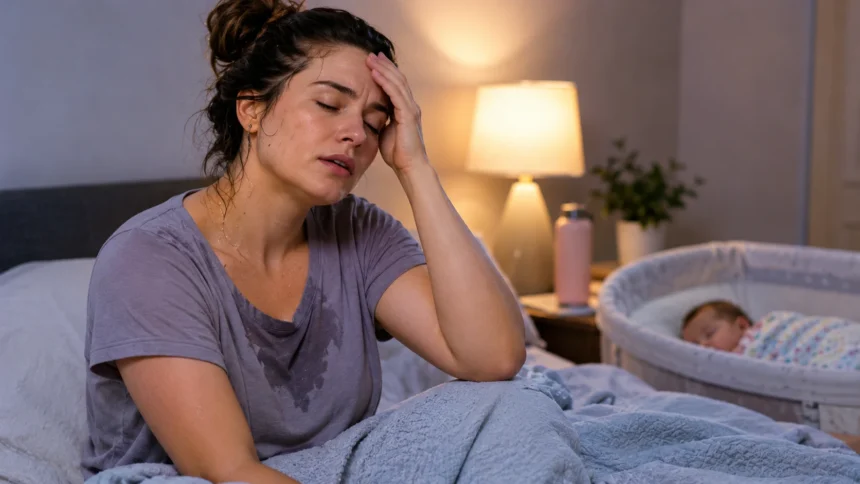
Postpartum night sweats are episodes of excessive sweating that occur during sleep after childbirth. They may cause damp clothing, wet bedding, or sudden feelings of intense warmth. Some people experience mild sweating, while others wake up needing to change their pajamas. The severity and frequency can vary considerably between individuals.
These episodes are different from ordinary sweating caused by heavy blankets or a warm bedroom. Postpartum sweating can occur even when the surrounding temperature feels comfortable. It is often associated with hormonal adjustments that begin immediately after delivery. The body’s changing temperature regulation may make nighttime sweating more noticeable.
Night sweats can occur after either vaginal delivery or cesarean birth. They may begin within the first few days and become particularly noticeable during early recovery. Most cases improve naturally as the body adjusts. However, sweating accompanied by fever, chills, or other concerning symptoms requires medical evaluation.
Why Do Night Sweats Happen After Giving Birth?
The most common explanation involves the rapid hormonal changes that follow childbirth. During pregnancy, estrogen and progesterone levels rise substantially to support pregnancy-related processes. After the placenta is delivered, these hormone levels fall sharply. This sudden shift can influence the body’s temperature-regulating mechanisms.
Changes in estrogen may affect the hypothalamus, the part of the brain involved in controlling body temperature. As hormone levels fluctuate, the body may become more sensitive to small temperature changes. Sweating is one way the body attempts to release heat. Researchers are still studying the exact mechanisms behind postpartum night sweats.
Fluid balance may also contribute to increased perspiration after delivery. Pregnancy involves retaining additional fluid to support circulation and the developing baby. After childbirth, the body begins adjusting to its changing fluid requirements. Increased urination and sweating can occur during this process, especially in the early postpartum period.
How Hormonal Changes Cause Postpartum Sweating
Hormones influence many body processes, including metabolism, circulation, and temperature regulation. Estrogen is particularly important because changes in its levels can affect how the brain responds to warmth. When estrogen declines after childbirth, some people experience hot flashes and increased sweating. These symptoms resemble certain temperature-related changes experienced during menopause.
Progesterone also decreases substantially after delivery. Although postpartum temperature symptoms involve several interacting factors, the combined hormonal shift may contribute to changes in sweating patterns. The body needs time to adjust to this new hormonal environment. Symptoms often become less noticeable as recovery progresses.
Hormonal recovery does not follow an identical schedule for everyone. Breastfeeding, individual physiology, and other health factors may influence the process. Some people experience sweating for only a short period, while others notice symptoms for several weeks. The presence of night sweats alone does not necessarily indicate a hormonal disorder.
How Long Do Postpartum Night Sweats Last?
Postpartum night sweats commonly begin within days of giving birth. They are often most noticeable during the first one or two weeks, when hormonal changes are particularly significant. For many people, symptoms gradually improve over the following weeks. However, there is no exact recovery timeline that applies to everyone.
Some individuals experience symptoms for several weeks, and breastfeeding-related hormonal changes may contribute to a longer duration. The intensity usually decreases as the body adjusts. Occasional sweating may continue even after the most uncomfortable episodes have resolved. The important pattern is whether symptoms are improving rather than becoming progressively worse.
Contact your healthcare professional if severe night sweats continue beyond the first month or interfere significantly with sleep. Persistent sweating may still have a harmless explanation, but other medical causes should be considered. New or worsening symptoms also deserve attention. A clinician can evaluate the circumstances and determine whether additional testing is appropriate.
Are Night Sweats Normal While Breastfeeding?
Night sweats can occur during breastfeeding because lactation influences reproductive hormone levels. Prolactin, the hormone responsible for supporting milk production, can suppress ovarian activity and contribute to lower estrogen levels. These hormonal changes may affect temperature regulation. As a result, some breastfeeding parents experience prolonged nighttime sweating.
Breastfeeding also changes daily routines and physical demands. Feeding sessions may involve close physical contact, warm clothing, or additional blankets. These factors can make sweating more noticeable, particularly at night. However, breastfeeding itself does not cause excessive sweating in every person.
If you are breastfeeding and experiencing night sweats, focus on staying comfortable and maintaining adequate hydration. Drink fluids regularly according to thirst and your healthcare team’s recommendations. Wear breathable clothing and keep the sleeping environment comfortable. Persistent or severe sweating should still be assessed rather than automatically attributed to breastfeeding.
Postpartum Night Sweats vs. Hot Flashes
Postpartum night sweats and hot flashes are related symptoms, but they are not exactly the same. A hot flash is a sudden sensation of warmth that may affect the face, neck, chest, or entire body. Sweating can accompany the feeling of heat. These episodes may occur during the day or at night.
Night sweats specifically involve excessive perspiration during sleep. They may occur with a noticeable hot flash or without a clearly recognized sensation of warmth. Some people wake suddenly feeling hot, while others only notice damp clothing or bedding. Both experiences can occur during postpartum hormonal adjustment.
The distinction matters because sweating can also have causes unrelated to hormonal hot flashes. Fever, infection, medication effects, and certain medical conditions may produce nighttime sweating. Understanding accompanying symptoms helps identify when further evaluation is necessary. Persistent symptoms should not automatically be dismissed as normal postpartum changes.
Why Postpartum Sweating Can Feel Worse at Night
Nighttime sweating may feel especially uncomfortable because the body remains in contact with bedding for several hours. Warm blankets, mattresses, and sleepwear can trap heat around the skin. When perspiration increases, moisture may accumulate before you wake up. This can make the episode feel more intense than sweating during daytime activities.
Sleep disruption can also make the experience more noticeable. New parents frequently wake for feeding, infant care, and recovery-related needs. These interruptions may cause people to notice temperature changes that would otherwise go unnoticed. Waking with damp pajamas can add another source of discomfort during an already interrupted night.
The body’s normal temperature regulation also changes across the sleep-wake cycle. Combined with postpartum hormonal fluctuations, these processes may influence when sweating becomes noticeable. However, nighttime symptoms do not necessarily indicate a more serious hormonal imbalance. The overall pattern and presence of other symptoms are more important than the time of day alone.
How to Manage Postpartum Night Sweats at Home
One practical approach is keeping your sleeping environment comfortably cool. A fan or air conditioner may help reduce heat buildup during the night. Lightweight bedding can also make temperature adjustments easier. Avoid making the room excessively cold, especially when caring for a newborn who needs an appropriately warm sleeping environment.
Choose loose, breathable sleepwear made from comfortable fabrics. Cotton and certain moisture-wicking materials may help manage perspiration. Keeping a clean change of clothing nearby can reduce disruption if pajamas become damp. A washable towel or absorbent layer over the mattress protector may also make nighttime cleanup easier.
Hydration is another important part of postpartum recovery. Increased sweating can contribute to fluid loss, so drink water regularly and respond to thirst. Breastfeeding parents may naturally need additional fluids. Avoid excessive water consumption in an attempt to stop sweating, since drinking more than your body needs will not correct hormonal temperature changes.
Best Clothing and Bedding for Postpartum Night Sweats
Sleepwear can make a difference in how comfortable you feel during sweaty nights. Lightweight, breathable clothing may allow moisture to evaporate more easily. Loose-fitting pajamas can also reduce the feeling of fabric sticking to the skin. Choose materials according to personal comfort rather than assuming one fabric works for everyone.
Bedding should be easy to adjust as your temperature changes. Using lighter layers instead of one heavy blanket makes it easier to manage warmth. Washable sheets and mattress protection can help prevent repeated moisture buildup. These adjustments may improve comfort without changing the underlying hormonal cause of sweating.
Keep spare pajamas and bedding accessible if night sweats are frequent. This can make unexpected nighttime changes less disruptive. Regularly washing damp fabrics also helps prevent unpleasant odors and irritation. Comfort-focused changes are often sufficient while normal postpartum sweating gradually improves.
Can Postpartum Night Sweats Cause Dehydration?
Heavy sweating increases fluid loss, which can contribute to dehydration when fluids are not adequately replaced. Mild dehydration may cause thirst, dry mouth, headache, or darker urine. Postpartum recovery can already involve changing fluid requirements. Breastfeeding may further increase the importance of regular fluid intake.
Most people can maintain hydration by drinking according to thirst and eating normally. Keeping water accessible during feeding sessions or nighttime awakenings may be convenient. Additional fluids may be needed when sweating is especially heavy or during hot weather. However, there is no need to force unusually large amounts of water.
Seek medical advice if you develop persistent dizziness, very little urine, inability to keep fluids down, or marked weakness. These symptoms can indicate dehydration or another medical problem. Severe symptoms require prompt assessment. Night sweats should not be the only explanation considered when other concerning changes appear.
Can Stress and Sleep Changes Make Night Sweats Worse?
The postpartum period often involves significant changes in sleep, responsibilities, and daily routines. Stress and anxiety can sometimes increase sweating through the body’s normal stress response. This may make existing hormonal symptoms feel more uncomfortable. However, not every episode of postpartum sweating is caused by emotional stress.
Interrupted sleep can also make it harder to feel rested and comfortable. Frequent awakenings may increase awareness of heat, damp clothing, or changing room temperatures. Although improving sleep can be challenging while caring for a newborn, practical support may reduce exhaustion. Rest opportunities are important for overall postpartum recovery.
If anxiety, low mood, or sleep difficulties become persistent or overwhelming, discuss them with a healthcare professional. Postpartum mental health concerns deserve attention just like physical symptoms. Sweating alone does not diagnose anxiety or another condition. A broader assessment can help identify the support and care that may be useful.
Other Medical Conditions That Can Cause Night Sweats
Although hormonal changes are common after delivery, not every case of nighttime sweating has a postpartum hormonal cause. Infections can produce sweating, fever, chills, and other symptoms. Postpartum uterine infections, urinary tract infections, and breast infections are examples that may occur after childbirth. These conditions require medical evaluation and appropriate treatment.
Thyroid problems are another possible explanation for persistent temperature-related symptoms. Postpartum thyroiditis can develop during the first year after delivery and may temporarily affect thyroid hormone production. Symptoms can include heat intolerance, sweating, palpitations, and changes in energy levels. Blood tests can help clinicians evaluate thyroid function when indicated.
Medications and other health conditions may also contribute to excessive sweating. Certain prescriptions, low blood sugar, and unrelated illnesses can produce similar symptoms. A clinician may review symptoms, medications, and medical history to identify possible explanations. Persistent or worsening sweats should not be assumed to result solely from postpartum hormones.
Night Sweats and Postpartum Thyroiditis
Postpartum thyroiditis is inflammation of the thyroid gland that may occur within the first year after childbirth. Some people initially develop a phase of increased thyroid hormone release. This can cause heat intolerance, sweating, a racing heartbeat, or feelings of nervousness. Other people have few noticeable symptoms.
The condition can also involve a later phase in which thyroid hormone levels become too low. Symptoms during that phase may include fatigue, constipation, and sensitivity to cold. Not everyone experiences both phases. Because these changes can resemble ordinary postpartum experiences, thyroid problems may be overlooked.
Persistent sweating accompanied by palpitations, tremors, or unexplained changes in energy deserves medical discussion. A healthcare professional may recommend thyroid function tests when symptoms suggest a thyroid disorder. Diagnosis is important because treatment depends on the specific hormone changes. Do not start thyroid supplements or medication without professional advice.
When Should You Worry About Postpartum Night Sweats?
Night sweats alone are often harmless during early postpartum recovery. However, sweating accompanied by a temperature of 100.4°F (38°C) or higher requires prompt contact with a healthcare professional. Fever can indicate an infection that needs treatment. Chills, worsening pain, or feeling unusually unwell are additional warning signs.
Other concerning symptoms include foul-smelling vaginal discharge, significant abdominal pain, or a breast that becomes red, hot, and painful. These changes may indicate postpartum infection or mastitis. New urinary pain or problems around a cesarean incision also deserve attention. Early assessment can help prevent complications.
Seek emergency medical care for chest pain, difficulty breathing, fainting, or other severe symptoms. Heavy vaginal bleeding, severe headache with visual changes, or sudden one-sided leg swelling also requires urgent evaluation. These conditions are not typical features of ordinary hormonal night sweats. Do not delay necessary care while trying home remedies.
How Doctors Evaluate Persistent Postpartum Night Sweats
Medical evaluation usually begins with questions about when the sweating started and how frequently it occurs. A clinician may ask about fever, weight changes, breastfeeding, medications, and other symptoms. They may also review pregnancy and delivery history. These details help distinguish expected postpartum changes from other possible causes.
A physical examination may be recommended when symptoms are persistent or associated with discomfort. Depending on the findings, the clinician may assess the breasts, abdomen, thyroid, or other relevant areas. Blood or urine tests may be appropriate in certain situations. Testing is not automatically necessary for every person experiencing ordinary postpartum sweating.
Treatment depends on the underlying cause rather than the sweating symptom alone. Hormonal night sweats usually improve without specific medical treatment. Infections and thyroid disorders require different approaches based on the diagnosis. Accurate evaluation helps avoid unnecessary treatments while ensuring important medical problems are not missed.
Can Diet and Daily Habits Affect Postpartum Sweating?
Certain foods and drinks can temporarily increase feelings of warmth or perspiration. Hot beverages and spicy meals may trigger sweating in some individuals. Caffeine can also contribute to sweating or sleep disruption for certain people. However, these triggers vary, and avoiding them does not directly correct postpartum hormonal changes.
A balanced diet supports overall recovery after childbirth. Regular meals containing a variety of nutrients help meet the body’s changing needs. Breastfeeding parents may have additional nutritional requirements. Restrictive diets or skipping meals are not recommended as ways to manage night sweats.
Light daily movement may support general well-being when appropriate for your stage of recovery. However, physical activity should follow your healthcare team’s guidance, especially after complications or cesarean delivery. Gentle activity does not directly treat hormonal night sweats. Comfort, hydration, recovery, and adequate nutrition remain more relevant priorities.
What to Expect During the First Six Weeks Postpartum
The first postpartum week often involves the most noticeable physical adjustments after delivery. Hormonal changes begin rapidly, and the body starts releasing some of the extra fluid retained during pregnancy. Sweating may become more apparent during this period. Other normal recovery changes can occur at the same time.
During the following weeks, many people notice that episodes of heavy nighttime sweating become less frequent. Some continue experiencing occasional hot flashes or damp sleepwear. Breastfeeding-related hormonal differences may contribute to ongoing symptoms. Recovery varies, and there is no requirement for every symptom to disappear on the same schedule.
By the six-week period, many early postpartum changes have improved, although some symptoms can continue longer. Persistent severe night sweats deserve discussion with a healthcare professional, particularly if they are not improving. Postpartum follow-up visits provide an opportunity to review recovery concerns. You do not need to wait for a scheduled appointment if warning signs develop.
Tips for Sleeping Better With Postpartum Night Sweats
Creating a comfortable sleeping environment may help reduce disruptions caused by sweating. Keep bedding lightweight and adjust room temperature according to comfort. A fan can improve air circulation when used safely. Avoid directing strong airflow at your newborn or allowing loose bedding near the baby’s sleeping area.
Prepare for nighttime changes by keeping water, clean sleepwear, and necessary supplies within easy reach. These small adjustments can make awakenings less stressful. When possible, share appropriate infant-care responsibilities with a trusted support person. Rest is an important part of physical recovery after childbirth.
Avoid expecting uninterrupted sleep during every stage of early parenthood. Instead, focus on practical ways to improve comfort and obtain rest when opportunities arise. If night sweats repeatedly prevent sleep or cause significant distress, discuss them with your healthcare professional. Persistent sleep disruption deserves attention even when sweating has a hormonal explanation.
Conclusion
Night sweats postpartum are a common experience during recovery after childbirth. Rapid hormonal changes, especially declining estrogen levels, can affect body temperature regulation and increase sweating. Changes in fluid balance may also contribute during the early postpartum period. For many people, symptoms improve naturally over the following weeks.
Practical measures such as breathable clothing, lightweight bedding, comfortable room temperatures, and regular hydration can make nighttime sweating easier to manage. Breastfeeding may influence how long symptoms last, but experiences vary considerably. Paying attention to symptom patterns can help identify whether recovery is progressing normally.
Although postpartum night sweats are usually temporary, persistent or severe symptoms should not be ignored. Fever, chills, significant pain, or other concerning changes require medical attention. Understanding what is normal and recognizing warning signs can help make postpartum recovery more comfortable and safer.
Frequently Asked Questions
Are night sweats normal after giving birth?
Yes, night sweats are common after childbirth because estrogen and progesterone levels change rapidly. The body also adjusts its fluid balance. Sweating usually improves over several weeks, although the duration varies between individuals.
How long do postpartum night sweats last?
Many people notice improvement within the first few weeks after delivery. Some experience symptoms longer, particularly while breastfeeding. Severe sweating that continues beyond a month or interferes with daily life deserves medical evaluation.
Do postpartum night sweats mean your hormones are changing?
Postpartum night sweats are often associated with changing hormone levels, especially declining estrogen. However, sweating can also have other causes. Fever, pain, or persistent symptoms may indicate a condition that needs medical assessment.
Can breastfeeding make postpartum night sweats worse?
Breastfeeding may contribute to longer-lasting sweating because prolactin can suppress estrogen levels. However, not every breastfeeding parent experiences night sweats. Persistent or unusual symptoms should be discussed with a healthcare professional.
When should I see a doctor for postpartum night sweats?
Contact a healthcare professional promptly if sweating occurs with fever of 100.4°F (38°C) or higher, chills, breast redness, abdominal pain, or foul-smelling discharge. Seek emergency care for chest pain or breathing difficulties.