

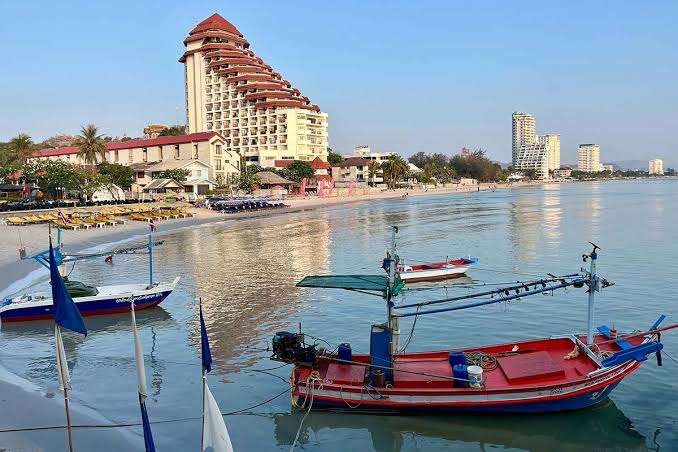
Hua Hin has spent much of its modern history in the shadow of Thailand’s louder beach destinations. Phuket attracted long-haul vacationers, Pattaya built a global nightlife reputation, and Koh Samui sold the idea of tropical island escape. Hua Hin followed a quieter path. It remained closely associated with Thai royal history, Bangkok weekenders, golfers, retirees, and families who preferred an easy coastal break to an all-night party.
That quiet position has started to look like an advantage. More travelers now want a destination that offers beaches without complicated transfers, good food without resort-only prices, and enough infrastructure for a stay longer than a weekend. Hua Hin answers those needs without forcing itself into a single category. It can be a two-night break, a month-long winter base, a family holiday, a wellness retreat, or a serious place to retire.
The town has not suddenly appeared on the map. Thailand’s first seaside resort has been developing for more than a century. What has changed is the audience. Hua Hin’s established strengths now match the priorities of travelers who value convenience, comfort, and room to slow down. Its popularity is growing not because it has copied Phuket or Pattaya, but because it offers an alternative to them.
1. A Historic Resort That Feels Relevant Again
Hua Hin’s identity began with access. The arrival of the southern railway in the early twentieth century connected Bangkok’s elite with the coast, turning a fishing community into a fashionable seaside retreat. The historic Hua Hin Railway Station still represents that era, with its red-and-cream architecture and royal waiting pavilion. Even after modern additions changed the surrounding rail facilities, the original station remained one of the town’s most recognizable landmarks.
Royal connections strengthened Hua Hin’s reputation. King Rama VI commissioned the seaside Mrigadayavan Palace north of town in the 1920s, while King Rama VII later built Klai Kangwon Palace in Hua Hin. The association gave the resort a dignified character that differed from destinations built mainly around international mass tourism. Visitors came to rest, take the sea air, play golf, and spend time with family.
The Railway Hotel, now Centara Grand Beach Resort & Villas Hua Hin, also preserves that early resort history. Its colonial-style buildings, clipped topiary, broad lawns, and position near the beach recall an age when reaching the coast by train was an event. The hotel is not merely a nostalgic attraction. It still operates in the center of modern Hua Hin, showing how the town layers new tourism over an existing identity.
That history matters because many modern travelers have grown tired of destinations that feel interchangeable. Hua Hin has shopping malls, pool villas, international hotels, and café culture, but it does not feel as if it was assembled solely for visitors. The railway, palaces, fishing heritage, temples, local neighborhoods, and Thai weekend crowds give the town a sense of continuity.
The past also shapes the pace. Hua Hin has nightlife, yet nightlife does not control the destination. A visitor can eat near the sea, walk through a market, listen to live music, and return to a quiet hotel without crossing a major party district. That moderate rhythm attracts couples and families who want evenings with some energy but little pressure.
Hua Hin’s renewed popularity therefore begins with something it already had: a clear personality. The town feels established rather than manufactured. Its current growth comes from presenting that character to people who may once have overlooked it.
2. The Bangkok Connection Makes Hua Hin Easy to Choose
Hua Hin occupies a practical position on the Gulf of Thailand. A road journey from Bangkok commonly takes around three hours, although weekend traffic can add considerable time. That distance is short enough for a spontaneous break and long enough to create a real change of setting. Visitors can leave the capital after breakfast and reach the coast in time for a late lunch.
The absence of an obligatory flight or ferry removes common points of friction. Families do not need to coordinate baggage, airport transfers, and a boat schedule. Bangkok residents can load a car with children’s equipment, golf clubs, or supplies for a villa stay. International travelers can combine several days in the capital with a beach visit without booking another domestic flight.
Rail travel gives the route more character. Trains connect Bangkok with Hua Hin as part of Thailand’s southern line, and the trip trades highway speed for a slower view of towns and countryside. Services and journey times vary, so passengers need to check the current State Railway of Thailand timetable rather than rely on old travel posts. The basic advantage remains clear: Hua Hin is one of Thailand’s notable coastal destinations that visitors can reach directly by train.
This access supports a strong domestic market. On long weekends, Bangkok families fill hotels, restaurants, and markets across Hua Hin and neighboring Cha-am. Domestic demand helps the area avoid complete dependence on foreign tourism. A restaurant may serve European winter visitors during the week and Thai families from the capital at the weekend.
Hua Hin works particularly well as the center of a wider coastal trip. Cha-am lies to the north, offering a more Thai-oriented beach atmosphere and large resorts. Pranburi and Pak Nam Pran lie to the south, where low-rise accommodation, local seafood, and a quieter coastline attract people who want more space. A visitor can stay in Hua Hin for its services and make simple day trips in either direction.
The town’s scale contributes to that convenience. Central Hua Hin contains the beach, the old railway area, hotels, restaurants, markets, and transport services within a fairly compact zone. Khao Takiab, Nong Kae, and other southern neighborhoods extend the choice without placing visitors hours from the center. Local songthaews, taxis, ride-hailing services, and rented vehicles cover many common routes, though a car becomes more useful for national parks and distant beaches.
Easy access does have a price. Traffic can become heavy on holiday weekends, and driving times from Bangkok are never guaranteed. Hua Hin’s airport has not replaced the road and railway as the main gateways. Yet these limitations have not erased the core appeal. Compared with an itinerary that requires a flight, a long transfer, and a ferry, a direct road or rail journey still feels manageable.
3. It Matches the Way More People Want to Travel
Hua Hin suits visitors who want variety without a demanding schedule. The main beach supports morning walks, horse rides, swimming when conditions permit, and long periods of doing very little. It is not Thailand’s most dramatic beach, and that is important to state plainly. Water clarity and sand conditions vary with weather and tides. The appeal comes from combining the sea with a functioning town immediately behind it.
Different stretches of coast serve different moods. Khao Takiab Beach, south of the center, sits beneath the hill and temple known for its macaques. Suan Son Pradipat offers a long, tree-backed shoreline farther south. Pak Nam Pran attracts cyclists, kiteboarders, and travelers who prefer a less urban base. These choices let repeat visitors change their surroundings without leaving the region.
Food gives people another reason to return. Hua Hin Night Market remains the classic central stop for grilled seafood, roti, fruit, clothing, and souvenirs. Cicada Market in Nong Kae adds art, crafts, performances, and a more curated weekend atmosphere. Nearby Tamarind Market centers more heavily on food and live music. At all three, visitors can choose an inexpensive snack or settle in for a full evening.
The markets also demonstrate Hua Hin’s broad audience. Thai families, European retirees, Bangkok couples, and short-term tourists share the same tables. At busy times, diners may search for open restaurant chairs while vendors grill prawns, squid, pork skewers, and corn nearby. The experience feels social without requiring entry to a club or formal entertainment venue.
Daytime options extend well beyond the beach. Black Mountain Water Park gives families a full-day activity away from the sea. Vana Nava Hua Hin, attached to the Holiday Inn complex, combines large slides and pools with easy access from the southern part of town. These attractions matter during periods when the sea is rough or children want something more active than another beach day.
Golf remains one of Hua Hin’s strongest specialist draws. Royal Hua Hin Golf Course, founded in the 1920s, lies close to the railway and carries historical importance as Thailand’s first golf course. Black Mountain Golf Club and Pineapple Valley Golf Club Hua Hin offer modern championship-level facilities outside the center. The concentration of courses supports dedicated golf holidays as well as seasonal communities that stay for weeks rather than days.
Wellness has developed into another serious reason to visit. Chiva-Som, operating in Hua Hin for three decades, built an international reputation around structured programs, consultations, fitness, physiotherapy, spa treatments, and health-focused food. It attracts guests who choose Hua Hin specifically for a physical or mental reset. Resorts such as RAKxa in the Bangkok area may compete for the same high-end wellness traveler, but Chiva-Som ties that market directly to Hua Hin.
Nature adds depth to the regional offer. Khao Sam Roi Yot National Park, about 45 kilometers south of Hua Hin according to the Tourism Authority of Thailand, contains limestone peaks, wetlands, beaches, caves, and birdlife. Phraya Nakhon Cave is its best-known attraction. Visitors hike to a vast chamber where sunlight can fall on the small Kuha Karuhas Pavilion, built during the reign of King Rama V. The trip requires more effort than a normal viewpoint stop, which makes it a genuine excursion rather than a quick photo opportunity.
Hua Hin does not depend on one spectacular attraction. Its strength lies in the combination: beach in the morning, lunch in town, a spa or water park in the afternoon, and a market after sunset. Travelers can plan full days, but they do not have to. That freedom fits the growing preference for slower trips built around meals, exercise, rest, and a few memorable outings.
4. Visitors Can Stay for a Month Without Living Like Tourists
Hua Hin becomes more persuasive after the first week. Many resort towns work beautifully for three days but become inconvenient when a visitor needs groceries, medical care, work space, laundry, exercise, or a normal weekday routine. Hua Hin has enough permanent infrastructure to support ordinary life.
Market Village and Bluport Hua Hin provide supermarkets, banks, restaurants, shops, cinemas, and practical services along the main road. Villa Market caters to residents looking for imported groceries, while local fresh markets offer produce, seafood, meat, and prepared food at lower prices. These options allow long-stay visitors to alternate restaurant meals with cooking at home.
Healthcare plays a major role in the town’s appeal to retirees and families. Bangkok Hospital Hua Hin provides private medical services in the center of town, while San Paulo Hua Hin Hospital is another established option. Hua Hin Hospital serves the public system. Access to hospitals does not remove the need for suitable insurance or referrals for complex treatment, but it makes day-to-day healthcare far less difficult than in a small island community.
Housing choices support different lengths of stay. Central hotels work for a weekend, beachfront condominiums suit seasonal residents, and pool villas west or south of town appeal to families and groups. Khao Takiab offers condominium living close to the beach and weekend markets. Hin Lek Fai, west of the railway, has become known for villa developments and larger homes, though residents usually depend more heavily on a car or motorbike.
Remote work has added another layer of demand. Hua Hin lacks the huge coworking culture associated with Chiang Mai or central Bangkok, but many apartments, villas, cafés, and hotels offer the basics needed for online work. A remote worker can keep Bangkok within reach for meetings while living near the coast. The town fits people who prioritize quiet routines over constant professional networking.
Retirees have understood this equation for years. Hua Hin offers warm weather, golf, private healthcare, international food, and an established foreign community without the intensity of a major city. Scandinavian and other European residents have created social networks, businesses, and seasonal patterns that make arrival easier for newcomers. At the same time, Hua Hin remains a Thai town with a large domestic visitor base, rather than an enclave built only for foreigners.
Daily life still requires adjustment. Pavements can be inconsistent, road crossings demand care, and neighborhoods away from the center often require private transport. Heat and humidity affect outdoor routines. Language barriers arise outside businesses accustomed to international customers. Long-stay residents also need to understand Thai immigration rules rather than treat repeated tourist entries as a permanent plan.
Those tradeoffs do not cancel the central advantage. Hua Hin allows visitors to create a life rather than remain inside a vacation bubble. People can visit a dentist, buy school supplies, join a gym, order household items, meet friends for lunch, and still walk by the sea before dinner. That mix turns a successful holiday into a possible long-term relationship with the town.
5. Hua Hin Offers Value Without Feeling Cut Off
Price strengthens Hua Hin’s position, although calling it universally cheap would be misleading. A villa near the beach during a Thai holiday weekend can cost far more than a modest room in the center. Imported food, international schools, golf, and luxury wellness programs can quickly raise a monthly budget. The town’s advantage is range rather than rock-bottom pricing.
Travelers can choose a five-star beachfront resort, a small guesthouse near the night market, a condominium with a kitchen, or a villa shared by several people. Food follows the same pattern. A local market meal may cost a fraction of dinner at a hotel restaurant, yet both are available within a short drive. Visitors control spending by changing where and how they stay, not by giving up the destination’s main benefits.
Hua Hin often compares favorably with Phuket in daily transport and accommodation, particularly outside peak periods and prime beachfront locations. It also avoids some island costs because goods arrive by road and residents can travel directly to Bangkok. The saving will not appear in every booking, but the structure of the town gives budget-conscious visitors more ways to reduce expenses.
Property development has expanded that range. Condominiums line parts of the coast, while villa communities spread west of town and toward Pranburi. Buyers are attracted by the possibility of personal use, retirement, or rental income. Yet property should not be treated as an automatic investment success. Foreign ownership rules, condominium quotas, lease structures, maintenance charges, water management, construction quality, and resale demand all require careful legal and financial review.
Location makes an enormous difference. A low-priced villa far from the center may require two vehicles and prove difficult to rent. A condominium near Khao Takiab may perform well during certain seasons but face competition from many similar units. Beach proximity can support demand, while exposure to salt air increases maintenance. Buyers need to inspect the specific project rather than rely on general claims that Hua Hin is growing.
Renters gain from the amount of housing already built. Monthly stays can offer more space and privacy than a hotel, especially outside peak dates. Families can find multiple bedrooms and a private pool; retirees can test different neighborhoods before committing to a long lease or purchase. That ability to try the town reduces the risk of a major decision based on a short vacation.
Value also comes from what residents do not have to sacrifice. Moving to a cheaper, isolated beach community may mean long journeys for hospitals, supermarkets, or reliable services. Hua Hin keeps those needs close enough for routine use. It costs more than a small provincial town, but the extra spending buys access to a deeper service base.
The same principle explains why the town attracts several income groups at once. Affluent guests can book Chiva-Som or a private beachfront villa. Middle-income Thai families can drive down for a weekend and eat at local markets. Long-stay foreigners can rent outside the center and manage costs through local shopping. Few coastal destinations accommodate all three groups without allowing one to erase the others.
6. Growth Will Test the Qualities That Made Hua Hin Popular
Hua Hin’s rise does not mean it suits every traveler. The beach can disappoint visitors expecting the bright water and island scenery associated with Krabi or the Andaman coast. Central traffic becomes frustrating on busy weekends. The nightlife feels limited beside Bangkok, Phuket, or Pattaya. Travelers who want dramatic island-hopping, major clubs, or a dense backpacker scene will find stronger choices elsewhere.
The town also faces the physical costs of growth. More condominiums and villa projects place pressure on roads, water supplies, drainage, and waste services. Construction can interrupt otherwise quiet neighborhoods. Coastal development may restrict views or change the character of low-rise areas. A destination praised for being calm can lose that quality if expansion outruns planning.
Success may also push prices upward. As fashionable hotels, second-home buyers, and long-stay residents increase demand, central land and desirable rentals become more expensive. Local businesses can benefit from higher spending, but workers and long-term residents may face rising housing costs. Hua Hin will need to preserve room for local life rather than turn its best areas into a continuous strip of private developments.
The town’s mixed audience offers some protection. Domestic weekenders, international vacationers, golfers, wellness guests, and retirees do not all arrive at the same time or spend money in the same places. That diversity spreads demand across seasons and business types. It also discourages the town from reorganizing itself around a single tourism trend.
Hua Hin is most appealing to people who know what they do not want. They do not want to take three transfers to reach a beach. They do not want every evening dominated by clubs. They do not want to stay inside an isolated resort for every meal. They want the option to visit a national park, play golf, buy groceries, get medical care, or do nothing beside a pool.
That list explains the growing attention. Hua Hin offers less spectacle than some Thai destinations, but it asks less effort from the visitor. It combines the sea with a real town, a long resort history, direct links to Bangkok, and enough variety to reward repeat stays. Families can manage it, retirees can live in it, and short-term visitors can enjoy it without a complicated plan.
Hua Hin’s future popularity will depend on restraint. If development respects the coast, improves transport, and supports the people who live there year-round, the town can grow without becoming generic. Its strongest selling point is not a single beach, market, hotel, or palace. It is the rare ability to feel easy without feeling empty—and developed without becoming overwhelming.