

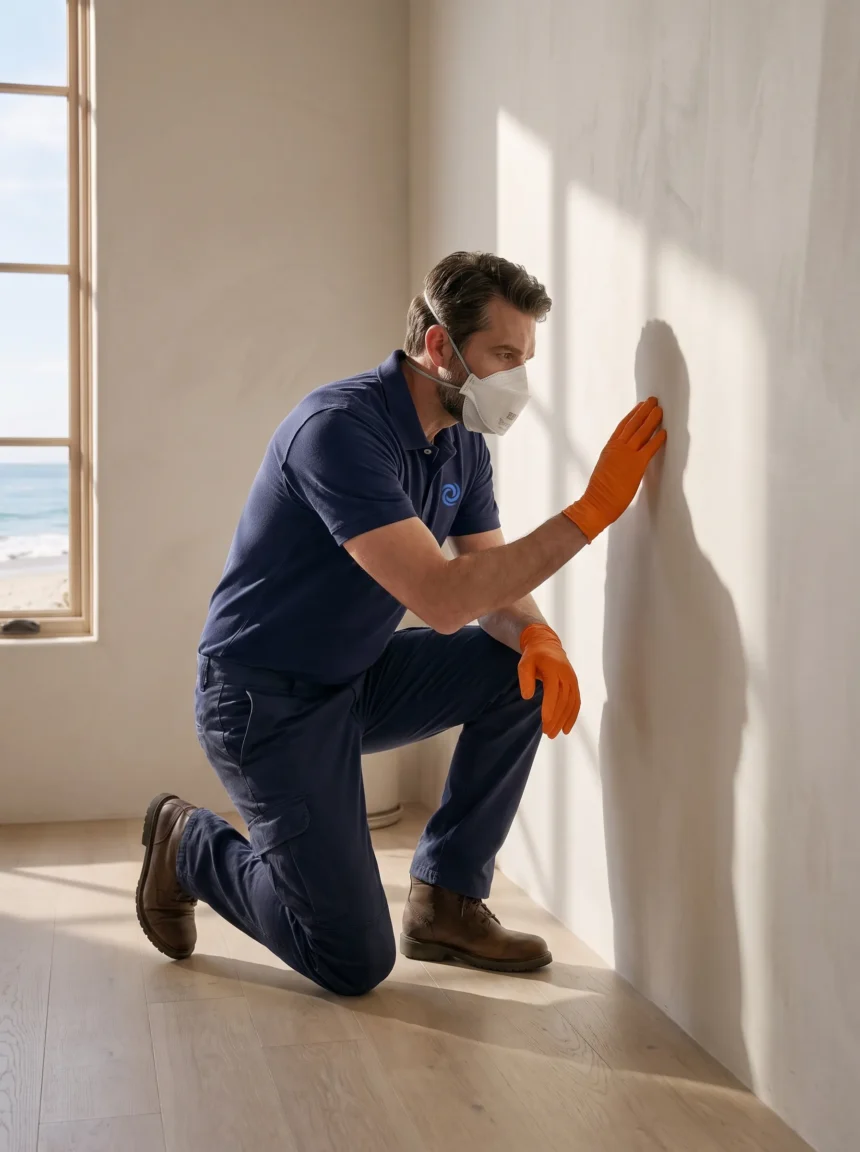
You can often sense a change in your home before you can explain it. A bedroom may feel stuffy, or condensation may gather on the windows after the heating or cooling system starts.
Picture a coastal bungalow where a family has begun noticing those small signals. The house looks clean, the filters are new, and there has been no dramatic flood. Still, the indoor air feels different from one week to the next.
For a practical look at how these clues fit together, Advanced Clean Air Solutions explains the relationship between mold inspection, indoor air quality, and moisture assessment. Those three areas provide a useful starting point for understanding how humidity, airflow, building materials, and daily habits shape the air inside your home.
The Monday Morning Reading
On Monday, the family finds condensation along the bedroom windows. By lunchtime, the glass is clear. The bathroom fan runs during showers, yet the mirror stays fogged for a long time afterward.
A single observation can feel insignificant. But once it becomes a sequence, it begins to describe the house.
The family writes down the time, outdoor conditions, indoor temperature, humidity, and rooms where the air feels heavy. They also record whether the heating or cooling system was running and whether anyone noticed irritation, fatigue, or an unusual smell.
That small log changes the conversation. “The air feels strange” becomes “The upstairs bedroom reaches 68 percent humidity after cool nights, while the living room stays near 52 percent.” Specific information points toward useful questions.
A House Has Weather
Outdoor weather enters a home through openings, ventilation, building materials, and mechanical systems. Sunlight and everyday activities can shift temperature, moisture, and air pressure from one room to the next.
Rooms respond differently because they have different surfaces and different jobs. That difference becomes noticeable along exterior walls, where limited warmth and air movement can leave surfaces cooler and more prone to condensation.
Think of each room as a small climate zone. Temperature, humidity, air movement, and surface conditions create the local forecast.
A comfortable thermostat setting tells you very little about the complete indoor environment. Two rooms can share the same temperature while one has condensation, stale air, or elevated particles that deserve a closer look.
The False Lead
In the bungalow, the family first blames the carpet. It feels like a reasonable explanation because the odor seems strongest near the guest room floor.
A closer look reveals that the guest room has a large bookcase pressed against an exterior wall. The carpet sits above a cool section of floor, the room receives little sunlight, and the door stays closed most of the day. The odor may be arriving from a small moisture pattern behind the furniture, from the carpet itself, or from air moving through an adjacent space.
This is where quick conclusions create wasted effort. Replacing the carpet could change the smell for a short time while leaving the humidity, airflow, or damp building material that helped produce it.
A better first step is to compare several clues:
- Where does the odor become stronger?
- Does it change after rain, cooking, bathing, or HVAC operation?
- Which surfaces feel cool, damp, stained, or unusually soft?
- Does the room differ from nearby spaces in humidity or air movement?
The purpose of the questions is simple: they help you separate a source from a symptom.
The Airflow Map
Air has routes through a building. It enters around doors, windows, vents, recessed lights, plumbing penetrations, and small gaps in walls. Mechanical equipment then moves that air from one area to another.
The family sketches the bungalow from above and marks the HVAC registers, main exhaust points, and exterior doors. They draw arrows showing where air might travel when the blower runs.
The map reveals a plausible path from a cool storage room to the hallway return grille. It also shows that the bathroom fan vents slowly, allowing humid air to linger near the bedrooms. These observations guide the next inspection more effectively than a room-by-room guess.
A return grille deserves particular attention because it pulls air toward the system. Dust around the grille can reflect ordinary household activity, while recurring odors, dampness, or debris inside an accessible component may suggest a separate issue that needs evaluation.
Three Small Experiments
You can learn more about an indoor environment through careful, low-risk observations. Each experiment should change one condition and record the result.
Experiment one: open the room. Move furniture several inches away from an exterior wall for a few days. Watch the wall, baseboard, and floor for condensation, staining, or odor changes.
Experiment two: follow the fan. Run a bathroom exhaust fan during a shower and for a while afterward. Hold a small piece of tissue near the grille to observe whether air is being pulled upward, then record how quickly the mirror clears.
Experiment three: compare the hours. Measure humidity in the same room after waking, in the afternoon, and before bed. A room that repeatedly spikes after a predictable activity offers a stronger lead than a single high reading.
These experiments are observations, not repairs. Avoid opening sealed walls, disturbing visible growth, or brushing questionable material into the air.
The Evidence Board
After a week, the family has a short record. The guest room humidity rises overnight, condensation appears after cool evenings, and the odor becomes stronger after the HVAC system starts. The bathroom fan has weak airflow, and the bookcase blocks part of the exterior wall.
Several explanations remain possible. Moisture may be collecting on a cool surface, air may be moving from an adjacent area, or the ventilation system may be redistributing particles from another location.
A professional inspection can build on those observations by examining visible conditions, using moisture detection tools, collecting samples where appropriate, and comparing indoor findings with outdoor conditions. Laboratory analysis can help identify mold types and quantify spore levels, while indoor air quality testing can assess particles and other factors such as carbon dioxide, formaldehyde, pollen, or humidity.
The value of testing comes from context. A number on a report becomes more useful beside the room location, weather, building history, ventilation pattern, and visible evidence that surrounded the sample.
A Better Baseline
A baseline gives you something to compare. Take readings around the activities that seem to affect the room, and keep the measuring device in the same general location. Record the outdoor weather as well.
Over time, ordinary variation becomes easier to distinguish from a recurring pattern. You may learn that the kitchen produces a brief particle increase that settles quickly, while a bedroom holds elevated humidity for hours.
The same principle applies after a leak or repair. Photograph the area, record its moisture level if you have suitable equipment, and check it again after the material has had time to dry. A repaired stain that returns after rain deserves a fresh look at the source of water.
Good records also help you explain the situation to a contractor, inspector, property manager, or medical professional. Clear details reduce guesswork for everyone involved.
Before You Change the Whole Room
The family eventually improves bathroom ventilation, creates more space around the exterior wall, checks the HVAC return path, and keeps tracking humidity. Those steps produce a calmer indoor environment, yet the record still shows an occasional odor after heavy rain.
That remaining clue points toward the building envelope and drainage around the bungalow. The next inspection can focus on gutters, downspouts, window edges, roof transitions, and exterior wall conditions.
This sequence matters because indoor air concerns rarely belong to one category. Ventilation, moisture, and building materials can all participate in the same pattern.
Begin with observation, follow with targeted checks, and use testing when the evidence calls for information that sight, smell, and a household meter cannot provide.
A home keeps its own weather journal in condensation, dust, airflow, temperature, and odor. Learn to read those entries patiently, and the building starts to feel less like a mystery and more like a map.