
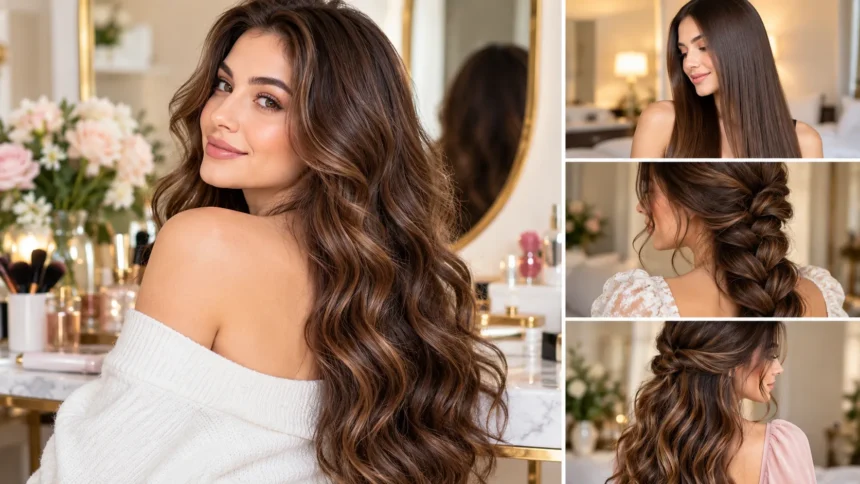
Long hair offers endless styling possibilities, from simple everyday looks to elegant hairstyles for special occasions. Whether you prefer loose waves, braided styles, polished ponytails, or relaxed buns, there are plenty of ways to style long hair without spending hours in front of a mirror. The key is finding hairstyles that complement your natural hair texture, fit your lifestyle, and feel comfortable throughout the day.
The best hairstyles for long hair combine versatility, practicality, and personal style. Some options take only a few minutes, while others involve creative braiding, twisting, or accessorizing. With the right techniques, you can create beautiful looks for work, school, weddings, casual outings, or simply relaxing at home.
You also don’t need professional styling experience or expensive tools to experiment with different hairstyles. Many popular long hairstyles can be created using basic hair ties, clips, brushes, and a few bobby pins. This guide explores easy hairstyles for long hair, elegant updos, heatless styling methods, and practical tips for keeping your hair healthy and manageable.
Why Long Hair Offers So Many Styling Options
Long hair provides flexibility because its length allows for a wide range of hairstyles and techniques. You can create braids, ponytails, buns, twists, waves, and half-up hairstyles without necessarily changing your haircut. This versatility makes long hair suitable for casual routines as well as more formal occasions.
Another advantage of longer hair is the ability to experiment with different accessories and textures. Hair clips, ribbons, scarves, and decorative pins can transform a simple hairstyle into something more detailed. Even small changes, such as switching from a middle part to a side part, can create a noticeably different appearance.
However, longer hair may also require additional attention to detangling, washing, and preventing breakage. Choosing hairstyles that avoid excessive tension and unnecessary heat can make maintenance easier. A balanced routine allows you to enjoy various styling options while supporting the overall condition of your hair.
1. Classic High Ponytail for Long Hair
A classic high ponytail is one of the easiest hairstyles for long hair because it keeps your hair gathered while creating a clean, practical appearance. Begin by brushing or gently detangling your hair, then gather it toward the crown of your head. Secure the ponytail with a soft, snag-free elastic.
For a smoother finish, apply a small amount of lightweight styling cream to areas with flyaways. You can also wrap a loose strand around the hair tie for a different look, securing it carefully with a pin. This simple detail can make an everyday ponytail suitable for more formal settings.
High ponytails work with straight, wavy, and curly hair, although the final appearance depends on texture and density. Avoid pulling too tightly, especially around the hairline, because repeated tension can contribute to discomfort and breakage. Alternating ponytail placement can help reduce pressure on the same sections of hair.
2. Messy Bun for an Effortless Everyday Look
The messy bun is a popular low-maintenance hairstyle for long hair that works well during busy mornings. Gather your hair into a loose ponytail, twist it gently, and wrap it around the base. Secure the bun with a hair tie or several bobby pins, leaving a few strands loose if you prefer a relaxed finish.
One of the advantages of a messy bun is that it doesn’t require perfectly smooth hair. Natural waves, curls, and textured strands can add dimension to the finished look. You can position the bun high on your head, at the back, or near the nape of your neck.
This hairstyle is useful for school, work-from-home days, casual outings, and everyday activities. If your hair is particularly long or thick, using a large claw clip or spiral pins may provide additional support. Keeping the bun comfortably loose helps prevent unnecessary tension on your scalp.
3. Loose Beach Waves for a Relaxed Hairstyle
Loose beach waves create a soft, flowing hairstyle that highlights the natural movement of long hair. The look features gentle bends rather than tightly defined curls, making it suitable for everyday wear. You can achieve this appearance through heatless styling techniques or carefully controlled heated tools.
One simple heatless method involves creating loose braids in slightly damp hair and allowing them to dry completely. Once dry, gently release the braids and separate the waves with your fingers. The final texture depends on your natural hair pattern, braid size, and how completely the hair dries.
Beach waves can be worn with a middle part, side part, or small decorative accessories. A lightweight styling product may help reduce frizz and support the hair’s natural movement. Avoid excessive brushing after releasing the waves, as this can disturb their shape and create unwanted tangling.
4. French Braid for a Timeless Style
A French braid is a classic braided hairstyle that keeps long hair organized while creating an attractive woven pattern. Begin with three sections of hair near the top of your head and gradually add small amounts of hair as you braid downward. Secure the end with a gentle elastic.
Although French braiding may require some practice, it becomes easier once you understand the basic hand movements. Working with slightly detangled hair helps prevent knots during the process. For a softer appearance, you can gently loosen the braid after securing it, provided the style remains comfortable.
French braids are practical for school, outdoor activities, and days when you want your hair contained. They also work with many hair textures, though preparation methods may differ. Avoid making the braid excessively tight, especially near the front hairline, to reduce repeated pulling.
5. Half-Up, Half-Down Hairstyle for Long Hair
The half-up, half-down hairstyle offers a balance between wearing your hair loose and keeping it away from your face. Separate the upper section of your hair and gather it toward the back of your head. Secure it with a small elastic, clip, or decorative barrette.
This versatile hairstyle allows the remaining hair to fall naturally over your shoulders. You can leave it straight, highlight existing waves, or maintain your natural curls. Adding a small twist to each side before securing the top section creates an interesting variation without requiring complicated techniques.
Half-up hairstyles are suitable for casual outings, celebrations, workdays, and school events. They also provide opportunities to experiment with accessories and different parting styles. If you prefer a comfortable hairstyle that doesn’t gather all your hair tightly, this can be a practical option.
6. Elegant Low Bun for Formal Occasions
An elegant low bun is a timeless hairstyle for long hair that works well for weddings, celebrations, and professional occasions. Start by gathering your hair near the nape of your neck and securing it loosely. Twist the length into a bun and use hairpins to hold it in place.
You can adjust the finished appearance depending on the occasion and your personal preferences. A neatly arranged bun offers a simple, polished look, while a slightly relaxed version creates a softer style. Decorative pins or a small hair accessory can add detail without making the hairstyle overly complicated.
Long hair provides enough length to create several low-bun variations, including twisted and braided arrangements. The most comfortable option depends on hair density and the weight of the bun. Distributing pins evenly can help support the hairstyle without concentrating pressure on one area.
7. Fishtail Braid for a Detailed Hairstyle
A fishtail braid is a distinctive hairstyle created using two main sections of hair instead of the traditional three. Divide your hair into two equal parts, then repeatedly move small strands from the outside of one section to the opposite side. Continue alternating until you reach the ends.
The finished braid creates an intricate woven appearance that can look more complex than the technique actually is. Using smaller strands produces a more detailed pattern, while larger sections create a relaxed variation. Start with a loose, comfortable braid while learning the method to avoid unnecessary pulling.
Fishtail braids work particularly well with long hair because additional length makes the woven pattern more visible. You can wear the braid down your back or over one shoulder. This hairstyle is suitable for everyday wear, celebrations, and occasions when you want a creative alternative to a standard braid.
8. Claw Clip Updo for Quick Styling
A claw clip updo is one of the simplest hairstyles for long hair when you want a quick, practical look. Gather your hair at the back, twist it upward, and secure it with a large claw clip. Depending on your hair length, you may need to fold the ends into the twist.
Choosing the correct clip is important because long hair may require additional support. A sturdy, appropriately sized clip can help hold thicker sections without pulling excessively. Smooth edges and comfortable teeth are useful features for preventing snagging and discomfort during daily wear.
Claw clip hairstyles are ideal for casual days, working at a desk, or managing hair during household activities. They can be adjusted easily when needed and require little preparation. Remove hard clips before activities where they may press against your head or interfere with comfortable head positioning.
9. Bubble Ponytail for a Playful Hairstyle
The bubble ponytail is an easy hairstyle that adds detail to a traditional long ponytail. Begin by gathering your hair and securing it with an elastic. Place additional hair ties along the ponytail, leaving evenly spaced sections between them.
Gently loosen the hair between each elastic to create rounded shapes resembling bubbles. The number of sections depends on your hair length and the appearance you want. Soft elastics are preferable because they can help minimize snagging when you remove the hairstyle.
Bubble ponytails are suitable for everyday outings, school events, and casual gatherings. You can create them using a high ponytail, low ponytail, or even two separate sections. The technique provides a simple way to experiment with long hair without learning complicated braiding patterns.
10. Side-Swept Curls for Special Occasions
Side-swept curls are a versatile hairstyle for long hair that creates a flowing, asymmetrical appearance. Gather most of your hair toward one shoulder while leaving the rest arranged naturally. You can work with existing curls, natural waves, or curls created through a gentle styling method.
For a heatless approach, try overnight braids or suitable foam rollers to create soft bends and curls. Allow your hair to dry fully before removing the styling tools. Using a light styling product can help manage flyaways without making the finished hairstyle feel stiff.
This hairstyle is popular for celebrations, formal dinners, and special occasions because it highlights the hair’s length and texture. Decorative clips or pins can help secure the side arrangement. Choose accessories that feel comfortable and avoid putting unnecessary tension on the hairline.
11. Dutch Braids for a Sporty Everyday Look
Dutch braids are similar to French braids, but the strands are crossed underneath rather than over the center section. This technique creates a raised braid pattern that stands out from the surrounding hair. Two Dutch braids are a common variation for keeping long hair organized.
To create the style, divide your hair into two sections and braid each side separately. Gradually add small amounts of hair while crossing the outer strands underneath the middle. Secure both braids with gentle elastics and adjust the tension for comfort.
Dutch braids are practical for physical activities, outdoor trips, and everyday routines. They can help contain long hair while reducing the need for constant adjustments. However, repeated tight braiding can stress the scalp, so keep the braids comfortable and vary your hairstyles regularly.
12. Braided Crown for an Elegant Long Hairstyle
A braided crown creates a decorative hairstyle by arranging braids around the head. This style can be made using two regular braids pinned across the top or through a more continuous braiding technique. Long hair provides enough length to create a visible crown-like arrangement.
For a beginner-friendly version, divide your hair into two sections and braid each side. Bring the braids over the top of your head and secure them with bobby pins. Tuck loose ends underneath the braids to create a neat finish.
Braided crowns are suitable for weddings, festivals, celebrations, and other occasions where you want an updo. You can keep the arrangement smooth or gently loosen individual sections for a relaxed appearance. Distribute pins carefully so the hairstyle remains comfortable throughout the day.
13. Sleek Straight Hair With a Middle Part
Sleek straight hair with a middle part is a simple hairstyle that emphasizes the length and natural movement of straight hair. Begin by gently detangling your hair and creating a centered part using a comb. A lightweight smoothing product may help control flyaways and improve manageability.
If your hair is naturally straight, you may be able to achieve the look without heated styling tools. For other textures, straightening is optional rather than necessary. When heat styling is used, follow the tool manufacturer’s guidance and avoid temperatures that could unnecessarily damage your hair.
This hairstyle can be worn loose or paired with clips and accessories. It works particularly well when you prefer a minimal styling routine. Regular conditioning and gentle handling can help maintain smoothness without relying on frequent heat exposure.
14. Twisted Half-Up Hairstyle for Everyday Wear
A twisted half-up hairstyle adds a subtle decorative element to long hair without requiring braiding skills. Take a small section from each side of your head and twist it gently toward the back. Secure the two sections together using a clip or small elastic.
The remaining hair can stay loose, allowing your natural texture to remain visible. This makes the hairstyle suitable for straight, wavy, curly, and coily hair. You can also adjust the thickness of the twisted sections depending on the appearance you want.
Twisted half-up styles are particularly helpful when you want to keep front strands away from your face. They work well for everyday errands, school, and casual gatherings. Since the technique involves only a few steps, it can become a reliable option for busy mornings.
15. Loose Side Braid for a Casual Hairstyle
A loose side braid is a comfortable hairstyle that works particularly well with medium-length and long hair. Gather your hair over one shoulder and create a simple three-strand braid. Secure the ends with a soft elastic, leaving the braid relaxed rather than pulling it tightly.
You can gently loosen individual sections to create a softer, more textured appearance. Natural waves and curls may add interesting detail to the braid. For layered haircuts, small clips or pins can help secure shorter strands that don’t fit into the main braid.
This hairstyle is suitable for casual outings, relaxing at home, or days when you want a simple alternative to a ponytail. It also requires minimal equipment and can be adjusted quickly. Keeping the braid loose reduces unnecessary pressure on the scalp.
Best Hairstyles for Long Hair Based on Hair Texture
Choosing hairstyles according to your natural hair texture can make styling easier and more comfortable. Straight hair often works well with smooth ponytails, low buns, and sleek half-up arrangements. Wavy hair can be styled into loose braids, beach waves, and relaxed updos that highlight its natural movement.
Curly and coily hair may benefit from styles that preserve natural curl patterns and reduce repeated manipulation. Loose pineapple styles, twists, gentle braids, and carefully arranged buns can be practical options. Using suitable moisturizing products and detangling techniques can help manage dryness and tangling.
Hair density also influences the amount of support a hairstyle requires. Thick, long hair may need larger clips or additional pins, while fine hair may work well with lightweight accessories. The ideal hairstyle is one that suits your texture, feels comfortable, and fits your daily routine.
Heatless Hairstyles for Long Hair
Heatless hairstyles provide alternatives for people who want to reduce their use of curling irons and straighteners. Loose braids, overnight twists, and suitable rollers can create waves or curls without high temperatures. The final result depends on your natural hair pattern, moisture level, and styling technique.
Braiding slightly damp hair is a common method for creating gentle waves. Allow the hair to dry completely before removing the braids to help maintain the finished texture. Avoid sleeping with excessively wet hair, as prolonged dampness and friction may contribute to tangling or scalp discomfort.
Heatless styling methods can also simplify everyday routines by allowing some preparation in advance. Soft fabric accessories and comfortable overnight arrangements are useful for maintaining natural texture. Experimenting with different techniques can help you find options that work well without unnecessary heat exposure.
How to Choose Hairstyles for Long Hair and Different Occasions
Different activities may call for hairstyles with varying levels of support and flexibility. Loose hair, half-up styles, and relaxed braids can be comfortable choices for casual gatherings. For activities involving movement, a gently secured ponytail or braid may keep hair contained.
Formal occasions offer opportunities to experiment with elegant buns, braided crowns, and decorative accessories. These hairstyles can be adjusted to match personal preferences and event requirements. Choosing a style that feels comfortable is especially important when you expect to wear it for several hours.
For school or work, practical hairstyles may be easier to maintain throughout the day. Low ponytails, simple buns, and claw clip arrangements are convenient options that don’t require constant restyling. Having a few familiar hairstyles available makes it easier to choose an appropriate look without unnecessary effort.
Essential Hair Accessories for Long Hairstyles
Hair accessories can make long hairstyles easier to create and maintain. Soft scrunchies, snag-free elastics, large claw clips, and bobby pins are useful for everyday styling. Choosing suitable accessories helps support the weight of longer hair without excessive pulling.
Decorative accessories can also change the appearance of familiar hairstyles. Ribbons, scarves, barrettes, and ornamental pins provide simple ways to personalize ponytails, buns, and braids. You don’t need a large collection, as a few versatile items can be used in many different arrangements.
Proper storage and maintenance help keep hair accessories convenient and hygienic. Replace damaged elastics and clips that catch or pull individual strands. Keeping your accessories organized can also reduce styling time, particularly when you’re getting ready in a hurry.
How to Keep Long Hair Healthy While Styling
Maintaining healthy long hair involves gentle detangling, appropriate conditioning, and minimizing unnecessary damage. Start detangling near the ends and gradually work upward to reduce pulling. Depending on your texture, a wide-tooth comb, suitable brush, or gentle finger detangling may be most comfortable.
Avoid wearing the same tightly secured hairstyle every day. Repeated pulling near the hairline may contribute to breakage or traction-related hair loss. Alternating between loose hairstyles and varying the placement of ponytails, braids, and buns can help reduce concentrated tension.
Regular washing and conditioning according to your scalp and hair needs are also important. Occasional trims can remove damaged ends, although trimming doesn’t increase the speed of hair growth. Consistent, gentle care helps keep long hair manageable and allows you to enjoy more styling options.
Common Mistakes to Avoid When Styling Long Hair
One common mistake is securing hairstyles too tightly in an effort to make them last longer. Excessive tension can cause scalp discomfort and hair damage, especially when repeated frequently. Choose comfortable accessories and avoid styles that create persistent pulling or pain.
Another mistake is using heated styling tools too frequently without appropriate precautions. High temperatures can weaken the hair shaft and contribute to dryness or breakage. Heatless alternatives and lower styling temperatures, when suitable, may help reduce unnecessary damage.
Using heavy amounts of styling products can also make long hair difficult to manage. Excessive gel, cream, or spray may create buildup and reduce the hair’s natural movement. Begin with small amounts and choose products suited to your hair texture and individual styling needs.
Tips to Make Long Hairstyles Last Throughout the Day
A hairstyle is easier to maintain when it matches your hair texture and daily activities. For example, loose waves may be suitable for relaxed occasions, while braids can keep hair organized during movement. Consider the expected conditions before choosing your style.
Secure your hairstyle with accessories that provide comfortable support. Larger clips, soft elastics, and evenly placed pins can help distribute the weight of long hair. Avoid relying on excessive tension to keep the hairstyle in place, as this may cause discomfort.
Carrying a spare hair tie or small clip can also be helpful for quick adjustments. If sections become loose, simple restyling may be enough to refresh the appearance. Choosing practical hairstyles reduces the need for frequent touch-ups and makes daily hair management easier.
Conclusion
The best hairstyles for long hair offer flexibility, comfort, and creative possibilities for different occasions. From classic ponytails and messy buns to French braids, fishtail braids, and elegant updos, there are numerous ways to arrange longer hair. Choosing styles that suit your natural texture and daily schedule makes the process more enjoyable.
You don’t need complicated tools or professional experience to create attractive hairstyles at home. Simple accessories, gentle styling techniques, and a little practice can help you explore many different looks. Heatless methods and comfortable arrangements can also support a healthier hair care routine.
Whether you prefer relaxed everyday styles or more detailed hairstyles for special occasions, long hair provides plenty of room for experimentation. Try different techniques, discover your favorite accessories, and prioritize comfort as you style. With a few reliable methods, you can keep your hair manageable while expressing your personal style.
Frequently Asked Questions
What are the easiest hairstyles for long hair?
Low ponytails, messy buns, simple braids, and claw clip twists are among the easiest hairstyles for long hair. They require basic accessories and can usually be completed within a few minutes.
Which hairstyles are best for long hair without heat?
Heatless options include loose braids, overnight twists, half-up styles, buns, and ponytails. These hairstyles allow you to work with your natural texture without relying on curling irons or straighteners.
What hairstyles work best for long, thick hair?
Loose braids, low buns, and large claw clip updos can help manage long, thick hair. Choose sturdy accessories that distribute the weight comfortably without pulling tightly against the scalp.
How can I style long hair quickly in the morning?
Prepare your hair the night before, keep accessories organized, and choose simple styles such as ponytails or claw clip twists. Gentle detangling and working with your natural texture can save time.
How do I prevent damage when styling long hair?
Avoid overly tight hairstyles, excessive heat, and rough detangling. Use comfortable accessories, condition your hair according to its needs, and alternate hairstyles to reduce repeated tension on the same areas.