

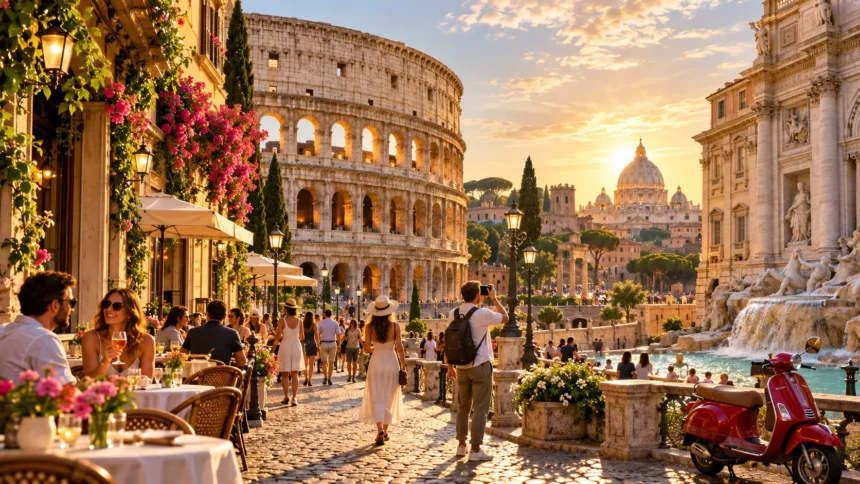
Rome is one of the most fascinating travel destinations in the world, offering an extraordinary combination of ancient history, breathtaking architecture, artistic masterpieces, and unforgettable cultural experiences. Known as the Eternal City, Italy’s capital attracts millions of visitors with its iconic landmarks, beautiful piazzas, historic churches, and charming cobblestone streets. From the legendary Colosseum to the magnificent Vatican Museums, Rome is filled with remarkable places worth discovering.
Exploring the best sights in Rome allows travelers to experience thousands of years of history while enjoying the city’s vibrant modern atmosphere. Whether you love archaeological ruins, Renaissance art, authentic Italian cuisine, or picturesque neighborhoods, Rome offers something for every visitor. This comprehensive Rome travel guide highlights the top attractions, must-see landmarks, and practical sightseeing tips to help you plan an unforgettable Italian adventure.
Colosseum: Discover Ancient Rome’s Greatest Landmark
The Colosseum is undoubtedly one of the best sights in Rome and among the world’s most recognizable historical monuments. Built during the first century AD, this enormous amphitheater once hosted gladiatorial contests and public spectacles. Its impressive architecture demonstrates the engineering achievements of ancient Roman civilization. Today, visitors can admire its massive stone arches, historic passageways, and fascinating archaeological features.
Exploring the Colosseum provides an opportunity to understand how entertainment and public life operated during the Roman Empire. Different visitor experiences may include access to the arena floor, underground areas, or upper sections, depending on ticket availability. Guided tours can explain the monument’s construction and historical significance. Its remarkable preservation makes it an essential attraction for history enthusiasts.
The Colosseum is located in central Rome, close to several other important archaeological sites. Entry requires a reserved time slot, and popular ticket categories can sell out during busy travel periods. Visitors should also check identification and admission requirements before arriving. Planning your visit in advance makes it easier to appreciate this extraordinary landmark without unnecessary complications.
Roman Forum and Palatine Hill: Explore Ancient Civilization
The Roman Forum was once the political, religious, and commercial center of ancient Rome. Today, its archaeological remains provide a fascinating glimpse into the daily activities of Roman citizens. Visitors can explore historic temples, monumental arches, and the foundations of important public buildings. Walking through the Forum reveals the impressive scale of a civilization that influenced much of European history.
Nearby Palatine Hill is another significant archaeological attraction, traditionally associated with the founding of Rome. The hill contains remains of imperial residences, ancient gardens, and important historical structures. Visitors can also enjoy beautiful viewpoints overlooking the Roman Forum and surrounding city. Its combination of archaeology and scenery makes it particularly rewarding for travelers interested in ancient history.
The Roman Forum and Palatine Hill are often explored alongside the Colosseum because the attractions are located close together. However, the archaeological area is extensive and includes uneven pathways and exposed sections. Comfortable walking shoes and appropriate weather protection are useful. Allowing several hours for exploration helps visitors appreciate the monuments without rushing through the experience.
Pantheon: Admire Rome’s Ancient Architectural Wonder
The Pantheon is one of Rome’s most extraordinary ancient buildings, celebrated for its impressive dome and remarkable architectural design. Originally constructed as a Roman temple, the surviving structure dates largely to the second century AD. It later became a Christian church, helping preserve its historical importance. The building remains an outstanding example of ancient Roman engineering.
The most striking feature of the Pantheon is its enormous concrete dome, which contains a circular opening called the oculus. Natural light enters through this opening, creating changing patterns throughout the interior. The building also contains impressive marble details and significant historical tombs. Its harmonious proportions continue to inspire architects and visitors from around the world.
Located near Piazza della Rotonda, the Pantheon is surrounded by lively cafés and attractive historic streets. Visitors generally need an admission ticket, although certain exemptions and free-entry periods may apply. Religious services can also affect access arrangements. Exploring the surrounding neighborhood provides an enjoyable opportunity to experience central Rome beyond its famous monuments.
Trevi Fountain: Rome’s Most Beautiful Baroque Fountain
The Trevi Fountain is among the most photographed attractions in Rome, known for its elaborate sculptures and dramatic Baroque architecture. Completed during the eighteenth century, the fountain features Oceanus surrounded by impressive figures and flowing water. Its magnificent design creates a memorable atmosphere in the surrounding square. Visitors often consider it an essential stop during their Rome sightseeing itinerary.
One of the fountain’s most famous traditions involves tossing a coin into the water while making a wish to return to Rome. This custom has become closely associated with the city’s romantic image and tourist culture. The fountain is especially beautiful when illuminated after sunset. Its detailed sculptures and surrounding buildings create excellent opportunities for photography.
Because the Trevi Fountain attracts large crowds, visiting during quieter hours can provide a more relaxed experience. Access arrangements for the closest viewing area may involve specific rules or fees, so current visitor information is worth checking. Travelers should respect barriers and avoid entering the water. Nearby streets also contain shops, cafés, and interesting architectural details.
Vatican Museums and Sistine Chapel: Discover Artistic Masterpieces
The Vatican Museums contain one of the world’s most significant collections of art, historical objects, and cultural treasures. Located within Vatican City, the museums attract visitors interested in Renaissance masterpieces, classical sculptures, and beautifully decorated galleries. Their collections reflect centuries of artistic and cultural history. Exploring these remarkable spaces is one of the best things to do in Rome.
The Sistine Chapel is a major highlight, internationally celebrated for Michelangelo’s extraordinary ceiling frescoes and The Last Judgment. Visitors can also admire the Raphael Rooms, Gallery of Maps, and other impressive museum spaces. The artistic details throughout the complex are remarkable. A guided visit can provide useful historical context for understanding the collections.
The Vatican Museums are extremely popular, making advance ticket reservations particularly valuable during busy seasons. Visitors should check opening dates, entry rules, and the official ticket arrangements before traveling. The Sistine Chapel also has restrictions on photography and visitor behavior. Allowing several hours makes it easier to appreciate the collections at a comfortable pace.
St. Peter’s Basilica: Experience Vatican City’s Grand Architecture
St. Peter’s Basilica is one of the most important religious buildings in the world and a magnificent example of Renaissance architecture. Located in Vatican City, the basilica attracts visitors with its enormous dome, beautiful interior, and exceptional artistic details. Its historical and spiritual significance extends far beyond Rome. The surrounding St. Peter’s Square is equally impressive.
Inside the basilica, visitors can admire Michelangelo’s famous Pietà, elaborate marble decorations, and Bernini’s monumental baldachin above the main altar. The remarkable scale of the interior creates an unforgettable impression. The basilica’s dome is another notable architectural feature. Designated visitor experiences may provide access to elevated viewpoints overlooking Vatican City and Rome.
St. Peter’s Basilica is an active place of worship, so visitors should respect religious services and appropriate clothing requirements. Security screening is generally required, and access arrangements can change during major events. Entrance to the basilica is normally free, while certain additional experiences involve fees. Visiting early can sometimes help reduce time spent in queues.
Piazza Navona: Discover Rome’s Most Charming Square
Piazza Navona is one of Rome’s most beautiful public squares, famous for its elegant Baroque architecture and lively atmosphere. The square follows the shape of an ancient Roman stadium that once occupied the location. Today, visitors can admire historic buildings, impressive fountains, and surrounding cafés. Its distinctive appearance makes it a wonderful destination for leisurely sightseeing.
The Fountain of the Four Rivers, designed by Gian Lorenzo Bernini, is the square’s most celebrated attraction. Its elaborate sculptures represent major rivers associated with different continents. The nearby Church of Sant’Agnese in Agone adds another remarkable architectural feature. Together, these landmarks create one of Rome’s most memorable urban spaces.
Piazza Navona is especially enjoyable during an evening walk when the surrounding buildings are beautifully illuminated. Travelers can also explore nearby streets containing small shops, churches, and traditional restaurants. The square is generally accessible without an admission ticket. Its central location makes it easy to combine with visits to the Pantheon and other historic attractions.
Spanish Steps and Piazza di Spagna: Enjoy Elegant Rome
The Spanish Steps are among Rome’s most famous landmarks, connecting Piazza di Spagna with the church of Trinità dei Monti. Completed during the eighteenth century, the grand staircase has become an internationally recognized symbol of the city. Its elegant design attracts visitors interested in architecture and photography. The surrounding neighborhood is also known for fashionable shopping streets.
At the bottom of the staircase, visitors can admire the Fontana della Barcaccia, a distinctive fountain designed during the Baroque period. The surrounding square contains beautiful buildings and lively pedestrian areas. Walking toward Trinità dei Monti reveals additional architectural details. The elevated position also offers pleasant views across nearby rooftops and streets.
The Spanish Steps are located close to several important shopping destinations, including Via dei Condotti. Visitors can explore this elegant district while discovering historic cafés and attractive streets. Sitting on the steps is prohibited under local rules, so travelers should respect posted restrictions. Visiting during quieter periods can make the experience more comfortable.
Trastevere: Explore Rome’s Most Atmospheric Neighborhood
Trastevere is one of Rome’s most charming neighborhoods, known for its narrow cobblestone streets, colorful buildings, and lively dining scene. Located across the Tiber River, the district offers a distinctive atmosphere compared with the city’s monumental historic center. Visitors can explore beautiful squares and traditional streets. Its welcoming character makes it particularly enjoyable for relaxed sightseeing.
The Basilica of Santa Maria in Trastevere is among the neighborhood’s most important cultural attractions. Its magnificent mosaics and historic architecture reflect centuries of religious and artistic heritage. Nearby streets contain independent shops, small cafés, and traditional restaurants. Walking through the district provides opportunities to discover everyday Roman life beyond the busiest tourist landmarks.
Trastevere becomes especially lively during the evening when restaurants and public squares fill with visitors and residents. Travelers can enjoy traditional Roman dishes while experiencing the neighborhood’s vibrant atmosphere. Some streets can become crowded during popular dining hours. Exploring during both daylight and evening reveals different sides of this memorable Roman neighborhood.
Villa Borghese and Borghese Gallery: Art and Green Spaces
Villa Borghese is one of Rome’s most attractive public parks, offering landscaped gardens, walking paths, and peaceful green spaces. Located near the historic center, the park provides a welcome contrast to crowded sightseeing districts. Visitors can enjoy leisurely walks and beautiful viewpoints. Its spacious environment makes it particularly appealing for travelers seeking a relaxing break.
The Borghese Gallery is a major cultural attraction within the park, featuring exceptional paintings and sculptures. Its celebrated collection includes works by artists such as Bernini, Caravaggio, Raphael, and Titian. The gallery’s elegant rooms complement the artistic masterpieces. Visitors interested in Renaissance and Baroque art will find the museum especially rewarding.
The Borghese Gallery generally requires advance reservations because admission is controlled through scheduled visiting sessions. Visitors should confirm ticket availability and the current entry arrangements before planning their day. After exploring the museum, the surrounding gardens provide opportunities for relaxation. Combining art and outdoor scenery makes this one of Rome’s most balanced sightseeing experiences.
Castel Sant’Angelo: Discover History Along the Tiber River
Castel Sant’Angelo is a remarkable historic fortress located beside the Tiber River, close to Vatican City. Originally built as a mausoleum for Emperor Hadrian, the structure later served several different purposes, including a fortress and papal residence. Its layered history makes it particularly fascinating. Today, visitors can explore the monument and its impressive architectural features.
Inside Castel Sant’Angelo, visitors can discover historic chambers, museum collections, and areas associated with the building’s defensive role. The elevated terraces provide beautiful views of Rome’s rooftops and the surrounding river. Nearby Ponte Sant’Angelo is famous for its elegant angel sculptures. Together, the castle and bridge create one of the city’s most scenic historic settings.
Castel Sant’Angelo is particularly convenient to visit when exploring the Vatican area. Travelers can combine the fortress with St. Peter’s Square and a walk along the Tiber. Admission arrangements and temporary exhibitions may vary, so checking visitor details in advance is sensible. The monument offers an excellent combination of history, architecture, and panoramic scenery.
Conclusion
Rome is an extraordinary destination filled with ancient monuments, magnificent churches, world-class museums, and charming neighborhoods. From the iconic Colosseum and Roman Forum to the breathtaking Vatican Museums and beautiful Trevi Fountain, the city offers unforgettable experiences. Each attraction reveals a different chapter of Rome’s remarkable history. Exploring these landmarks helps visitors appreciate the cultural influence of the Eternal City.
Choosing the best sights in Rome depends on your interests, travel schedule, and preferred sightseeing experiences. History enthusiasts may prioritize ancient archaeological sites, while art lovers can explore the Vatican Museums and Borghese Gallery. Travelers seeking traditional Roman atmosphere will enjoy Piazza Navona and Trastevere. A balanced itinerary allows time for both famous attractions and spontaneous discoveries.
Whether you are planning a short weekend getaway or an extended Italian vacation, Rome offers something memorable around every corner. Reserve popular attractions in advance, wear comfortable walking shoes, and allow time to explore the city’s beautiful streets. With thoughtful planning and an open mind, your journey through Rome can become an unforgettable combination of history, art, culture, and Italian charm.
Frequently Asked Questions
What are the most famous sights in Rome?
The Colosseum, Roman Forum, Trevi Fountain, Pantheon, Vatican Museums, and St. Peter’s Basilica are among Rome’s most famous attractions. Each offers remarkable historical, architectural, or cultural experiences.
How many days do you need to see Rome?
Three to four days provide enough time to explore several major attractions at a comfortable pace. Five days or longer allow additional opportunities to visit museums, neighborhoods, and lesser-known landmarks.
What is the best time of year to visit Rome?
April, May, September, and October are generally excellent months for visiting Rome because temperatures are often comfortable for sightseeing. However, popular attractions can remain busy throughout these periods.
Can you explore Rome without a car?
Yes. Rome has metro, bus, tram, and regional transportation services, while many central attractions are within walking distance of one another. Public transportation is generally more practical than driving for tourists.
Which Rome attractions should you book in advance?
The Colosseum, Vatican Museums, and Borghese Gallery are particularly important attractions to reserve ahead of time. Advance booking helps secure preferred entry dates and avoid disappointment during popular travel seasons.