

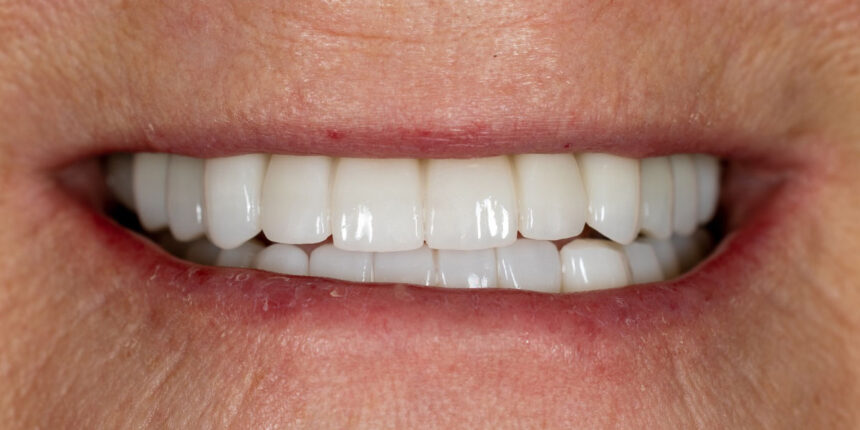
You may see a missing tooth as a small blank square in your smile, easy to ignore during a busy week. You notice its larger effects during ordinary tasks such as biting an apple, pronouncing certain sounds, and keeping food away from tender gum tissue.
That is why replacing your tooth involves more than filling an empty space. You want a stable point of contact for chewing, along with support for the surrounding teeth and tissues. A guide to dental implants Boca Raton explains how titanium posts, abutments, and porcelain or zirconia crowns work together, along with the role of 3D imaging and jawbone health. When you look at those details together, you can see that an implant has a job to perform inside a working system.
Is a missing tooth mainly a cosmetic issue?
Appearance is one visible part of the picture. A gap can also change how pressure travels through your bite, how your nearby teeth meet, and how easily you can clean the surrounding gumline.
Imagine losing a back molar. Your tongue may press into the open space, food may collect there, and your neighboring teeth can gradually tilt toward the gap. You may still feel perfectly comfortable, which makes the change easy to overlook.
Comfort can tell you how you feel, yet it does not describe every change taking place. Your teeth, gums, jawbone, muscles, and jaw joints work as a connected set of parts, so a missing tooth can influence several small routines at once.
What starts changing after a tooth disappears?
Your tooth root sends pressure into the bone around it. Once you lose the root, that area receives a different kind of stimulation, and your jawbone may lose volume over time. The pace can vary with your age, health, gum condition, the location of the tooth, and the length of time it has been missing.
Your nearby teeth may also begin sharing forces in new ways. A front tooth gap can affect how you bite into food, while a back tooth gap can alter the grinding pattern that usually handles tougher textures.
These shifts can occur without immediate symptoms. That is why your dental examination considers more than the empty space itself. Your dentist may review your gums, remaining teeth, jawbone, bite, medical history, and imaging before discussing possible treatments.
How does an implant fit into the picture?
You can think of a dental implant as three connected parts: a small post that serves as an artificial root, an abutment that connects the post to the visible restoration, and a crown shaped to function like a tooth. Titanium is commonly used for the implant post because your bone can bond with its surface during healing.
The crown you receive carries the practical duties of biting and chewing. Its shape, contact with your neighboring teeth, color, and position all matter, since your restoration should feel natural during meals as well as look natural in a photograph.
Healing takes time because your bone needs to integrate with the implant. Your treatment plan may use a conventional healing period before the final restoration, while selected cases may follow an immediate loading approach. Your plan depends on stability, bone quality, infection control, the location of the tooth, and your overall health.
Does every missing tooth call for the same solution?
Your replacement plan depends on your mouth. Replacing one missing tooth, several adjacent teeth, loose dentures, or a complete set of teeth creates different mechanical and biological questions.
Common categories include:
- Single-tooth replacement: one implant supports one crown while your neighboring teeth remain separate.
- Several missing teeth: if you have a gap spanning several teeth, multiple implants may support a bridge or a group of restorations.
- Full-arch rehabilitation: you may receive a fixed restoration or an implant-supported denture for an upper or lower arch.
- Different abutment materials: you may discuss titanium and tooth-colored zirconia based on your functional and cosmetic priorities.
Your preferred option also depends on your bone volume and the condition of your gums. Bone grafting, periodontal treatment, extractions, or staged care may be part of your plan before an implant can support a final tooth.
What can a scan reveal that a mirror cannot?
A mirror lets you see the crown of a tooth and the visible gumline. Three-dimensional imaging can show you the bone width, bone height, nearby roots, sinus spaces, and important anatomical structures beneath the surface.
That information helps your dental team plan implant placement before treatment begins. It can also help you and your dentist determine whether a minimally invasive approach is appropriate and where your restoration should sit for a balanced bite.
Digital planning matters because a difference of millimeters can influence your comfort and function. When your dentist plans the post with your final crown in mind, the restoration has a clearer relationship to your neighboring teeth, gum contour, and chewing forces.
What does the patient’s part of the process look like?
You can support good results with accurate information and steady aftercare. Your consultation usually includes a health review, an examination, imaging, and a conversation about your proposed sequence of treatment.
Useful preparation includes:
- Share your medications, allergies, health conditions, and previous dental complications.
- Follow instructions about eating, medication, and oral hygiene before your appointment.
- Plan softer foods and a quieter schedule during the first stage of healing.
- Keep your follow-up visits so healing and the fit of your restoration can be checked.
- Call your dental office if pain, swelling, bleeding, fever, or another concern changes unexpectedly.
Your healing is a biological process, so patience has a practical purpose. You may find the temporary phase less exciting than the final crown, yet it gives your tissues time to recover and your dental team a chance to confirm that the implant is stable.
Which habits help an implant stay useful?
Your implant cannot develop a cavity in the same way as a natural tooth, though the gum and bone around it still need care. Plaque can still inflame those tissues, and inflammation may affect the support around your implant.
Brush daily, clean between your teeth, attend regular dental visits, and pay attention to gum bleeding. A night guard may be useful if you clench or grind, and tobacco use can complicate your healing and long-term gum health.
Keep your routine simple: clean your mouth thoroughly, follow your care plan, attend maintenance visits, and respond early to changes. Contact your dentist if you notice a loose feeling, persistent bleeding, recurring swelling, or a shift in your bite.
What should a reader remember about tooth replacement?
Your missing tooth changes the way your mouth distributes work. Pay attention to the visible gap, along with your bone, gums, bite, neighboring teeth, and daily habits connected to it.
Keep these points in mind:
- A missing tooth can affect function as well as appearance.
- Implant treatment involves planning, healing, and a final restoration.
- One-tooth, multi-tooth, and full-arch cases require different decisions.
- Imaging helps reveal the conditions beneath the gumline.
- Your long-term care focuses on clean tissues, healthy gums, and regular reviews.
Dental implants are one method of rebuilding a missing tooth’s role in your mouth. You can begin the conversation with your anatomy, health, goals, and expectations, then work with your dentist to turn those details into a treatment plan you understand one step at a time.