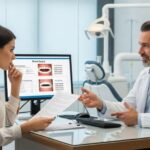


Knowing when to stay with your general practitioner and when to book a specialist skin clinic is not always obvious. General practitioners handle a wide range of skin concerns well, and for a lot of presentations they are exactly the right call. But there is a category of skin concerns where the equipment, the training, and the diagnostic process at a dedicated dermatology clinic produce a meaningfully different result than a standard GP appointment can.
This article covers where that line sits, what a specialist skin check actually involves, and how to know when it is time to escalate. If you are already at that point, the dermatology Neutral Bay team at The Skin Cancer and Cosmetic Clinic handles skin checks, suspicious lesion assessments, and conditions that have not responded to GP treatment.
What a General Practitioner Can and Cannot Do for Your Skin
General practitioners handle the majority of skin presentations well. Mild acne, recognisable rashes, contact dermatitis, and clearly benign sebaceous cysts are all appropriate for general practice. A general practitioner can prescribe topical treatments, refer when concerned, and in some settings remove straightforward lesions under local anaesthetic.
The limits show up in the diagnostic detail. Dermoscopy, which is the magnified examination technique used to assess pigmented lesions, requires dedicated equipment and specific training that sits outside the scope of standard general practice. A general practitioner examining a mole under a consulting room light and a clinician examining the same mole with a quality dermatoscope are working with completely different amounts of information. For a lesion that is genuinely ambiguous, that difference changes the outcome.
Once you are comfortable with the shorthand: the rest of this article uses GP when referring to general practitioners.
Two other patterns tend to indicate it is time to escalate beyond a GP:
A skin condition that has not responded after two or more treatment rounds
Any lesion that has changed in size, shape, colour, or texture since you last had it looked at
Both of those warrant a specialist review rather than another wait-and-see appointment.
Why a Dedicated Skin Check Actually Matters Here
Australia has one of the highest rates of skin cancer in the world. According to the Cancer Council Australia, two in three Australians will be diagnosed with some form of skin cancer before the age of 70. In that context, a thorough skin check at a clinic equipped for it is not an over-caution. It is fairly standard preventive care for anyone who has spent real time outdoors in this country.
A specialist skin check differs from a GP skin check in a few practical ways:
The examination is full body and systematic, not limited to the area you point at
Dermoscopy is applied to any lesion that warrants it, not selectively based on time pressure
The clinician’s training centres specifically on skin cancer detection, so the threshold for follow-up is calibrated accordingly
Research published in the British Journal of Dermatology found that dermoscopy improves melanoma detection accuracy by approximately 20% compared to unaided visual inspection. That improvement comes from the combination of equipment and training together, not either one in isolation.
If you have had significant sun exposure over your lifetime, have a family history of melanoma, or have not had a full skin check in more than two years, a specialist clinic is the right setting for that review.
Conditions That Tend to Need Specialist Assessment
Beyond skin cancer checks, several presentations consistently produce better outcomes when a specialist manages them rather than a GP continuing to adjust treatment.
Changing or atypical moles. Any lesion that has shifted in size, shape, colour, or texture warrants dermoscopic evaluation. Change over time is the signal that matters, regardless of what the lesion looks like at a single point in time.
Actinic keratoses. These rough, scaly patches are common in people with significant UV exposure history and carry pre-cancerous status. Treatment options vary depending on how many there are, their location, and whether there is any concern about progression. A specialist review gives you a complete picture rather than treating each patch in isolation.
Treatment-resistant eczema, psoriasis, and rosacea. When GP-prescribed treatments have not shifted the condition after a reasonable trial, the range of options available at a dermatology level is wider, and the diagnostic precision around what is actually happening tends to be higher.
Cosmetic presentations with a clinical dimension. Persistent hyperpigmentation, scarring acne, and significant skin texture changes sit in the space where clinical and cosmetic expertise overlap. A clinic that handles both avoids the situation where two separate providers are managing different parts of the same problem without talking to each other.
What Happens at Your First Appointment
The visit itself is straightforward. You will be asked about your skin history, any lesions you have noticed, your history of sun exposure, and whether there is a family history of skin cancer. None of this requires preparation beforehand.
The skin check works through all areas systematically. Dermoscopy is used on anything that warrants closer evaluation, and if a lesion needs to be photographed for monitoring purposes, that happens during the same appointment. If something requires biopsy or removal, the next steps are explained clearly before you leave, and the procedure can generally be performed at the clinic without a separate referral elsewhere.
Frequently Asked Questions
Do I need a GP referral to attend a dermatology clinic in Neutral Bay? No. You can book directly without a referral. If you have existing pathology results or a history of previously treated lesions, bringing those helps the clinician get context faster, but it is not a requirement.
Is a skin check covered by Medicare? Skin cancer consultations at accredited clinics are generally Medicare-billable. What applies to your specific visit depends on the items the clinician bills and your individual circumstances. The clinic can clarify the details when you book.
What is the difference between a skin cancer clinic and a dermatologist? A dermatologist is a medical specialist who has completed postgraduate training in dermatology and can manage the full clinical spectrum of skin conditions. A skin cancer clinic staffed by trained clinicians concentrates specifically on detection and management of skin cancers and related conditions. The Skin Cancer and Cosmetic Clinic in Neutral Bay covers both skin cancer services and cosmetic treatments under one roof.
What should I do if a spot changes between appointments? Do not wait for your next scheduled check. Any lesion that changes in size, shape, colour, or sensation, or that bleeds without obvious cause, should be assessed promptly. Book a specific appointment for that concern rather than adding it to a routine visit months away.
A skin concern that gets looked at properly is almost always easier to manage than one that waited too long. If there is something you have been putting off, booking a check with a clinic set up to assess it properly is the straightforward next step.