

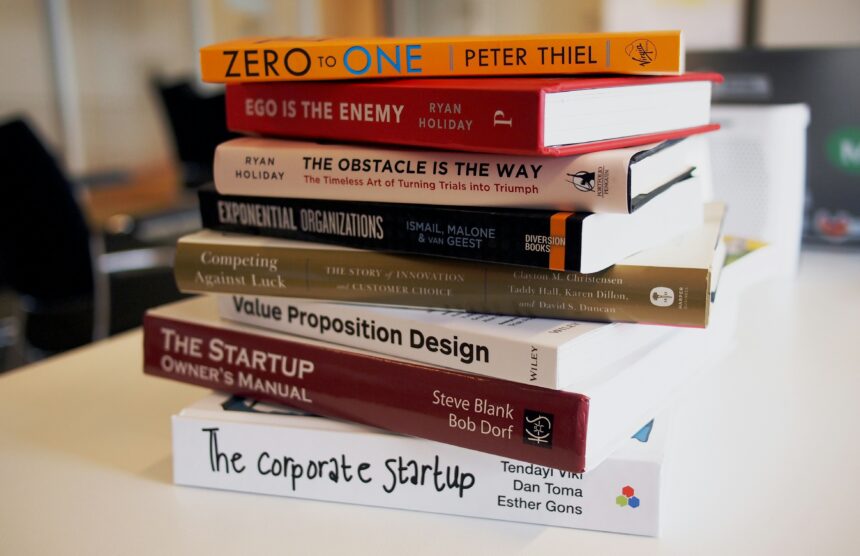
Introduction to Business Literature
Reading is a cornerstone of personal and professional growth for entrepreneurs. Engaging with business literature not only enriches knowledge but also presents an opportunity to gain insights into diverse industries. Through the pages of celebrated business books, entrepreneurs can explore time-tested principles and innovative strategies that propel decision-making and enhance business operations.
The significance of business books cannot be overstated; they provide frameworks for understanding complex market dynamics, inspirational leadership, and effective management tactics. For instance, esteemed authors often compile research and real-world examples that enable readers to draw parallels between theory and practice. This amalgamation of knowledge serves as a powerful tool for entrepreneurs who are looking to refine their skills and broaden their perspectives.
Moreover, the realm of entrepreneurship is characterized by constant evolution. Business literature often encapsulates emerging trends, which can be pivotal for entrepreneurs aiming to stay ahead of the curve. These books encourage innovative thinking, prompting readers to cultivate creativity and adopt unconventional approaches that may lead to breakthrough ideas.
Furthermore, the knowledge gained from reading extends beyond abstract concepts; it plays a critical role in shaping strategic decisions that affect business growth. Insightful literature can inform risk assessment, financial management, and customer engagement strategies, all of which are essential in navigating the competitive landscape.
In summary, immersing oneself in business literature is crucial for any entrepreneur. As these books encapsulate years of experience and expertise, they not only provide guidance but also instill confidence in the decision-making process, ultimately contributing to the success and sustainability of the business venture.
Criteria for Selecting the Best Business Books
When delving into the vast expanse of business literature, it is imperative to establish a framework for selecting the most impactful texts. The selection process should be guided by several criteria that ensure relevance and practical application.
First and foremost, one must consider the relevance of a book to current market trends. The fast-paced nature of business requires that entrepreneurs stay informed about contemporary practices, challenges, and opportunities. Books that reflect recent developments or that address emerging industry trends are likely to provide more applicable insights than those that are outdated or too broadly generalized.
Secondly, the credibility of the author is a critical aspect to evaluate. Authors with extensive experience, established reputations, or recognized achievements in the business world often lend credibility to their work. Additionally, examining the author’s background and their connection to the subject matter can significantly enhance the reader’s trust in the material presented.
Practical applications are another vital criterion. Business books that offer actionable advice, case studies, or real-world examples tend to be more valuable. Entrepreneurs should seek works that not only present theories but also provide tools, techniques, and strategies that they can implement in their businesses.
Moreover, reader reviews and ratings offer insights into the book’s effectiveness and reception within the community. Analyzing feedback from other business professionals can highlight strengths and weaknesses, therefore guiding one’s decision.
Lastly, it is essential to consider how different books might cater to varying business stages and sectors. A startup might require different insights compared to a mature company or a company in crisis. By tailoring selections based on specific needs, entrepreneurs can maximize their learning and strategic growth.
Classics that Shaped Business Thinking
Timeless business literature serves as a guiding light for aspiring entrepreneurs, offering invaluable insights that transcend generations. Among these influential works, The 7 Habits of Highly Effective People by Stephen Covey stands out as a pillar of personal and professional development. Covey introduces a framework for effective leadership based on principles of personal responsibility and integrity. His emphasis on proactivity, prioritization, and synergistic collaboration encourages readers to adopt a holistic approach to success. By instilling a mindset that prioritizes interpersonal skills alongside technical expertise, Covey’s work continues to resonate with both new and seasoned entrepreneurs.
Another seminal text, Think and Grow Rich by Napoleon Hill, serves as a foundational guide for achieving wealth and success. Hill’s comprehensive research into the habits of successful individuals culminates in 13 principles that empower readers to harness their thoughts towards achieving their goals. Key concepts such as the importance of a definite purpose and the power of the mastermind group emphasize that success is not solely the result of individual effort but also of collaboration and shared vision. This book’s relevance endures, inspiring countless readers to conceptualize their aspirations and translate them into actionable steps.
Additionally, How to Win Friends and Influence People by Dale Carnegie merits mention for its profound impact on business relationships. Carnegie underscores the importance of interpersonal skills in achieving professional success. By advocating for genuine respect and understanding in business interactions, the principles outlined in this classic have led many to enhance their networking capabilities, ultimately fostering fruitful relationships. The integration of these classic texts into the minds of entrepreneurs underscores their continued significance in shaping effective business practices, establishing a legacy that remains pertinent in today’s ever-evolving business landscape.
Modern Must-Reads for Entrepreneurs
In the rapidly evolving landscape of business, staying informed and adaptable is essential for entrepreneurs. Several modern business books have emerged that not only reflect recent trends but also provide valuable insights into navigating current challenges. Two noteworthy titles in this category are “The Lean Startup” by Eric Ries and “Good to Great” by Jim Collins.
“The Lean Startup” introduces a framework that emphasizes the importance of validated learning, experimentation, and iterative product releases. Eric Ries advocates for a methodology that encourages startups to quickly test their ideas in the market, gather customer feedback, and refine their business models accordingly. This approach helps entrepreneurs minimize risk while maximizing their chances of success. The principles outlined in the book resonate well with entrepreneurs seeking to innovate and adapt in a fast-paced environment.
On the other hand, Jim Collins’ “Good to Great” delves into what differentiates companies that make the leap from being merely good to achieving enduring greatness. Through rigorous research and analysis, Collins identifies key characteristics of successful businesses, such as strong leadership, a focus on core values, and the importance of a disciplined culture. The insights gleaned from his findings can aid entrepreneurs in guiding their organizations towards sustained excellence, even amidst challenges.
Both of these influential titles provide critical perspectives on modern entrepreneurship. They address essential concepts such as agility, strategic execution, and cultural integrity. For entrepreneurs looking to thrive in today’s competitive market, the insights offered by “The Lean Startup” and “Good to Great” serve as invaluable resources, equipping them with the knowledge and strategies needed to overcome obstacles and drive innovative growth.
Books on Leadership and Management Skills
Effective leadership is essential for any entrepreneur aiming to succeed in today’s competitive business landscape. To foster stronger management skills, numerous books have been published that delve into various aspects of leadership, team dynamics, and effective communication. Two noteworthy titles include “Leaders Eat Last” by Simon Sinek and “Dare to Lead” by Brené Brown.
In “Leaders Eat Last,” Simon Sinek discusses the concept of servant leadership. According to Sinek, great leaders prioritize the well-being of their team members, creating a culture of trust and collaboration. He highlights the significance of emotional safety within a team, suggesting that when employees feel cared for, they become more innovative and committed to their work. Sinek’s insights draw upon real-life examples from military and corporate settings, making the lessons applicable in various business contexts. By implementing these principles, entrepreneurs can foster an environment where team members are motivated to perform at their best.
Complementing this is Brené Brown’s “Dare to Lead,” which focuses on the importance of vulnerability in leadership. Brown argues that embracing vulnerability encourages open communication and honesty among team members. Her research underscores the idea that effective leaders must cultivate trust by being authentic and approachable. “Dare to Lead” offers practical strategies for leaders looking to enhance their management skills and improve workplace relationships, ultimately leading to a more cohesive team dynamic.
Both of these works provide invaluable lessons for entrepreneurs seeking to navigate the complexities of leadership. By embracing the principles outlined by Sinek and Brown, individuals can significantly improve their management skills and create a more productive working environment. The lessons learned from these books are instrumental for entrepreneurs striving for sustainable success in their business ventures.
Financial Wisdom from the Experts
Understanding finance and investment strategies is crucial for entrepreneurs aiming to achieve economic success. Two seminal works in this domain are “Rich Dad Poor Dad” by Robert Kiyosaki and “The Intelligent Investor” by Benjamin Graham. Both books provide invaluable insights into wealth creation, investment philosophies, and financial literacy.
In “Rich Dad Poor Dad,” Kiyosaki presents the contrasting financial mindsets of his two father figures. The ‘Rich Dad’ advocates for financial education and the importance of assets, which can generate passive income, whereas the ‘Poor Dad’ promotes traditional employment and school as the primary routes to success. This dichotomy challenges readers to think critically about their financial choices and encourages them to build a mindset geared toward entrepreneurship and wealth building. Key concepts include the difference between assets and liabilities, emphasizing the need to acquire assets that contribute positively to cash flow.
On the other hand, “The Intelligent Investor” is considered a foundational text on value investing. Benjamin Graham, often referred to as the father of value investing, outlines principles that prioritize long-term strategies over speculation. He discusses key concepts like intrinsic value and margin of safety, empowering investors to analyze stocks based on their fundamental worth rather than market hype. Graham’s perspective teaches entrepreneurs to approach investments with discipline and patience, which are essential traits in the volatile nature of financial markets.
By integrating the lessons from these two influential books, entrepreneurs can refine their financial strategies and make informed decisions that support their business goals. It is essential to develop a strong understanding of these financial concepts to navigate the complexities that come with entrepreneurship successfully.
Innovation and Disruption in Business Literature
The landscape of business is perpetually evolving, and for entrepreneurs, understanding innovation and disruption is crucial to thriving in a competitive environment. Several seminal works in business literature specifically address these themes, providing frameworks that can guide entrepreneurs toward success. Among these notable titles is “Blue Ocean Strategy” by W. Chan Kim and Renée Mauborgne, which offers a comprehensive approach to creating untapped market space, known as a “blue ocean,” as opposed to competing in saturated markets, or “red oceans.” This strategic approach challenges conventional business models and encourages entrepreneurs to innovate beyond their current boundaries.
Another critical piece of literature in this realm is “The Innovator’s Dilemma” by Clayton Christensen. This work articulates the idea of disruptive innovation, emphasizing how established companies can fail despite good management practices if they neglect emerging technologies or business models. Entrepreneurs can utilize Christensen’s insights to understand how to position their startups effectively in an ever-changing marketplace. By fostering a mindset that embraces innovation, entrepreneurs can anticipate market shifts and develop strategies that cater to the evolving preferences of consumers.
Additionally, these books underscore the importance of adaptability in modern business. They encourage entrepreneurs to not only solve current problems but also to foresee and create future opportunities. Through the principles found in these significant texts, aspiring business leaders can learn the importance of continuous innovation and the value derived from being proactive rather than reactive. As such, delving into these works equips entrepreneurs with the necessary tools to carve out new markets and remain competitively agile, ensuring their ventures can withstand the test of time and change.
Recommendations Based on Entrepreneurial Stages
Entrepreneurship is a multifaceted journey, often characterized by distinct stages, each possessing unique challenges and requirements. Understanding these stages can guide entrepreneurs in selecting the right literature to bolster their growth and development. Below, we explore recommended business books corresponding to various phases of the entrepreneurial journey: ideation, startup, and scaling.
During the ideation phase, entrepreneurs are focused on generating and refining new ideas. A highly recommended read for this stage is “The Lean Startup” by Eric Ries. This book introduces the concept of validated learning through experimentation and emphasizes the importance of agile product development. By integrating customer feedback early and often, this book provides a solid framework for transforming innovative ideas into viable business models.
As entrepreneurs transition into the startup phase, practical guidance becomes essential. “Zero to One” by Peter Thiel stands out as a notable title. Drawing from Thiel’s experiences in founding PayPal, the book delves into the importance of creating significant innovations rather than merely improving upon existing ideas. This reflection on monopolistic practices can guide startups in positioning themselves within their respective markets effectively.
Finally, when entrepreneurs anticipate scaling their businesses, they encounter challenges related to growth, management, and market adaptation. “Good to Great” by Jim Collins serves as an invaluable resource during this phase. Collins provides insights backed by rigorous research on how companies transition from mediocrity to excellence, introducing concepts like the hedgehog principle and the importance of disciplined organizational practices. By applying the lessons from these stages, entrepreneurs can navigate their paths with enhanced clarity and purpose.
Conclusion: The Lifelong Journey of Learning
For entrepreneurs, the path to success is not a destination, but a continual journey that emphasizes the value of ongoing education and personal development. In an ever-evolving business landscape characterized by rapid technological advances and shifting market dynamics, the ability to adapt and innovate is crucial. One of the most effective ways to achieve this adaptability is through the habit of regular reading. Engaging with business literature helps entrepreneurs not only to acquire fresh insights but also to challenge their existing perspectives.
The significance of continuous learning in entrepreneurship cannot be overstated. By dedicating time to read influential business books, entrepreneurs can glean knowledge from industry leaders and thought pioneers. This accumulated wisdom provides valuable frameworks for decision-making and problem-solving. Moreover, staying updated with the latest publications allows entrepreneurs to remain competitive and informed about emerging trends that can impact their ventures.
In essence, cultivating a reading habit fosters a mindset geared towards growth and resilience. Entrepreneurs who commit to lifelong learning are better equipped to navigate uncertainties and capitalize on new opportunities. The blend of diverse ideas, theories, and case studies found in reputable business literature serves not only to enlighten but also to inspire action.
Ultimately, the journey of an entrepreneur is marked by learning experiences that enrich their skills and understanding. By prioritizing the acquisition of knowledge through reading, entrepreneurs can develop a strong foundation for sustained success. Therefore, it is imperative for current and aspiring business leaders to prioritize reading as an essential tenet of their professional growth and to recognize it as a primary catalyst for longevity in their entrepreneurial endeavours.