

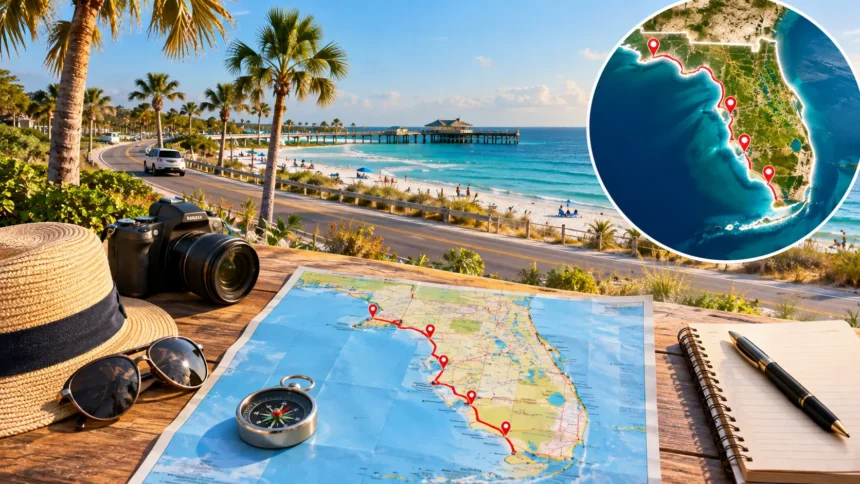
Florida’s Gulf Coast is one of the most beautiful regions for a scenic road trip in the United States. From the white-sand beaches of the Panhandle to the tropical islands near Naples, this coastline offers charming towns, waterfront attractions, and unforgettable natural scenery. A map of Florida Gulf Coast destinations helps travelers understand driving routes, distances, and worthwhile stops. Whether you have a weekend or an entire week, this guide will help you plan an enjoyable coastal adventure.
Understanding the Map of Florida Gulf Coast
Florida’s Gulf Coast stretches along the western side of the state, facing the Gulf of Mexico. It includes popular destinations such as Pensacola, Destin, Panama City Beach, Clearwater, Sarasota, Fort Myers, and Naples. The region features sandy beaches, barrier islands, coastal wetlands, and historic communities. Understanding its geography makes planning a road trip much easier.
The northern coastline includes the Florida Panhandle, known for its emerald-colored waters and beautiful white-sand beaches. Farther east, the Big Bend region features quieter coastal communities, wetlands, and wildlife habitats. The central Gulf Coast includes Tampa Bay and several well-known beach destinations. Southwest Florida offers tropical landscapes, peaceful islands, and access to the Everglades.
A Florida Gulf Coast map also helps travelers identify major highways and transportation connections. US Highway 98 serves many Panhandle destinations, while Interstate 75 connects several cities farther south. Local coastal roads provide access to islands, beaches, and waterfront neighborhoods. Choosing suitable roads allows visitors to balance efficient driving with enjoyable sightseeing.
Best Driving Routes Along Florida’s Gulf Coast
Planning the best Florida Gulf Coast road trip begins with selecting a route that matches your available time. Travelers exploring the Panhandle often follow US Highway 98 between Pensacola, Destin, and Panama City Beach. Scenic Highway 30A offers an attractive coastal alternative through smaller beach communities. These roads provide access to beautiful shoreline destinations and local attractions.
For central and southwest Florida, Interstate 75 is a convenient option for traveling between major cities. US Highway 41 provides another route through communities around Tampa, Sarasota, Fort Myers, and Naples. However, reaching individual beaches often requires additional roads and bridges. Travelers should check current navigation information because traffic conditions can significantly influence travel times.
A complete Gulf Coast journey can cover several hundred miles, depending on the starting point and chosen detours. Rather than rushing through every destination, consider dividing the coastline into manageable sections. The Panhandle, Tampa Bay, and Southwest Florida each offer enough attractions for separate trips. This approach allows more time for sightseeing, relaxation, and unexpected discoveries.
Pensacola and Destin: Explore the Emerald Coast
Pensacola is an excellent starting point for a Florida Gulf Coast road trip. Located near the Alabama border, the city combines historic attractions with access to beautiful coastal scenery. Pensacola Beach is particularly appealing for its light-colored sand and inviting shoreline. Visitors can explore waterfront areas, enjoy local restaurants, and experience the relaxed atmosphere of northwest Florida.
Traveling east toward Destin introduces some of the most recognizable beaches along the Emerald Coast. This popular vacation destination is known for its clear-looking coastal waters, sandy beaches, and recreational attractions. Henderson Beach State Park offers a beautiful setting for enjoying the natural shoreline. Destin Harbor also features restaurants, waterfront views, and sightseeing opportunities.
The journey between Pensacola and Destin can include stops around Navarre Beach and Fort Walton Beach. These destinations provide additional coastal scenery and opportunities for peaceful beach walks. Allow extra time during busy vacation periods because traffic may become heavy near popular beach areas. A relaxed schedule helps make the experience more enjoyable.
Scenic Highway 30A and Panama City Beach
Scenic Highway 30A is one of the most attractive roads along Florida’s Gulf Coast. This approximately 24-mile route passes picturesque beach communities in South Walton County. Seaside, Rosemary Beach, and Grayton Beach are among the best-known destinations along the corridor. Their distinctive architecture, coastal landscapes, and local shops make the drive particularly memorable.
Grayton Beach State Park provides opportunities to experience sandy dunes, coastal vegetation, and beautiful shoreline scenery. Nearby communities feature cafés, restaurants, and pedestrian-friendly areas that encourage visitors to explore at a slower pace. Some beaches and public access points have specific parking arrangements. Checking local information beforehand can help prevent unnecessary difficulties.
Continuing east brings travelers toward Panama City Beach, another popular destination on the Florida Gulf Coast map. This area features an extensive sandy shoreline and numerous visitor attractions. St. Andrews State Park is a worthwhile stop for nature lovers and beach enthusiasts. Families can also explore waterfront entertainment areas and enjoy scenic sunset views.
Apalachicola and the Forgotten Coast
The Forgotten Coast offers a quieter alternative to Florida’s busier beach destinations. This region includes Apalachicola, St. George Island, and several smaller coastal communities. Visitors can discover historic buildings, peaceful waterfront settings, and natural landscapes that feel different from major resort areas. It is particularly suitable for travelers who appreciate relaxed sightseeing.
Apalachicola is known for its maritime heritage, historic downtown, and connection to the surrounding bay. Traditional buildings, independent shops, and waterfront restaurants contribute to the town’s distinctive character. Visitors can explore the streets and learn about the area’s fishing history. Its slower atmosphere provides a pleasant contrast to larger coastal cities.
St. George Island is another beautiful destination worth adding to your route. The island features sandy beaches, natural dunes, and opportunities for wildlife observation. Dr. Julian G. Bruce St. George Island State Park protects a scenic section of the coastline. Travelers should respect protected habitats and check beach conditions before planning outdoor activities.
Cedar Key and Florida’s Nature Coast
Cedar Key is a charming coastal community that offers a different side of Florida’s Gulf Coast. Located along the state’s Big Bend region, it is known for its quiet waterfront atmosphere and natural surroundings. Unlike larger resort destinations, Cedar Key emphasizes traditional coastal character. Its location makes it an interesting detour for travelers exploring the wider shoreline.
The town features small shops, waterfront restaurants, and opportunities to observe local coastal wildlife. Visitors can explore its historic streets or enjoy views across the surrounding islands. Kayaking and nature observation are popular activities when weather and water conditions are suitable. The peaceful environment makes Cedar Key appealing to travelers seeking a less crowded experience.
The broader Nature Coast includes areas with springs, rivers, forests, and coastal wetlands. Places such as Crystal River and Homosassa offer opportunities to learn about Florida’s natural environment. Some wildlife experiences require special guidelines to protect animals and their habitats. Checking local regulations and seasonal conditions helps visitors enjoy these destinations responsibly.
Clearwater and Tampa Bay: Beaches and City Attractions
Clearwater is one of the most recognizable beach destinations along Florida’s central Gulf Coast. Clearwater Beach attracts visitors with its sandy shoreline, waterfront activities, and lively atmosphere. The surrounding area includes restaurants, shops, and places to enjoy coastal views. It is an excellent stop for travelers who want a traditional Florida beach experience.
Pier 60 is a popular landmark where visitors can enjoy views of the Gulf and surrounding shoreline. Nearby beach areas provide opportunities for walking, relaxing, and watching the sunset. Clearwater can become crowded during holidays and peak travel seasons. Arriving earlier in the day may make parking and beach access easier.
Tampa offers a different experience with museums, cultural attractions, and waterfront entertainment. The Tampa Riverwalk connects several interesting areas along the Hillsborough River. Visitors can explore local neighborhoods or enjoy restaurants near the city center. Combining Tampa with Clearwater creates a balanced itinerary featuring both urban attractions and coastal relaxation.
St. Petersburg and Anna Maria Island
St. Petersburg is another worthwhile destination for a Florida Gulf Coast driving itinerary. The city offers an appealing combination of waterfront parks, museums, and lively neighborhoods. Its downtown area provides opportunities to explore art, restaurants, and local attractions. Nearby Gulf beaches add another reason to include St. Petersburg in your travel plans.
St. Pete Beach offers a beautiful coastal setting with sandy shoreline and sunset views. Visitors can enjoy relaxed walks or explore nearby coastal communities. The area’s beaches and waterfront facilities make it suitable for different travel interests. Parking rules and beach access arrangements vary, so checking local details can improve the experience.
Anna Maria Island lies farther south and is known for its laid-back atmosphere and attractive beaches. Small coastal communities, independent shops, and traditional cottages contribute to its charm. Visitors can enjoy the shoreline or explore local streets at a comfortable pace. Its quieter character makes it a pleasant addition to a longer road trip.
Sarasota, Siesta Key, and Venice Beach
Sarasota is a popular stop along Florida’s southwest Gulf Coast, combining cultural attractions with beautiful beaches. The city features museums, gardens, restaurants, and waterfront areas. Its location provides convenient access to nearby barrier islands and coastal communities. Travelers interested in both sightseeing and relaxation can easily spend more than one day exploring.
Siesta Key is particularly famous for its fine white quartz sand and inviting beach environment. Siesta Beach offers a spacious shoreline and facilities that attract visitors throughout the year. The surrounding area includes restaurants and shops for casual exploration. Beach conditions, weather, and seasonal crowds should be considered when choosing the best time to visit.
Continuing south brings travelers toward Venice, another attractive coastal destination. Venice Beach provides opportunities for shoreline walks, swimming when conditions permit, and searching for fossilized shark teeth. The historic downtown features shops, restaurants, and pleasant streets. Venice works well as a shorter stop or a relaxed overnight destination.
Fort Myers, Sanibel Island, and Captiva
Fort Myers provides access to several of Southwest Florida’s most interesting attractions. The city features a historic downtown, waterfront areas, and cultural landmarks. Nearby Fort Myers Beach offers another option for experiencing the Gulf Coast. Visitors should check current beach access and facility conditions because storm recovery and maintenance can affect individual locations.
Sanibel Island is particularly well known for its natural scenery and shell-covered beaches. Its shoreline attracts visitors interested in beachcombing, birdwatching, and peaceful coastal walks. The J.N. “Ding” Darling National Wildlife Refuge protects important habitats on the island. Exploring designated trails and viewing areas provides opportunities to appreciate the region’s wildlife.
Captiva Island lies north of Sanibel and offers another attractive coastal experience. Its beaches, tropical vegetation, and relaxed surroundings make it appealing to nature lovers. Travelers should allow additional driving time for island traffic and bridge access. Spending a full day around Sanibel and Captiva provides more opportunities to enjoy their distinctive landscapes.
Naples and Marco Island: Southwest Florida Highlights
Naples is one of the most popular destinations in Southwest Florida, known for its attractive beaches and refined coastal atmosphere. The city offers waterfront parks, shopping areas, and restaurants alongside natural attractions. Visitors can enjoy walks through established neighborhoods and explore nearby beaches. Naples also provides a convenient starting point for discovering the Everglades region.
Marco Island is located south of Naples and features beautiful coastal scenery. Its sandy beaches and surrounding waterways attract travelers seeking a peaceful seaside experience. Tigertail Beach is a well-known location for nature observation and coastal recreation. Visitors should check current access arrangements and local conditions before planning activities involving water or wildlife.
Travelers with additional time can continue toward Everglades City and the surrounding natural areas. This region provides access to wetlands, mangrove habitats, and opportunities to learn about Florida’s unique ecosystems. Wildlife viewing is especially rewarding when conducted responsibly. Naples and its neighboring destinations create an excellent final section for a Gulf Coast road trip.
Best Time to Visit Florida’s Gulf Coast
Choosing the right season can make a significant difference when exploring Florida’s Gulf Coast. Spring and fall often provide comfortable conditions for sightseeing and outdoor activities. Temperatures vary across the region, with northern destinations generally experiencing cooler winters than Southwest Florida. Seasonal events and vacation schedules can also influence accommodation availability and traffic.
Summer offers warm beach weather, but high humidity and frequent afternoon thunderstorms are common. The Atlantic hurricane season runs from June through November, making weather monitoring especially important. Travelers should review forecasts and follow official safety guidance during severe weather threats. Flexible reservations and travel plans can help reduce disruption during uncertain conditions.
Winter is popular in many southern Gulf Coast communities because temperatures are often milder than in northern states. However, beach swimming conditions may be cooler, especially in the Panhandle. Popular destinations can also become crowded during holiday periods and seasonal travel peaks. Selecting dates based on preferred activities helps create a more enjoyable experience.
Practical Tips for Planning a Florida Gulf Coast Road Trip
A successful Florida Gulf Coast road trip begins with realistic travel planning. Choose a manageable number of destinations and estimate driving distances before making reservations. Although some towns appear close on a map, bridges, local traffic, and coastal detours can increase journey times. Allowing flexibility creates opportunities to discover unexpected attractions without rushing.
Pack clothing suitable for warm weather, occasional rain, and cooler evenings. Sunscreen, drinking water, comfortable footwear, and beach essentials are useful for most coastal activities. Travelers planning outdoor adventures should also review local wildlife and water safety guidance. Keeping important travel information accessible can make the journey more convenient and organized.
Accommodation planning is particularly important during spring break, major holidays, and other busy travel periods. Beachfront properties may cost more than hotels located farther inland. Comparing parking arrangements, cancellation policies, and travel distances can help manage expenses. A balanced itinerary that combines popular attractions with quieter stops often provides the most rewarding coastal experience.
Conclusion
A map of Florida Gulf Coast destinations reveals an impressive variety of beaches, cities, islands, and natural attractions. From Pensacola and Destin to Clearwater, Sarasota, and Naples, each region offers its own distinctive atmosphere. Scenic highways connect lively waterfront communities with peaceful stretches of coastline. Understanding the geography makes it easier to choose worthwhile stops and create a practical route.
Travelers can explore the entire coastline over an extended holiday or focus on smaller sections during shorter visits. The Panhandle offers beautiful white-sand beaches, while Tampa Bay combines urban attractions with coastal scenery. Southwest Florida provides tropical islands, wildlife habitats, and charming waterfront towns. Choosing destinations that match your interests helps make every stop more meaningful.
The best Florida Gulf Coast road trip is one that allows enough time to enjoy the journey. Plan your route carefully, check seasonal conditions, and remain flexible when exploring unfamiliar areas. Whether you prefer quiet beaches, scenic drives, or historic communities, the coastline offers memorable experiences. With thoughtful preparation, your Florida Gulf Coast adventure can become a highlight of your travels.
FAQs
What cities are on the Florida Gulf Coast map?
Major destinations include Pensacola, Destin, Panama City Beach, Clearwater, St. Petersburg, Sarasota, Fort Myers, and Naples. Smaller communities such as Apalachicola, Cedar Key, and Venice also offer worthwhile coastal attractions.
What is the best route to drive along Florida’s Gulf Coast?
US Highway 98 and Scenic Highway 30A are popular choices in the Panhandle. Farther south, Interstate 75 and US Highway 41 connect major cities, with local roads providing beach access.
How many days do you need for a Florida Gulf Coast road trip?
A complete Gulf Coast road trip is best enjoyed over seven to ten days or longer. Shorter trips can focus on the Panhandle, Tampa Bay, or Southwest Florida.
Which Florida Gulf Coast beaches are worth visiting?
Popular options include Pensacola Beach, Henderson Beach, Clearwater Beach, Siesta Beach, and Sanibel Island. Each destination offers different scenery, facilities, and activities for visitors.
What is the best month to visit Florida’s Gulf Coast?
April and October are often appealing for comfortable sightseeing temperatures, although conditions vary by location. October falls within hurricane season, so travelers should monitor forecasts and plan accordingly.