

Most families don’t see it coming. A teenager starts skipping meals, a young adult becomes unusually focused on “clean eating,” or a parent quietly disappears after dinner every night. Eating disorders rarely announce themselves loudly. They move in quietly, disguise themselves as discipline or health consciousness, and take hold before anyone realizes what is happening. Understanding the warning signs, the different disorder types, and what recovery actually looks like is one of the most practical things a family member or friend can do.
This article walks through the core facts about eating disorders, including how they differ from one another, which populations are most affected, what evidence-based treatment involves, and how families fit into the recovery process. The goal is to replace fear and confusion with knowledge that actually helps.
What Eating Disorders Actually Are (and Are Not)
Eating disorders are serious mental health conditions characterized by persistent disturbances in eating behavior, distorted body image, and significant emotional distress. They are not phases. They are not vanity. And they are not choices. Research consistently shows that genetic, neurobiological, psychological, and social factors all contribute to their development, which means no single cause explains every case.
According to the National Eating Disorders Association, eating disorders affect at least 28.8 million Americans at some point in their lifetime. They carry the second-highest mortality rate of any mental health condition, behind only opioid use disorder. These are not minor concerns. They are medical and psychological emergencies that respond well to treatment when caught early.
One of the most persistent myths is that eating disorders only affect thin, young, white women. In reality, they occur across all genders, racial backgrounds, body sizes, ages, and income levels. Recognizing that reality matters because it changes who gets screened, who gets believed, and who gets help.
The Main Types and How They Differ
Several distinct eating disorder diagnoses exist, each with specific behavioral and psychological features. Knowing the differences helps families identify what they may be observing and understand why treatment approaches vary.
| Disorder | Core Features | Common Misconception |
| Anorexia Nervosa | Severe restriction of food intake, intense fear of weight gain, distorted body image | Only affects very underweight individuals |
| Bulimia Nervosa | Cycles of binge eating followed by purging behaviors such as vomiting or excessive exercise | Easy to spot because of purging behavior |
| Binge Eating Disorder | Recurrent episodes of eating large amounts rapidly, with feelings of shame and loss of control, without purging | Just a lack of willpower or self-control |
| Avoidant/Restrictive Food Intake Disorder (ARFID) | Extreme food avoidance based on sensory issues or fear of choking, not body image concerns | Same as picky eating in children |
| Other Specified Feeding or Eating Disorder (OSFED) | Clinically significant symptoms that don’t meet full criteria for above categories | Less serious than “official” diagnoses |
Binge eating disorder is actually the most common eating disorder in the United States, yet it remains the least talked about. People living with it often experience significant shame and may not seek treatment for years. ARFID, meanwhile, is frequently misunderstood even by medical providers, which can delay accurate diagnosis for children and adults alike.
Recognizing Warning Signs Before a Crisis Develops
Early detection dramatically improves treatment outcomes. A 2021 study published in the International Journal of Eating Disorders found that shorter duration of illness before treatment is one of the strongest predictors of full recovery. Knowing what to watch for gives families and friends a real advantage.
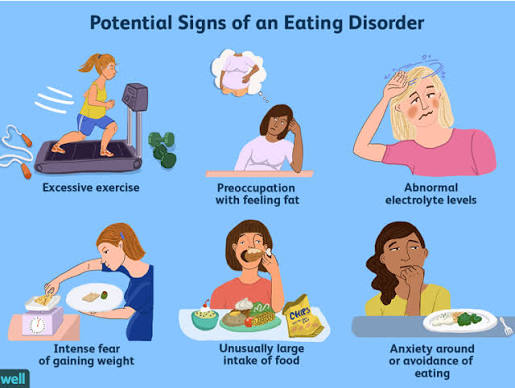
Warning signs span behavioral, physical, and emotional domains. Not every person will show every sign, and some symptoms are easier to observe than others.
- Avoiding meals, making excuses not to eat with others, or eating only very small portions
- Intense preoccupation with food, calories, dieting, or body weight that dominates conversation
- Wearing loose or layered clothing to conceal body shape
- Disappearing to the bathroom shortly after meals
- Evidence of food hoarding, hidden wrappers, or large quantities of food missing
- Noticeable weight changes in either direction, or frequent fluctuations
- Hair thinning, dry skin, cold intolerance, or fatigue without clear medical cause
- Withdrawal from social activities that involve food
- Extreme distress or anxiety at mealtimes
- Rigid food rules with strong emotional reactions when those rules are broken
Physical warning signs sometimes appear before behavioral ones become obvious, especially with anorexia. Lanugo (fine body hair that grows to conserve heat), yellowing of the skin, swollen jaw or cheeks, and calluses on the knuckles are all physical markers clinicians look for. These details matter because they can prompt a medical appointment that leads to a real conversation.
What Evidence-Based Treatment Actually Involves
Treatment for eating disorders is not one-size-fits-all. The appropriate level of care depends on medical stability, the type and severity of the disorder, the person’s living situation, and what has or hasn’t worked in the past. Most clinical guidelines use a stepped care model, moving from higher to lower levels of intensity as recovery progresses.
- Medical stabilization: When malnutrition or purging has created a medical emergency, inpatient hospitalization focuses first on physical safety before psychiatric treatment begins.
- Residential treatment: Provides round-the-clock support in a structured living environment, combining medical monitoring with intensive therapy.
- Partial Hospitalization Program (PHP): A full-day program, typically five days a week, that includes therapeutic meals, group therapy, and individual sessions, while the person returns home in the evenings.
- Intensive Outpatient Program (IOP): Several hours of programming three to five days per week, allowing more independence while maintaining structured support.
- Standard outpatient care: Weekly or biweekly therapy and medical check-ins for those who have achieved greater stability.
The therapeutic approaches with the strongest evidence base include Cognitive Behavioral Therapy adapted for eating disorders (CBT-E), Family-Based Treatment (FBT, also called the Maudsley approach) for adolescents, Dialectical Behavior Therapy (DBT) for those with significant emotional dysregulation, and Acceptance and Commitment Therapy (ACT). Nutritional counseling from a registered dietitian who specializes in eating disorders is almost always part of the treatment team, as is psychiatric care when medications are clinically appropriate.
Medication does not treat eating disorders directly, but it can address co-occurring conditions like depression, anxiety, or obsessive-compulsive tendencies that maintain disordered eating. Fluoxetine is currently the only FDA-approved medication for bulimia nervosa. For binge eating disorder, lisdexamfetamine (Vyvanse) has FDA approval. No medications are approved specifically for anorexia, though several are used off-label to support treatment.
The Role Families Play in Recovery
Family involvement has measurable benefits in eating disorder recovery, particularly for children and adolescents. The Maudsley approach, developed at the Maudsley Hospital in London, positions parents as the primary agents of nutritional rehabilitation during the early phase of treatment, operating under clinical guidance. Studies have shown FBT produces full remission in roughly 40 to 50 percent of adolescent cases, with partial remission in many more, making it one of the strongest interventions available for that age group.
For adult patients, family involvement looks different but still matters. Family therapy sessions help loved ones understand the disorder, learn to communicate without inadvertently reinforcing disordered thinking, and build a home environment that supports rather than complicates recovery. Families also play a practical role by helping identify relapses early, supporting appointment attendance, and maintaining their own mental health so they can sustain the long-term work involved.
Geographic access to specialized care is a real barrier for many families. Southern California has a relatively strong treatment infrastructure, and programs specifically designed to provide support for San Clemente families and surrounding coastal communities help bridge the gap between need and access for residents in that region.
One thing families frequently underestimate is their own need for support during this process. Caring for someone with an eating disorder is exhausting, emotionally complex, and isolating. Parent support groups, family therapists, and caregiver-specific resources all exist to help the people in the supporting role stay healthy themselves. That is not a luxury. It is a component of the treatment system.
What Recovery Looks Like Over Time
Recovery from an eating disorder is rarely a straight line. Relapse is common, particularly during periods of high stress like academic transitions, relationship changes, illness, or major life losses. This does not mean treatment failed. It means eating disorders are complex, chronic-tendency conditions that require ongoing attention even after significant progress is made.
Full recovery, defined as the absence of eating disorder behaviors and a healthy relationship with food and body, is achievable. Research suggests that with appropriate treatment, roughly 50 to 70 percent of people with anorexia nervosa will achieve full or substantial recovery, though timelines vary widely. Bulimia nervosa has somewhat higher full recovery rates. Binge eating disorder, when treated, shows strong response rates to both CBT and medication-assisted approaches.
Recovery also involves building a life where the eating disorder no longer has to serve its original function, whether that function was control, emotional numbing, self-punishment, or managing anxiety. This is where good therapy does its most important work. The behavioral changes come first. The deeper psychological shifts follow with time, support, and patience from everyone involved.
Families who stay informed, stay engaged without becoming controlling, and seek their own support tend to see better outcomes over the long run. The goal is not to manage the disorder forever. It is to help someone reach a point where they can manage their own life, fully and freely, without the disorder calling the shots.