

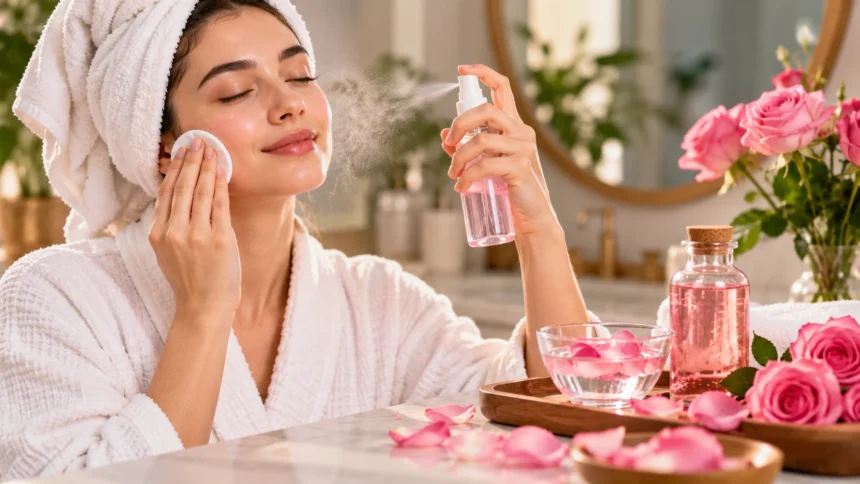
Understanding Rose Water for Skin and Its Benefits
Rose water is a popular skincare ingredient known for its gentle floral fragrance, refreshing properties, and long history of cosmetic use. It is commonly found in facial mists, toners, cleansers, and moisturizing products. Many people use rose water as part of their daily skincare routines because it feels lightweight and is easy to apply.
Rose water is typically produced by distilling rose petals with water, creating a fragrant liquid containing small amounts of naturally occurring plant compounds. Its composition varies depending on the rose species, extraction process, and product formulation. Although some laboratory research suggests potential antioxidant and soothing properties, strong clinical evidence for many skincare claims remains limited.
Understanding the benefits of rose water for skin can help you decide whether it belongs in your skincare routine. It is important to distinguish traditional uses from scientifically established effects and recognize that natural ingredients can still cause irritation. This guide explains what rose water does, how to use it safely, and what to consider before choosing a product.
What Is Rose Water?
Rose water is an aromatic liquid commonly obtained through the steam distillation of rose petals. During distillation, steam passes through plant material and carries volatile compounds that contribute to the characteristic fragrance. The resulting floral water, often called a hydrosol, is used in cosmetics, personal care products, and fragrances.
Different rose varieties can be used to produce rose water, including Rosa damascena, commonly known as the Damask rose. The concentration of aromatic substances and other plant compounds can vary between products. This variation means that two bottles labeled rose water may not have identical ingredients or effects.
Cosmetic rose water is available as a standalone product or an ingredient in formulated skincare products. Some manufacturers add preservatives, fragrances, or other substances to improve stability and performance. Reading the ingredient label helps identify whether a product contains primarily rose water or a broader mixture of cosmetic ingredients.
Why Is Rose Water Popular in Skincare?
Rose water has remained popular because of its pleasant scent, lightweight texture, and refreshing feeling when applied to the skin. It is often associated with traditional beauty practices in different cultures. Modern cosmetic brands continue using rose water in facial toners, mists, cleansers, and moisturizing formulations.
Another reason for its popularity is the growing interest in botanical skincare ingredients. Consumers often look for products containing recognizable plant extracts and relatively simple formulations. However, natural origin does not automatically mean that an ingredient is more effective or safer than a synthetic alternative.
Rose water may serve as a pleasant addition to a skincare routine, particularly when included in a well-formulated product. Its actual benefits depend on ingredient concentration, product quality, and individual skin characteristics. Understanding these factors helps set realistic expectations rather than relying entirely on promotional claims.
Potential Benefits of Rose Water for Skin
Rose water may offer mild soothing and refreshing effects when applied to the skin. Its liquid texture can temporarily make the skin feel comfortable, especially when used as a facial mist. However, these effects should not be confused with long-lasting hydration or treatment of underlying skin conditions.
Some laboratory studies have examined rose-derived compounds for antioxidant and anti-inflammatory activity. These findings suggest possible biological properties, but they do not establish that ordinary cosmetic rose water produces the same effects on human skin. Product concentration and formulation can significantly influence results.
The most realistic benefits of rose water involve its cosmetic qualities and potential role in a comfortable skincare routine. It may complement cleansing and moisturizing products, provided the formula is well tolerated. Rose water should not replace proven treatments for persistent irritation, acne, eczema, or other skin concerns.
Rose Water May Help Soothe Mild Skin Discomfort
Rose water is often described as a soothing skincare ingredient because of its gentle, cooling sensation. A light mist may temporarily feel pleasant when skin is warm or uncomfortable. Nevertheless, the degree of relief varies between individuals and cannot be assumed for every product.
Laboratory research into certain rose extracts suggests potential anti-inflammatory activity. However, evidence specifically demonstrating meaningful benefits from cosmetic rose water on irritated human skin is limited. It is therefore more accurate to describe rose water as potentially comforting rather than a treatment for inflammation.
People with irritated or sensitive skin should approach botanical products cautiously. Fragrant plant compounds may trigger stinging, redness, or allergic reactions in susceptible individuals. Persistent irritation requires appropriate skincare assessment rather than repeated application of a product that may worsen discomfort.
Does Rose Water Hydrate the Skin?
Rose water contains water and can temporarily wet the skin’s surface when applied. This may create an immediate feeling of freshness, particularly in warm or dry environments. However, applying water alone does not necessarily provide sustained hydration or strengthen the skin’s natural moisture barrier.
Long-lasting skin hydration usually depends on ingredients that attract moisture and help reduce water loss. Humectants such as glycerin and hyaluronic acid can support moisture retention, while moisturizers contain ingredients that help protect the skin barrier. Rose water does not automatically provide these functions on its own.
A rose water mist may be followed by a suitable moisturizer to help maintain skin comfort. The moisturizer generally plays the more important role in supporting lasting hydration. People with dry skin should avoid treating facial mists as substitutes for effective moisturizing products.
Antioxidant Properties of Rose Water
Antioxidants are substances that can help limit certain chemical reactions involving unstable molecules known as free radicals. Oxidative stress is involved in several biological processes, including aspects of skin aging. Researchers have investigated rose-derived compounds for their potential antioxidant activity.
Some rose extracts contain naturally occurring plant compounds that demonstrate antioxidant effects in laboratory experiments. However, extraction methods and ingredient concentrations differ significantly between rose extracts and cosmetic rose water. Findings from concentrated extracts cannot automatically be applied to diluted facial products.
Although antioxidant ingredients can contribute to skincare formulations, rose water should not be considered a proven anti-aging treatment. Sun protection and appropriate moisturization have stronger practical roles in everyday skin care. Realistic expectations are especially important when evaluating products advertised as natural solutions for aging.
Can Rose Water Help With Redness?
Facial redness can develop for many reasons, including temperature changes, irritation, sensitivity, and certain skin conditions. Applying a cool, gentle liquid may temporarily feel soothing in some situations. Rose water is sometimes used for this purpose, although its effectiveness has not been firmly established through clinical research.
The potential soothing effects of rose-derived compounds do not guarantee that rose water will reduce visible redness. Fragrant ingredients may actually make redness worse in people with sensitive or reactive skin. Product formulation and individual tolerance are important considerations.
If redness occurs repeatedly, identifying the underlying cause is more useful than relying on a cosmetic mist. Persistent flushing, burning, or irritation may require advice from a qualified healthcare professional. Rose water should be discontinued if application causes discomfort or worsens existing symptoms.
Is Rose Water Good for Oily Skin?
Rose water is sometimes marketed toward people with oily skin because it feels light and does not usually leave a heavy residue. This texture may appeal to individuals who prefer products that absorb quickly. However, a refreshing sensation does not mean that rose water controls oil production.
Skin oil, or sebum, is produced by sebaceous glands and plays a role in protecting the skin. Factors such as hormones, genetics, and environmental conditions influence sebum production. There is insufficient clinical evidence to conclude that ordinary rose water meaningfully regulates these processes.
People with oily skin may use a well-formulated rose water product if it does not cause irritation. Gentle cleansing, appropriate moisturizing, and non-comedogenic skincare products are generally more important for routine care. Astringent or heavily fragranced products should not be assumed beneficial simply because they leave skin feeling temporarily less oily.
Can Rose Water Be Used on Dry Skin?
Dry skin often feels rough, tight, or uncomfortable because of reduced moisture retention and changes in the skin barrier. Rose water may provide a brief refreshing sensation when applied. However, its water content alone is unlikely to deliver the sustained moisture support that dry skin needs.
A moisturizer containing humectants, emollients, and barrier-supporting ingredients is usually more useful for maintaining skin hydration. Rose water can be included in a cosmetic routine when tolerated, but it should remain an optional addition. It does not replace a suitable cream or lotion.
People with very dry or compromised skin may be particularly sensitive to fragrant products. Even naturally derived aromatic compounds can produce irritation or discomfort. Choosing fragrance-free moisturizers may be more appropriate when dryness is associated with persistent sensitivity.
Is Rose Water Suitable for Sensitive Skin?
Sensitive skin may react to ingredients that other people tolerate without difficulty. Symptoms can include stinging, burning, redness, or itching after product application. Although rose water is frequently described as gentle, its botanical origin does not guarantee suitability for sensitive skin.
Natural fragrance compounds present in rose water can cause irritation or contact allergies in some individuals. Added perfumes, alcohol, and other ingredients may create additional problems depending on the formulation. Checking the complete ingredient list is therefore more useful than relying on marketing descriptions.
A patch test can help identify obvious reactions before applying a new cosmetic product more widely. However, a successful patch test does not guarantee that irritation will never occur. People with eczema, allergies, or ongoing skin sensitivity may benefit from professional guidance when selecting new skincare products.
Does Rose Water Help With Acne?
Acne develops through several interacting processes, including clogged hair follicles, oil production, inflammation, and bacterial activity. Effective acne management often involves ingredients specifically studied for these mechanisms. Rose water is sometimes promoted as an acne remedy, but supportive clinical evidence remains insufficient.
Certain rose-derived preparations have demonstrated antimicrobial properties in laboratory settings. These findings do not establish that cosmetic rose water can reliably treat acne or prevent breakouts. Laboratory activity against microorganisms is different from proven effectiveness on human skin.
People experiencing acne should prioritize gentle cleansing, non-comedogenic moisturizers, and evidence-based treatments when appropriate. Products containing benzoyl peroxide, salicylic acid, or other established acne ingredients may be used according to professional guidance and product directions. Rose water should not replace effective care, particularly when acne is persistent or painful.
Can Rose Water Improve Skin Texture?
Skin texture refers to the smoothness and consistency of the skin’s surface. Roughness may develop because of dryness, accumulated surface cells, acne, or other skin concerns. Rose water may temporarily make skin feel refreshed, but this does not necessarily indicate a lasting improvement in texture.
There is limited direct evidence that rose water exfoliates the skin or produces meaningful changes in surface roughness. Unlike established exfoliating ingredients, rose water does not have a well-demonstrated mechanism for removing accumulated dead skin cells. Claims about smoother skin should therefore be interpreted cautiously.
A balanced skincare routine can support a smoother-feeling skin surface through gentle cleansing and regular moisturizing. Particular skin concerns may require additional ingredients selected for individual needs. Rose water may be used for its cosmetic appeal without expecting it to transform skin texture.
Rose Water and Signs of Skin Aging
Skin aging is influenced by genetics, sun exposure, environmental factors, and natural biological processes. Common changes include reduced elasticity, dryness, and the appearance of fine lines. Cosmetic products may support skin comfort, but not every ingredient marketed for anti-aging has strong supporting evidence.
Rose-derived extracts have attracted research interest because of their naturally occurring plant compounds. However, ordinary rose water has not been conclusively shown to reduce wrinkles or restore skin elasticity in clinical settings. The difference between laboratory findings and visible cosmetic results is important.
Daily sun protection is a more established approach to reducing premature visible skin aging. Regular moisturizing can also temporarily improve the appearance of fine lines associated with dryness. Rose water may remain an optional skincare product rather than a replacement for these better-supported practices.
How to Use Rose Water on Your Face
Rose water is commonly applied as a facial mist or toner after cleansing. The goal is usually to provide a refreshing sensation or prepare the skin for other cosmetic products. Its use should remain consistent with the directions provided by the product manufacturer.
Before using a new rose water product, examine the ingredient list and consider whether your skin reacts to fragrance. Testing a small area first is sensible, especially if your skin is sensitive. Discontinue the product if redness, itching, or burning develops.
Rose water can be incorporated into a simple routine that includes gentle cleansing, moisturizing, and appropriate sun protection. It is not necessary to apply large amounts or use the product repeatedly throughout the day. More frequent application does not guarantee additional benefits.
Using Rose Water as a Facial Toner
Facial toners are liquid skincare products typically applied after cleansing and before moisturizing. Their functions vary depending on the ingredients included in the formula. Rose water is commonly used in toners because it offers a light texture and pleasant botanical fragrance.
A rose water toner may make the skin feel refreshed after washing, but it does not necessarily provide exfoliating or oil-regulating effects. Products containing additional active ingredients may behave differently from pure rose hydrosol. Understanding the complete formulation helps establish realistic expectations.
Toner is an optional skincare step rather than an essential requirement for healthy skin. A gentle cleanser, suitable moisturizer, and sunscreen provide a practical foundation for many routines. Rose water toner may be included when it is enjoyable and well tolerated.
Using Rose Water as a Facial Mist
Facial mists are designed to distribute a fine layer of liquid across the skin. Rose water is frequently included because of its fragrance and refreshing sensation. A mist may feel pleasant after time spent in a warm environment or during an ordinary skincare routine.
A facial mist does not replace moisturizer, especially when skin is dry or prone to losing moisture. Some people may experience temporary comfort, while others find that fragrant sprays cause irritation. Individual skin response matters more than the frequency of application.
When using facial sprays, avoid deliberately directing the product into the eyes or inhaling the mist. Follow the manufacturer’s directions and keep the container clean. A properly formulated cosmetic mist is preferable to an unpreserved homemade mixture with uncertain stability.
Can Rose Water Be Mixed With Moisturizer?
Rose water is sometimes included alongside moisturizers in cosmetic formulations. Commercial products may combine floral waters with humectants, emollients, and other ingredients designed to support hydration. These formulations undergo development to improve consistency, compatibility, and product stability.
Adding rose water directly to a finished moisturizer can change the product’s formulation and potentially affect its preservation system. Introducing extra water may also increase contamination concerns, particularly if the mixture is stored. Homemade combinations are therefore not automatically safer than commercially prepared skincare.
For most people, using a suitable moisturizer separately is simpler and more predictable. Those who enjoy rose water can select a properly formulated product that contains both ingredients. The most important consideration is whether the finished product meets individual skincare needs without causing irritation.
How Often Should You Use Rose Water?
There is no scientifically established application frequency that guarantees specific skincare benefits from rose water. Appropriate use depends on the formulation, manufacturer instructions, and individual skin tolerance. Some products are intended for occasional refreshing use, while others are marketed for regular skincare routines.
Using rose water more frequently does not necessarily improve its effects. Repeated exposure to fragrant botanical compounds may increase irritation for certain individuals. If the skin begins feeling uncomfortable, reducing or discontinuing application is more appropriate than continuing automatically.
A skincare routine should remain manageable and focused on products that provide genuine value. Rose water is optional, and skipping it does not mean the skin is missing an essential treatment. Gentle cleansing, moisturizing, and sun protection are more important priorities for most people.
Best Time to Apply Rose Water
Rose water products can generally be used at different times of day, depending on their intended purpose. Some people prefer facial mists after cleansing, while others enjoy their refreshing sensation during routine skincare. There is no strong evidence that a particular application time produces superior results.
During a morning skincare routine, a suitable rose water toner may be used before moisturizer and sunscreen. At night, it may be included after cleansing if the product is well tolerated. However, these arrangements are preferences rather than medically necessary steps.
The effectiveness of an overall skincare routine depends more on suitable products and consistent habits than the timing of rose water. Sunscreen remains important during daytime sun exposure, regardless of other cosmetic products. Rose water does not provide reliable protection from ultraviolet radiation.
How to Choose the Best Rose Water for Skin
Choosing a rose water product begins with reviewing its complete ingredient list. Some formulations contain primarily distilled rose water, while others include added fragrance, alcohol, preservatives, or moisturizing ingredients. These differences can influence how a product feels and whether it suits particular skin types.
People with sensitive skin should pay particular attention to fragrance-related ingredients. A product advertised as natural or pure can still contain compounds capable of causing irritation. Clear labeling and appropriate cosmetic quality standards are more useful indicators than broad claims about botanical purity.
Packaging and storage instructions also deserve consideration. Cosmetic products should be manufactured and preserved appropriately to limit contamination during normal use. Selecting products from reputable manufacturers and following expiration guidance can help support safer skincare practices.
Pure Rose Water vs. Rose Water Toner
Pure rose water generally refers to a floral water produced through rose distillation without additional active skincare ingredients. A rose water toner may contain rose water alongside substances intended to improve hydration, texture, preservation, or other cosmetic characteristics. The two product types should not automatically be treated as interchangeable.
A toner containing glycerin, for example, may provide different moisturizing properties from rose water alone. Other formulations may include exfoliating acids or added fragrances that influence suitability. The final ingredient combination determines the product’s characteristics rather than the presence of rose water by itself.
Some rose waters also contain preservatives necessary for safe commercial use. The word pure does not necessarily establish that a product is safer or better formulated. Understanding the ingredient list helps consumers choose products based on practical skincare needs.
Can You Make Rose Water at Home?
Homemade rose water is sometimes prepared by heating or steeping rose petals in water. However, this type of infusion is not necessarily equivalent to commercially distilled rose hydrosol. The resulting liquid may contain different substances and may not have the same quality or stability.
Water-based homemade skincare preparations can support microbial growth if they are not properly manufactured and preserved. Contamination may not always be visible or detectable through smell. Using garden flowers can introduce additional uncertainty because of potential pesticide residues or environmental contaminants.
For facial skincare, a properly manufactured cosmetic product is generally more predictable than an unpreserved homemade preparation. People with sensitive or compromised skin should be especially cautious about applying uncertain mixtures. Product safety depends on formulation and handling rather than whether the ingredients are homemade or commercially produced.
Possible Side Effects of Rose Water on Skin
Rose water can cause unwanted reactions despite its reputation as a gentle botanical ingredient. Possible symptoms include redness, itching, stinging, or discomfort after application. These reactions may arise from naturally occurring aromatic compounds or other ingredients included in the cosmetic formulation.
People with fragrance allergies or reactive skin may be more susceptible to irritation. Products containing additional perfume, alcohol, or certain preservatives may also produce sensitivity in some users. Individual reactions can vary, so an ingredient tolerated by one person may be unsuitable for another.
If irritation develops, stop using the product and gently rinse the affected area when appropriate. Persistent symptoms should be discussed with a healthcare professional. Severe allergic symptoms, such as difficulty breathing or significant swelling, require urgent medical attention.
Common Myths About Rose Water for Skin
One common myth is that rose water permanently shrinks pores. Pore appearance is influenced by genetics, oil production, and skin characteristics, and rose water has not been shown to permanently change pore size. A temporary feeling of freshness should not be confused with structural changes in the skin.
Another misconception is that rose water can cure acne, eliminate wrinkles, or treat every form of redness. These claims go beyond the available clinical evidence. Although certain rose-derived substances have demonstrated interesting properties in laboratory research, their effectiveness in ordinary skincare products remains uncertain.
It is also incorrect to assume that rose water is suitable for everyone simply because it comes from flowers. Botanical ingredients can trigger sensitivity and allergic reactions. Understanding these limitations makes it easier to evaluate skincare information without relying on exaggerated promises.
Conclusion
Rose water is a traditional botanical skincare ingredient valued for its floral fragrance, lightweight texture, and refreshing sensation. It may provide temporary skin comfort, and rose-derived compounds have shown potential biological activity in laboratory studies. However, strong clinical evidence supporting many popular skincare claims remains limited.
Rose water can be used as an optional facial toner or mist when the formulation is suitable and well tolerated. It should not replace moisturizer, sunscreen, or established treatments for persistent skin concerns. Choosing properly formulated products and watching for irritation are important parts of responsible skincare.
The best skincare routine is one that addresses individual needs using gentle, effective, and evidence-based products. Rose water may be an enjoyable addition, but it is not essential for maintaining healthy skin. Realistic expectations and careful ingredient selection help people make informed decisions about its use.
Frequently Asked Questions (FAQs)
What Are the Main Benefits of Rose Water for Skin?
Rose water may provide a refreshing sensation and temporary skin comfort. Certain rose compounds have shown antioxidant and anti-inflammatory potential in laboratory studies, but strong clinical evidence for cosmetic benefits remains limited.
Can I Apply Rose Water to My Face Every Day?
Some people tolerate regular use, but daily application is not necessary. Follow product instructions, consider a patch test, and discontinue use if redness, itching, stinging, or other irritation develops.
Does Rose Water Help Remove Pimples and Acne?
Rose water has not been established as an effective acne treatment. Although some rose extracts show laboratory antimicrobial activity, persistent acne is better addressed with evidence-based skincare and appropriate professional guidance.
Is Rose Water Good for All Skin Types?
Not necessarily. Some people enjoy rose water without problems, while others experience irritation from naturally occurring fragrance compounds or added ingredients. Sensitive skin may benefit more from fragrance-free products.
Should Rose Water Be Applied Before or After Moisturizer?
Rose water toner or mist is commonly used after cleansing and before moisturizer. However, it is optional, and there is no proven requirement to use it for healthy skin or effective hydration.