
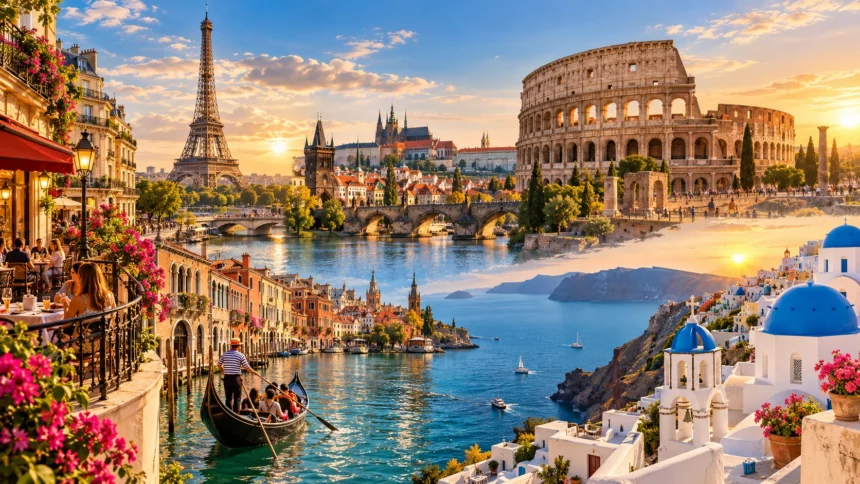
Europe is one of the most fascinating travel destinations in the world, offering historic cities, stunning architecture, beautiful landscapes, and unforgettable cultural experiences. From romantic streets in Paris to ancient landmarks in Rome and picturesque canals in Amsterdam, European cities have something for every traveler. Whether you love history, food, art, shopping, or sightseeing, exploring the best cities in Europe can make your vacation truly memorable.
With more than 40 countries and hundreds of remarkable destinations, Europe offers endless opportunities for discovery. Some cities attract visitors with world-famous landmarks, while others stand out for their charming neighborhoods, traditional markets, and local lifestyles. This guide explores the best European cities to visit, highlighting must-see attractions, exciting activities, and practical travel tips to help you plan an unforgettable journey.
1. Paris, France – The City of Art, Romance, and Culture
Paris is among the most famous cities in Europe, attracting travelers with its elegant architecture, historic landmarks, and world-class museums. The French capital is known for its romantic atmosphere, beautiful boulevards, and charming sidewalk cafés. Whether you’re visiting for the first time or returning to discover hidden attractions, Paris offers unforgettable experiences throughout the year.
The Eiffel Tower remains the city’s most recognizable attraction, offering spectacular views of the surrounding neighborhoods. Visitors can also explore the Louvre Museum, admire Notre-Dame Cathedral, and walk along the scenic Seine River. Montmartre is another beautiful area where narrow streets, artists, and the Sacré-Cœur Basilica create a distinctive atmosphere that reflects the city’s creative heritage.
Beyond sightseeing, Paris offers excellent shopping, traditional French cuisine, and peaceful public gardens. Travelers can enjoy freshly baked pastries, explore local markets, or relax in the Luxembourg Gardens. Spring and early autumn are particularly pleasant seasons for exploring the city, although Paris remains a fascinating destination regardless of when you decide to visit.
2. Rome, Italy – Discover Ancient History and Famous Landmarks
Rome is one of the best places to visit in Europe for travelers interested in ancient civilizations, historical architecture, and Italian culture. Known as the Eternal City, Rome combines remarkable archaeological sites with lively neighborhoods and traditional restaurants. Its historic streets reveal centuries of artistic, religious, and political history, making almost every corner an interesting place to explore.
The Colosseum is among Rome’s most impressive attractions, offering insight into the entertainment and public life of ancient Rome. Nearby, visitors can discover the Roman Forum and Palatine Hill, two important archaeological sites. Other famous landmarks include the Pantheon, Trevi Fountain, Spanish Steps, and Vatican City, where St. Peter’s Basilica and the Vatican Museums attract visitors.
Exploring Rome also means enjoying authentic Italian food and discovering charming neighborhoods away from the busiest attractions. Trastevere is especially popular for its narrow streets, traditional restaurants, and welcoming atmosphere. Travelers should allow several days to experience the city’s major landmarks comfortably, particularly because popular historical attractions often require advance ticket reservations.
3. London, England – Experience History and Modern Attractions
London is one of Europe’s most exciting cities, offering a remarkable combination of royal history, cultural diversity, modern entertainment, and famous landmarks. As the capital of the United Kingdom, London attracts visitors from around the world throughout the year. Its historic buildings, beautiful parks, and lively neighborhoods create countless opportunities for sightseeing and cultural discovery.
Visitors can explore Buckingham Palace, admire Big Ben, and discover the historic Tower of London. The British Museum and Natural History Museum provide fascinating educational experiences, while Tower Bridge offers beautiful views of the River Thames. Other popular attractions include the London Eye, Westminster Abbey, and the bustling shopping streets surrounding Oxford Street.
London is also famous for its theater performances, international restaurants, and attractive public spaces. Travelers can explore Hyde Park, visit Camden Market, or enjoy an afternoon discovering the colorful streets of Notting Hill. The city’s extensive underground railway and public transportation network make exploring different neighborhoods relatively convenient, even during a short European city break.
4. Barcelona, Spain – Enjoy Architecture, Beaches, and Culture
Barcelona is one of the most beautiful European cities, combining Mediterranean beaches with extraordinary architecture and vibrant cultural attractions. Located along Spain’s northeastern coast, the city offers sunny weather, attractive streets, and an exciting atmosphere. Its combination of coastal relaxation and urban sightseeing makes Barcelona particularly appealing to travelers who enjoy varied holiday experiences.
The Sagrada Família is Barcelona’s most famous architectural landmark, showcasing the extraordinary creative vision of Antoni Gaudí. Visitors can also explore Park Güell, Casa Batlló, and the historic Gothic Quarter. Walking along La Rambla provides opportunities to discover shops, restaurants, and local street life, although nearby neighborhoods offer quieter places to explore.
Barcelona’s beaches create additional opportunities for swimming, seaside walks, and relaxing beneath the Mediterranean sunshine. Travelers can enjoy traditional Spanish and Catalan dishes, including seafood, tapas, and regional specialties. Spring and early autumn often provide comfortable conditions for exploring outdoor attractions, while summer attracts visitors interested in combining sightseeing with beach activities.
5. Amsterdam, Netherlands – Explore Beautiful Canals and Museums
Amsterdam is among the most charming cities in Europe, recognized for its picturesque canals, historic buildings, and relaxed atmosphere. The Dutch capital offers a distinctive urban landscape filled with narrow houses, beautiful bridges, and tree-lined waterways. Its compact historic center makes it especially appealing for travelers who enjoy discovering attractions through walking and leisurely sightseeing.
A canal cruise is one of the best ways to experience Amsterdam’s remarkable architecture and waterfront scenery. Popular cultural attractions include the Rijksmuseum, Van Gogh Museum, and Anne Frank House, each offering different perspectives on history and art. Visitors can also explore Dam Square, admire traditional Dutch buildings, and discover the lively Jordaan neighborhood.
Cycling is an important part of everyday life in Amsterdam, with extensive bicycle infrastructure throughout the city. Visitors can also enjoy peaceful walks through Vondelpark, browse local markets, or visit nearby flower-growing areas during the spring season. Planning museum visits ahead of time is recommended because several of Amsterdam’s most popular attractions have limited ticket availability.
6. Prague, Czech Republic – Visit a Beautiful Medieval City
Prague is one of Europe’s most picturesque cities, famous for its medieval architecture, historic bridges, and romantic riverside scenery. The capital of the Czech Republic features cobblestone streets, impressive churches, and charming public squares. Its well-preserved historic center creates an atmosphere that appeals to travelers interested in European history, architectural beauty, and traditional cultural experiences.
Prague Castle is among the city’s most important attractions, overlooking the historic neighborhoods along the Vltava River. Visitors can walk across Charles Bridge, explore Old Town Square, and admire the famous Astronomical Clock. The colorful buildings surrounding these landmarks provide excellent opportunities for photography, while nearby streets reveal smaller churches, galleries, and traditional shops.
Beyond its famous landmarks, Prague offers attractive parks, scenic viewpoints, and local Czech cuisine. Travelers can explore the historic Lesser Town district, enjoy riverfront walks, or discover the peaceful gardens surrounding Petřín Hill. Spring and autumn are excellent times to visit because the weather is often comfortable for exploring the city’s beautiful streets on foot.
7. Vienna, Austria – Discover Imperial Palaces and Classical Music
Vienna is one of the most elegant cities in Europe, celebrated for its imperial architecture, classical music heritage, and sophisticated cultural attractions. Austria’s capital combines historic palaces with beautiful gardens, museums, and traditional coffeehouses. Its rich artistic history makes Vienna an exceptional destination for travelers who appreciate architecture, music, and cultural experiences.
Schönbrunn Palace is among Vienna’s most popular attractions, featuring magnificent interiors and extensive landscaped gardens. Visitors can also explore the Hofburg Palace complex, admire St. Stephen’s Cathedral, and discover impressive collections at the Kunsthistorisches Museum. The Vienna State Opera is another important landmark that reflects the city’s longstanding connection to classical music.
Vienna’s traditional cafés provide welcoming spaces to enjoy local pastries and experience the city’s relaxed social culture. Travelers can explore the Naschmarkt, walk through attractive public gardens, or discover the colorful architecture of the Hundertwasserhaus. The city’s reliable transportation system makes it convenient to explore multiple attractions while enjoying a comfortable European city vacation.
8. Budapest, Hungary – Relax in Thermal Baths and Explore History
Budapest is one of the most impressive European capital cities, known for its grand architecture, historic bridges, and famous thermal baths. Divided by the Danube River into Buda and Pest, the Hungarian capital offers contrasting neighborhoods and spectacular waterfront scenery. Its combination of cultural attractions and relaxing experiences makes Budapest an appealing destination for different types of travelers.
The Hungarian Parliament Building is among the city’s most recognizable landmarks, standing beautifully beside the Danube River. Visitors can explore Buda Castle, admire Fisherman’s Bastion, and discover Matthias Church. Walking across the Széchenyi Chain Bridge provides impressive river views, while the surrounding historic streets offer opportunities to appreciate Budapest’s architectural heritage.
Budapest is particularly famous for its traditional thermal bathing culture, with Széchenyi Thermal Bath and Gellért Baths among the well-known establishments. Travelers can also enjoy Hungarian cuisine, visit historic markets, and explore peaceful riverside promenades. Evening walks beside the Danube offer memorable views of illuminated landmarks, making the city especially attractive after sunset.
9. Lisbon, Portugal – Discover Coastal Views and Colorful Streets
Lisbon is one of the most attractive cities in Southern Europe, offering colorful neighborhoods, historic trams, and beautiful views across the Tagus River. Portugal’s capital is known for its hillside streets, traditional tiled buildings, and welcoming atmosphere. Visitors can enjoy an appealing combination of historic sightseeing, local cuisine, and scenic coastal surroundings.
Belém Tower and Jerónimos Monastery are two of Lisbon’s most important historical attractions, reflecting Portugal’s maritime heritage. Travelers can explore the narrow streets of Alfama, admire São Jorge Castle, and ride traditional trams through historic neighborhoods. Several scenic viewpoints, known locally as miradouros, provide spectacular perspectives of the city and surrounding river.
Lisbon is also famous for its traditional pastries, seafood dishes, and lively cultural neighborhoods. Visitors can enjoy freshly prepared pastéis de nata, explore local markets, or experience traditional Portuguese music. Nearby destinations such as Sintra and Cascais offer excellent day-trip opportunities, making Lisbon a convenient base for discovering additional attractions along Portugal’s western coast.
10. Florence, Italy – Experience Renaissance Art and Architecture
Florence is one of the best European cities for art lovers, history enthusiasts, and travelers interested in Italian cultural heritage. Located in Tuscany, this beautiful city played a major role in the development of Renaissance art and architecture. Its historic center features impressive churches, elegant squares, and remarkable museums that attract visitors from around the world.
The Florence Cathedral, also known as the Duomo, is among the city’s most recognizable architectural landmarks. Visitors can explore the Uffizi Gallery, admire Renaissance masterpieces, and discover Michelangelo’s David at the Accademia Gallery. The historic Ponte Vecchio bridge offers beautiful views across the Arno River, while nearby streets contain traditional shops and charming restaurants.
Florence is also an excellent destination for enjoying Tuscan cuisine and exploring regional cultural traditions. Travelers can discover local markets, visit artisan workshops, or enjoy panoramic city views from Piazzale Michelangelo. Because many popular attractions are concentrated in the historic center, Florence is particularly suitable for visitors who prefer exploring European cities on foot.
11. Copenhagen, Denmark – Enjoy Scandinavian Design and Waterfront Beauty
Copenhagen is among the most appealing cities in Northern Europe, offering colorful waterfront buildings, modern architecture, and a relaxed Scandinavian atmosphere. Denmark’s capital is recognized for its attractive public spaces, bicycle-friendly streets, and creative design culture. Visitors can experience a wonderful combination of historic landmarks, contemporary attractions, and peaceful coastal scenery.
Nyhavn is one of Copenhagen’s most photographed locations, featuring brightly colored historic buildings along a charming waterfront canal. Travelers can also visit Rosenborg Castle, explore the Tivoli Gardens amusement park, and see the famous Little Mermaid statue. Christiansborg Palace and Amalienborg Palace provide additional opportunities to discover Denmark’s royal history and architectural heritage.
Copenhagen offers many enjoyable experiences beyond its famous tourist attractions, including local markets, beautiful parks, and contemporary museums. Visitors can explore the city by bicycle, discover waterfront neighborhoods, or enjoy traditional Danish pastries in local bakeries. The summer months are particularly pleasant for outdoor sightseeing, although winter brings festive markets and a different atmosphere.
12. Athens, Greece – Explore Ancient Ruins and Mediterranean Culture
Athens is one of the most historically significant cities in Europe, offering a remarkable journey through ancient Greek civilization. The capital of Greece combines archaeological landmarks with vibrant neighborhoods, traditional markets, and modern cultural attractions. Its sunny Mediterranean setting makes Athens an appealing destination for travelers who want to experience both ancient history and contemporary urban life.
The Acropolis is Athens’ most famous attraction, featuring the Parthenon and other important monuments overlooking the city. Visitors can explore the Acropolis Museum, discover the Ancient Agora, and admire the Temple of Olympian Zeus. These historical sites provide fascinating insights into Greek architecture, mythology, democracy, and the cultural achievements of ancient Athens.
Beyond archaeological sightseeing, Athens offers lively neighborhoods filled with restaurants, shops, and traditional Greek hospitality. Plaka is especially popular for its narrow streets and charming buildings, while Monastiraki features markets and attractive public squares. Travelers can enjoy classic Greek dishes, explore nearby viewpoints, and consider coastal excursions along the beautiful Athens Riviera.
Conclusion
Europe offers an extraordinary collection of cities that combine historical landmarks, breathtaking architecture, rich cultural traditions, and memorable travel experiences. From the artistic streets of Paris and the ancient ruins of Rome to the beautiful canals of Amsterdam, every destination has something distinctive to offer. Exploring different European cities allows travelers to experience the continent’s remarkable cultural diversity.
Whether you prefer discovering museums, enjoying traditional cuisine, exploring historic neighborhoods, or relaxing in scenic public spaces, the best cities in Europe provide countless opportunities for adventure. Popular destinations such as London, Barcelona, Vienna, Prague, and Lisbon offer unforgettable attractions for first-time and returning visitors. Choosing cities that match your interests can make your European vacation more enjoyable and rewarding.
Planning your journey carefully can help you explore more attractions while avoiding unnecessary travel stress. Consider seasonal weather, transportation connections, accommodation costs, and the time needed to appreciate each destination. With thoughtful preparation and a flexible itinerary, visiting Europe’s most beautiful cities can become an unforgettable experience filled with cultural discoveries, scenic landscapes, and lasting memories.
Frequently Asked Questions (FAQs)
1. What are the best cities to visit in Europe for first-time travelers?
Paris, Rome, London, Amsterdam, and Barcelona are excellent choices for first-time visitors. These cities offer famous landmarks, cultural attractions, diverse accommodation options, and convenient public transportation for exploring major tourist destinations.
2. Which European cities are the most beautiful?
Paris, Prague, Florence, Vienna, and Amsterdam are widely admired for their architecture and historic surroundings. Each offers distinctive attractions, including charming streets, scenic waterways, beautiful public squares, and impressive cultural landmarks.
3. What are the cheapest cities to visit in Europe?
Budapest, Kraków, Sofia, and Bucharest can offer more affordable accommodation, dining, and sightseeing than many Western European capitals. Actual travel expenses depend on the season, neighborhood, accommodation type, and individual preferences.
4. What is the best time to visit European cities?
Spring, particularly April through June, and early autumn, from September through October, are often excellent periods for European city trips. These seasons generally offer comfortable sightseeing weather, although conditions vary significantly between destinations.
5. How many European cities can you visit in two weeks?
Travelers can comfortably explore three to five European cities in two weeks, depending on transportation distances and personal interests. Spending several days in each destination allows enough time for sightseeing and cultural experiences.