

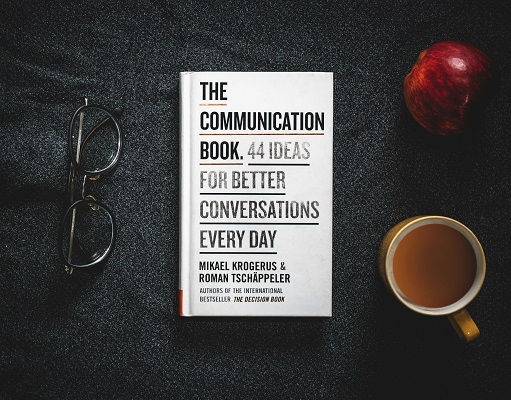
Communication skills are a fundamental part of human interaction, influencing both personal relationships and professional growth. Effective communication ensures that messages are clearly transmitted and understood, fostering stronger connections between individuals. In both social and workplace contexts, the ability to convey ideas, emotions, and information succinctly can significantly impact the quality of interactions. For instance, a study conducted by The National Association of Colleges and Employers revealed that 73% of employers rated communication skills as the most sought-after quality in candidates.
In a personal context, strong communication skills contribute to building and maintaining healthy relationships. Individuals with proficient communication capabilities are better equipped to express their thoughts and feelings, leading to enhanced mutual understanding and conflict resolution. Anecdotal evidence suggests that couples who engage in open and effective communication report higher levels of satisfaction in their relationships. This highlights that good communication is not just about the exchange of information; it is also about nurturing relationships through empathy and active listening.
In the workplace, the importance of communication skills is equally critical. Whether it be presenting ideas during meetings or engaging in written correspondence, the ability to communicate effectively can set the foundation for one’s career advancement. Employees who excel in this area often find themselves entrusted with greater responsibilities, as clear communication can lead to improved collaboration among teams. Furthermore, research from the Harvard Business Review indicates that organizations with strong communicators are 50% more likely to report lower employee turnover rates.
Ultimately, honing one’s communication skills is an investment in both personal and professional development, leading to increased confidence and success in various aspects of life.
Identifying Your Communication Style
Effective communication is fundamental in both personal and professional contexts. To enhance your communication skills, it is crucial to first identify your unique communication style. Broadly, communication styles can be categorized into three main types: verbal, non-verbal, and written. Each style has distinct characteristics that can influence how others perceive and respond to your messages.
Verbal communication encompasses the words we choose and how we articulate them. Consider how you express your thoughts in conversations do you prefer to be straightforward, or do you often use metaphors and analogies? Understanding your verbal approach can help you adapt your conversations for better clarity and influence.
Non-verbal communication includes body language, facial expressions, and even tone of voice. These non-verbal cues often convey more meaning than spoken words. For instance, maintaining eye contact may project confidence, while crossed arms can signal defensiveness. Reflect on your own non-verbal cues during interactions and consider how they might affect your communication effectiveness.
Written communication is another vital aspect, particularly in professional environments. This style is characterized by the clarity, structure, and tone used in written correspondence, such as emails and reports. Do you tend to use formal language or a more casual tone? Assess how your writing style communicates your intentions and resonates with your intended audience.
To better understand your own communication style, consider the following self-assessment questions: How do you typically express your thoughts? What body language do you exhibit when speaking? Can you identify patterns in your writing? By reflecting on these questions, you will gain insight into your communication habits, setting the stage for future improvement.
Active Listening Techniques
Active listening is a fundamental aspect of effective communication, enabling individuals to engage fully with the speaker. Unlike passive listening, which involves hearing words without processing their meaning, active listening requires conscious effort and attention. This skill is crucial for fostering understanding, resolving conflicts, and creating strong relationships, both personally and professionally.
One of the primary techniques in active listening is reflecting. This involves mirroring back what the speaker has said, demonstrating attentiveness and ensuring clarity. For example, if someone states, “I feel overwhelmed with work deadlines,” the listener might respond with, “It sounds like you are feeling stressed about your work commitments.” This technique not only confirms understanding but also reassures the speaker that their feelings are acknowledged.
Another effective technique is paraphrasing, which entails rephrasing the speaker’s message in one’s own words. This approach helps clarify the original message and provides an opportunity for the speaker to elaborate if necessary. For instance, if a colleague shares concerns about a project, a listener might paraphrase, “You are worried that we might not meet the deadline. Is that correct?” Paraphrasing encourages dialogue and enhances mutual understanding.
Additionally, asking open-ended questions is a vital tool in active listening. These questions, which cannot be answered with a simple ‘yes’ or ‘no,’ encourage deeper discussions and insights. An example of an open-ended question could be, “What challenges are you experiencing with this project?” This technique not only promotes engagement but also allows the speaker to share more comprehensive thoughts and feelings.
Despite these techniques, barriers to effective listening can hinder communication. Factors such as distractions, preconceived notions, and emotional barriers can impede comprehension. To overcome these obstacles, individuals can create a conducive listening environment by minimizing interruptions and actively setting aside biases. By prioritizing active listening, one can enhance understanding and build stronger connections in conversations.
Improving Verbal Communication Skills
Enhancing verbal communication skills is essential for effective interaction in both personal and professional settings. A key aspect of verbal communication involves the use of tone and pace. The tone of voice can significantly affect the message being conveyed; it can express confidence or uncertainty, enthusiasm or indifference. Practicing modulation in your tone—varying between soft and strong—can help better express your intended emotions.
Pace is equally crucial; speaking too quickly may lead to misunderstandings, while speaking too slowly can cause listeners to lose interest. To find an appropriate balance, consider recording yourself during practice sessions and adjusting your pace accordingly. Aim for a measured speed that allows your audience to absorb your message effectively.
Another vital element of verbal communication is clarity. Use straightforward language, avoiding jargon or overly complex words unless necessary for the context. This helps ensure that your listeners comprehend the information being presented. Clear articulation is also important; enunciating your words can enhance understanding.
Word choice plays a significant role in verbal interactions. Selecting the right words to convey your message can enhance its impact. For instance, instead of saying “I think we should…,” you might say, “I recommend that we…” This assertive phrasing instills confidence in your suggestions.
To practice these skills, consider engaging in various exercises such as structured debates, which help improve articulation and clarity. Alternatively, public speaking activities or impromptu speeches can boost your ability to think and articulate under pressure. Everyday conversations also offer opportunities for practice; strive to improve your verbal skills in both casual and formal discussions.
By focusing on tone, pace, clarity, and word choice, individuals can significantly improve their verbal communication skills, leading to more effective and engaging interactions.
Enhancing Non-Verbal Communication
Effective communication comprises more than just spoken or written words; non-verbal communication plays a crucial role in conveying messages. Body language, facial expressions, and eye contact significantly impact interpersonal interactions, influencing how messages are received and interpreted. Understanding these non-verbal cues can help individuals convey their intentions more clearly and enhance their ability to connect with others.
Body language encompasses a range of physical behaviors that communicate emotions and reactions. For instance, crossed arms might suggest defensiveness, while an open posture typically signals receptiveness. To improve your non-verbal communication, it is essential to maintain an open and relaxed stance, which encourages positive interactions. Furthermore, being aware of your own body language can help ensure consistency between your verbal messages and physical gestures.
Facial expressions are another fundamental aspect of non-verbal communication. They can convey a wide array of emotions, from happiness and confidence to anger and confusion. Becoming more attuned to your facial expressions allows you to project the desired emotional tone during conversations. In tandem, observing others’ facial expressions helps decode their feelings and reactions, thereby fostering clearer communication.
Eye contact also plays a vital role in establishing trust and engagement while communicating. Maintaining appropriate eye contact conveys interest and sincerity, whereas a lack of eye contact can come off as disinterest or dishonesty. It is important, however, to strike a balance; overly intense eye contact can make others uncomfortable. Practice finding a comfortable level of eye contact that demonstrates attentiveness and respect for the other person’s space.
In conclusion, developing awareness of non-verbal communication can significantly enhance interpersonal interactions. By focusing on body language, facial expressions, and eye contact, individuals can learn to communicate more effectively and interpret others’ messages accurately, ultimately fostering better relationships and greater understanding in both personal and professional contexts.
Adapting to Your Audience
Understanding your audience is a fundamental aspect of effective communication. Tailoring your message to align with the specific needs, preferences, and backgrounds of your audience can lead to greater engagement and clearer understanding. This adaptability is particularly critical in varied contexts, whether it be in a professional environment, casual settings among friends, or familial discussions. By recognizing the composition and characteristics of your audience, you can enhance your communication efficacy.
One primary consideration is the complexity of the language employed. For instance, when addressing coworkers or industry professionals, using technical terminology and specialized jargon can be appropriate and helpful. Conversely, when communicating with friends or family members who may not share the same background knowledge, simplifying language and avoiding complex terminologies can prevent misunderstandings. It is crucial to gauge the audience’s familiarity with the topic and adjust your vocabulary accordingly.
Cultural awareness also plays a significant role in effective communication. Different cultures may have diverse norms regarding formality, directness, and conversational style. For example, while some cultures value direct communication and brevity, others may prefer a more nuanced and indirect approach. Recognizing and adapting to these cultural preferences can foster a more inclusive environment and promote better understanding.
Equally important is recognizing different communication preferences. Some individuals may prefer detailed information, while others may thrive on concise summaries. Engaging in active listening can inform you about these preferences and allow you to adjust your communication style effectively. By addressing the unique characteristics of your audience, you facilitate a more productive dialogue that resonates with their expectations and experiences.
Practicing Empathy in Communication
Empathy is the ability to understand and share the feelings of others, acting as a crucial component in fostering effective communication. This skill transcends mere verbal exchanges, enabling individuals to connect on a deeper emotional level. By cultivating empathy, one can enhance their interactional capabilities, leading to more meaningful dialogues and enriched relationships.
One effective way to practice empathy is through active listening. This involves fully concentrating, understanding, responding, and then remembering what the other person is saying. Engaging in this process allows communicators to grasp not only the words spoken but also the underlying emotions and intentions. To improve active listening skills, maintain eye contact, avoid interrupting, and clarify by summarizing or asking questions about what has been said.
Additionally, recognizing non-verbal cues plays a vital role in empathetic communication. Body language, facial expressions, and tone of voice often convey more than verbal communication alone. Being attuned to these signals helps in understanding the emotional state of the speaker, fostering a compassionate and responsive interaction. When faced with a conversation, take a moment to observe the other person’s non-verbal signals, which can provide valuable context to their words.
Another critical aspect of practicing empathy is expressing compassion. This can be achieved by validating the feelings of others and allowing them to feel heard without judgment. Whether through simple affirmations like, “I understand how you feel,” or more supportive actions, demonstrating empathy can significantly enhance trust and openness in conversations.
In conclusion, practicing empathy involves active listening, recognizing non-verbal cues, and expressing compassionate understanding. By incorporating these methods into everyday interactions, individuals can significantly improve their communication skills and foster deeper, more meaningful connections with others.
Using Technology to Your Advantage
In today’s fast-paced world, technology plays a crucial role in enhancing communication skills. It offers various platforms and tools that can facilitate the development of effective communication methods. Among these tools are video calling platforms like Zoom or Microsoft Teams, which have become indispensable for both formal and informal interactions. These platforms not only enable face-to-face communication regardless of location but also help users to become more comfortable speaking and presenting to an audience, mimicking in-person scenarios.
Moreover, messaging applications such as Slack and WhatsApp provide users with unique opportunities to practice succinct and clear communication. With the constraint of character limits and the absence of non-verbal cues, individuals must learn to convey their thoughts logically and clearly, honing their writing skills. These applications also enable instant feedback, allowing users to refine their messages immediately, which is beneficial in developing effective written communication.
In addition to these tools, online courses are invaluable resources for enhancing communication skills. Websites like Coursera, Udemy, and LinkedIn Learning offer courses specifically focused on communication training, covering topics from public speaking to negotiation skills. Engagement in these courses not only facilitates learning but allows individuals to practice their skills in a structured environment. Furthermore, many platforms utilize interactive elements such as quizzes and peer reviews, which foster a more engaging learning experience.
To maximize the effectiveness of virtual communications, it is essential to maintain professionalism. This includes ensuring a proper background during video calls, practicing active listening, and being mindful of tone in written communications. By leveraging technology effectively, one can significantly improve their communication skills, adapting to the demands of a predominantly digital world.
Continuing to Hone Your Communication Skills
Enhancing communication skills is an ongoing process that requires dedication and a proactive approach. To cultivate effective communication abilities, it is crucial to embrace continual learning and regular practice. One of the fundamental strategies for this development is actively seeking feedback from peers, mentors, or even professional communication coaches. Such input can provide valuable insights into areas for improvement, helping individuals identify and overcome their challenges in expressing themselves clearly and confidently.
Additionally, enrolling in communication workshops or courses can significantly boost one’s skills. These educational opportunities often utilize a variety of teaching methods, including group discussions, role-playing, and public speaking exercises, which enable participants to engage in real-time practice. By immersing oneself in a learning environment, individuals not only gain theoretical knowledge but also develop practical techniques that enhance their verbal and nonverbal communication.
Joining public speaking clubs, such as Toastmasters International, is another effective avenue for continuous improvement. Members benefit from a supportive community that provides constructive critiques and encouragement. Presenting speeches regularly helps in refining delivery styles and alleviating the fear of public speaking, which is a common barrier to effective communication.
Moreover, setting personal goals related to communication can aid in maintaining focus and direction. Establishing clear, measurable objectives—such as improving clarity of speech or enhancing listening skills—allows individuals to monitor their progress over time. Keeping a journal to reflect on these experiences and track advancements can also be instrumental in showcasing the journey of growth.
In conclusion, the persistent pursuit of enhancing communication skills through feedback, workshops, clubs, and personal goal-setting is essential for anyone wishing to excel in their interpersonal interactions. By remaining committed to this lifelong learning process, individuals can achieve notable improvements in their communication proficiency.