

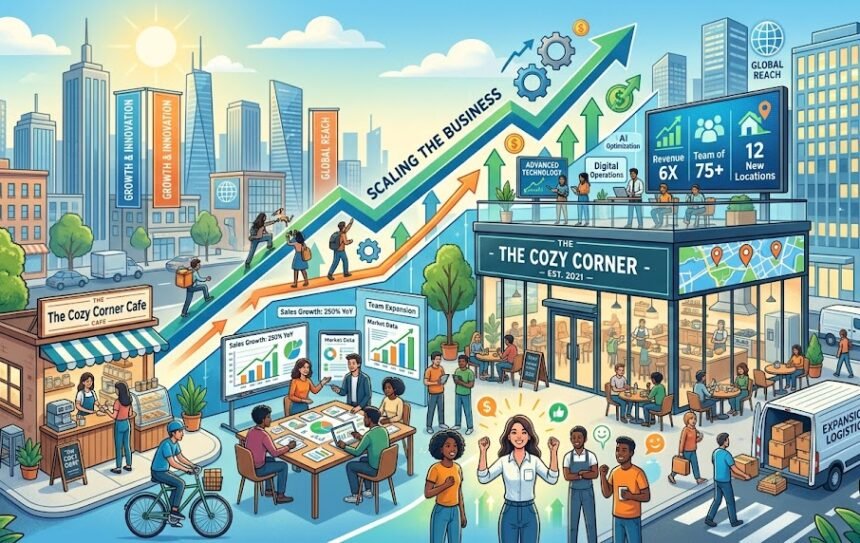
Scaling a small business refers to the process of increasing its capacity to grow and generate revenue without a corresponding increase in costs. This is a critical phase for small businesses that aspire to transition from survival mode to significant market players. Successfully scaling entails expanding operations, improving efficiency, and effectively managing resources to handle greater demand while maintaining quality.
Small businesses often face unique challenges when it comes to scaling. Limited resources, whether financial or human, can hinder their ability to invest in new technologies, hire additional staff, or expand their product lines. Moreover, the risk of losing the personal touch and agility that often characterizes small businesses looms when they grow too quickly without a solid plan. Thus, the process requires careful strategizing and a keen understanding of market dynamics.
The potential for growth in scaling a small business is substantial. By implementing the right strategies, small businesses can tap into new markets, increase their customer base, and ultimately enhance their profitability. This forward movement is crucial, particularly in the evolving landscape of 2026, where businesses must adapt to technological advancements and shifting consumer preferences.
Having a well-defined vision and strategy becomes imperative when attempting to scale. Business owners must articulate their goals, identify the key performance indicators (KPIs) that will signal growth, and develop a plan to execute their vision. This includes leveraging technology, optimizing operations, and building a strong brand presence. When these elements align, a small business can embark on a successful scaling journey that establishes it as a formidable competitor in its industry.
Understanding Your Market and Customers
To scale a small business successfully in 2026, grasping the dynamics of your target market and understanding customer preferences are fundamental. The process begins with conducting thorough market research. This involves not only identifying who your customers are but also analyzing their behaviors, preferences, and demographics. Surveys, focus groups, and interviews can provide valuable insights, allowing you to tailor your offerings to effectively meet their needs.
In tandem with direct consumer feedback, utilizing data analytics tools can represent a significant advantage. These tools allow business owners to track consumer behavior trends, examine purchasing patterns, and identify emerging market demands. This qualitative and quantitative data is crucial for developing strategies that resonate with your audience.
Additionally, competitor analysis plays a vital role in understanding the market landscape. Evaluating competitors helps in identifying gaps your business can fill, as well as challenges that may arise in scaling efforts. By analyzing your competitors’ strengths and weaknesses, you can carve a strategic niche and differentiate your brand, thereby enhancing your market position.
Furthermore, effective segmentation of your market enables you to craft targeted marketing strategies that captivate different customer groups. Personalization, an increasingly significant trend, involves tailoring marketing messages and products based on specific customer segments. By leveraging this understanding, businesses can foster stronger connections with their audience, leading to higher conversion rates.
Understanding your market and customers lays the groundwork for informed decision-making throughout the scaling process. Ensuring that your scaling strategy is customer-centric not only improves customer satisfaction but also enhances loyalty and retention, vital components for sustainable growth in the competitive landscape of 2026.
Developing a Strong Value Proposition
In a competitive market, a robust value proposition is essential for distinguishing your small business from competitors and attracting your target audience. A value proposition clearly articulates the unique benefits and value that your offerings provide to customers. It serves as the foundation for your marketing strategy and is decisive in driving customer loyalty as your business expands.
The initial step in crafting a compelling value proposition involves understanding your customers and their needs. Engaging with your target audience through surveys, interviews, and social media can provide invaluable insights into their preferences and pain points. Leveraging this feedback allows you to tailor your offerings effectively, ensuring they address the specific requirements of your market. Additionally, analyzing industry trends and competitor strategies can help you identify gaps in the market, further refining your unique selling points.
As you scale your small business, it is crucial to regularly revisit and update your value proposition. Market dynamics, customer preferences, and competitive landscapes evolve, necessitating a flexible and adaptable approach. Utilize metrics and analytics to assess the effectiveness of your value proposition over time. Key performance indicators such as customer acquisition rates, satisfaction, and retention will indicate whether your proposition resonates with your audience.
Furthermore, it can be beneficial to engage with your team in brainstorming sessions focused on enhancing the value proposition. Collaborating with employees from different departments can yield diverse perspectives that contribute to a more comprehensive understanding of how to elevate your business’s value. By cultivating a culture of continual improvement, your small business can position itself for sustainable growth.
Leveraging Technology for Growth
In the rapidly evolving business landscape of 2026, technology has become an indispensable asset for small businesses aiming to scale successfully. Embracing advanced software solutions and tools can significantly enhance operational efficiency, allowing businesses to streamline processes and focus on growth. Automation, in particular, serves as a powerful means to reduce manual effort while increasing productivity.
One of the key areas where technology can facilitate scaling is in automation. Utilizing software for tasks such as payroll processing, inventory management, and marketing outreach can free up valuable time and resources. Tools like Zapier, for instance, enable businesses to automate workflows by connecting different applications, thereby minimizing the need for manual intervention. This not only reduces errors but also ensures that operations run smoothly and efficiently.
Another critical factor in leveraging technology for growth is the use of data analysis tools. By harnessing analytics platforms like Google Analytics or Tableau, small businesses can gain deep insights into customer behavior and market trends. Understanding these patterns enables organizations to make data-informed decisions, optimizing strategies for better engagement and ultimately driving sales. For example, businesses can identify which products are trending and adjust their offerings accordingly, ensuring they remain relevant and competitive.
Additionally, adopting customer relationship management (CRM) systems, such as Salesforce or HubSpot, can enhance customer interactions and retention. These platforms provide a comprehensive overview of customer data, interactions, and preferences, allowing small businesses to tailor their services effectively. By nurturing customer relationships through personalized communication and targeted marketing campaigns, companies can foster loyalty and encourage repeat business.
In summary, leveraging technology remains a crucial strategy for small businesses aiming for sustainable growth in 2026. By investing in automation, data analysis, and CRM technologies, organizations can enhance their operational efficiency and cultivate strong customer relationships, ultimately setting the stage for scalable success.
Building a Robust Team
In the competitive landscape of small businesses in 2026, having the right talent is crucial for scalability and sustainable growth. A strong team is not just about individual skills but also about how those skills combine to create a cohesive unit that can drive innovation and productivity. Therefore, effective recruitment strategies are vital to ensure that businesses acquire individuals who not only possess the necessary competencies but also align with the company’s values and mission.
Recruitment should extend beyond traditional hiring practices. Employers can leverage technology to tap into diverse talent pools and attract candidates who bring unique perspectives. During the recruitment process, emphasis should be placed on assessing cultural fit alongside technical ability. By prioritizing candidates who demonstrate adaptability and a collaborative spirit, businesses can lay a strong foundation for teamwork and collaborative efforts.
Once the right talent is on board, training becomes paramount. Ongoing professional development fosters growth among employees and equips them to meet the evolving demands of a scaling business. By implementing structured training programs that include mentoring and peer learning opportunities, organizations can cultivate a knowledgeable team adept at tackling new challenges. Additionally, businesses should actively encourage employees to engage in continuous learning through workshops and online courses, as this commitment to growth will help retain top talent.
Retention, ultimately, hinges on creating a positive workplace culture. Fostering collaboration and innovation should be at the core of team dynamics. Encouraging open communication and valuing employees’ input can stimulate an environment where creativity flourishes. Regular team-building activities and recognition of achievements also play a significant role in promoting loyalty among employees. By prioritizing these elements, small businesses can build a robust team capable of achieving long-term success and sustaining growth in a competitive market.
Financial Strategies for Scaling
Scaling a small business successfully requires meticulous financial planning and a strategic approach to management. One of the primary financial strategies is establishing a clear and realistic budgeting framework that accommodates growth. This involves forecasting future revenues and expenses while identifying potential risks associated with scaling. A well-structured budget helps in allocating resources efficiently, ensuring that funds are appropriately directed towards growth initiatives.
Securing funding is another crucial aspect of scaling. Small businesses may explore various financing options, such as loans, angel investors, or venture capital. Each funding source has its implications, and understanding these can lead to more informed decision-making. It is essential to craft a compelling business plan that showcases the potential for growth, as this will significantly improve the chances of attracting investors or lenders.
Effective cash flow management is vital for any business aiming to scale. It is essential to monitor cash inflows and outflows diligently to maintain liquidity during growth phases. Implementing strategies like optimizing collection processes, offering discounts for early payments, or leveraging technology for invoicing can enhance cash flow. Additionally, maintaining reserve funds is advisable to navigate unexpected expenses that may arise during the scaling process.
Understanding the financial implications of scaling decisions is equally critical. This includes evaluating the cost of hiring additional staff or investing in new technology and how these decisions will affect overall profitability. Conducting financial analyses, such as break-even calculations and return on investment (ROI) assessments, will provide insights into the long-term value of scaling initiatives.
In conclusion, small businesses must adopt comprehensive financial strategies that encompass budgeting for growth, securing funding, managing cash flow, and evaluating financial implications. These strategies form the foundation for sustainable scaling and help in navigating the complexities that arise in the growth journey.
Effective Marketing and Sales Strategies for Business Growth
In 2026, small businesses face the challenge of navigating an increasingly competitive market while maximizing their growth potential. Implementing effective marketing and sales strategies is fundamental in establishing a strong brand presence and acquiring new customers. One of the most instrumental approaches in recent years has been the adoption of digital marketing techniques.
Utilizing search engine optimization (SEO) helps small businesses increase their online visibility, driving organic traffic to their websites. By optimizing web content with relevant keywords, companies can connect more effectively with their target audience. Furthermore, employing pay-per-click (PPC) advertising can yield significant returns on investment by reaching potential customers at the right moment in their buying journey.
Leveraging social media platforms is another powerful strategy for engaging customers. These platforms offer businesses a unique opportunity to build personal connections with their audience, amplify brand messages, and promote products or services. Small business owners should focus on creating quality content that resonates with their target demographic, encouraging interaction and sharing. Utilizing social media analytics can provide valuable insights into customer behavior and preferences, allowing for data-driven decision-making.
Furthermore, establishing customer loyalty programs is an effective way to increase retention and boost repeat purchases. Programs that reward customers for their continued patronage not only enhance satisfaction but also encourage word-of-mouth marketing, which is critical for small businesses. Tailoring these programs to align with customer preferences can create a more personalized experience, leading to increased engagement and loyalty.
Incorporating these marketing and sales strategies is essential for small businesses striving for growth in a saturated marketplace. By focusing on digital marketing, social media engagement, and customer loyalty initiatives, businesses can create a robust framework that supports sustained expansion.
Measuring Success and Growth Metrics
To effectively scale a small business in 2026, measuring success through clearly defined metrics is essential. Key performance indicators (KPIs) offer a valuable framework for business owners to monitor performance, identify growth opportunities, and make informed decisions. Common KPIs for assessing business health include revenue growth rate, customer acquisition cost, customer lifetime value, and profit margins.
Tracking revenue growth rate allows business owners to evaluate how rapidly their sales are increasing, which is critical in determining the effectiveness of marketing strategies. A rising revenue trend typically signifies successful scaling efforts, while stagnation or decline may indicate a need for strategic reassessment.
Understanding customer acquisition cost (CAC) provides insight into the investment required to gain new customers. Comparing CAC against customer lifetime value (CLV) is vital; if CAC exceeds CLV, a business may need to rethink its pricing strategy or acquisition processes to ensure sustainable growth. Moreover, monitoring profit margins can help assess operational efficiency and pinpoint areas where cost reductions are possible without jeopardizing quality.
Regular assessment of these KPIs is crucial. Establishing a consistent review schedule, whether monthly or quarterly, allows business owners to promptly address any deviations from expected performance. This proactive approach not only fosters accountability but also empowers businesses to adapt to changing market conditions and customer preferences.
Adjusting strategies based on performance data is paramount in the scaling process. If performance indicators highlight underperformance in particular areas, it is essential to explore new tactics or channels. Flexibility in response to data insights often distinguishes thriving businesses from those that struggle in dynamic environments.
Preparing for Future Challenges
As businesses strive to scale successfully in 2026, they must also prepare for an array of potential challenges. The landscape of entrepreneurship is constantly evolving, and the ability to adapt to changing circumstances is essential for sustainable growth. Entrepreneurs should begin by conducting thorough market research to identify emerging trends and potential pitfalls that could affect their operations. Understanding customer needs and preferences will play a critical role in shaping strategies that allow for flexibility and quick responsiveness.
Resilience is another cornerstone of navigating future challenges. A scaling a small business that embraces resilience is better equipped to face setbacks and unforeseen obstacles. This can be achieved by cultivating a strong company culture that encourages innovation and fosters a supportive environment for employees. When team members feel valued and engaged, they are likely to contribute positively to problem-solving efforts, bringing diverse perspectives to the table.
Furthermore, proactive problem-solving cannot be overemphasized in the process of scaling a business. This involves anticipating challenges before they arise and having strategies in place to mitigate their impact. For instance, small businesses should consider creating a contingency plan that accounts for economic downturns, supply chain disruptions, or shifts in consumer behavior. Regularly revisiting and updating these plans ensures that the business remains prepared for unexpected scenarios.
Continuous learning and development should be integral to any scaling strategy. Encouraging ongoing education for employees, staying informed about industry advancements, and participating in networking opportunities can all contribute to a robust framework for adapting to future challenges. Ultimately, embracing a proactive mindset will empower small business owners and their teams to tackle obstacles head-on and achieve sustained growth as they scale.