

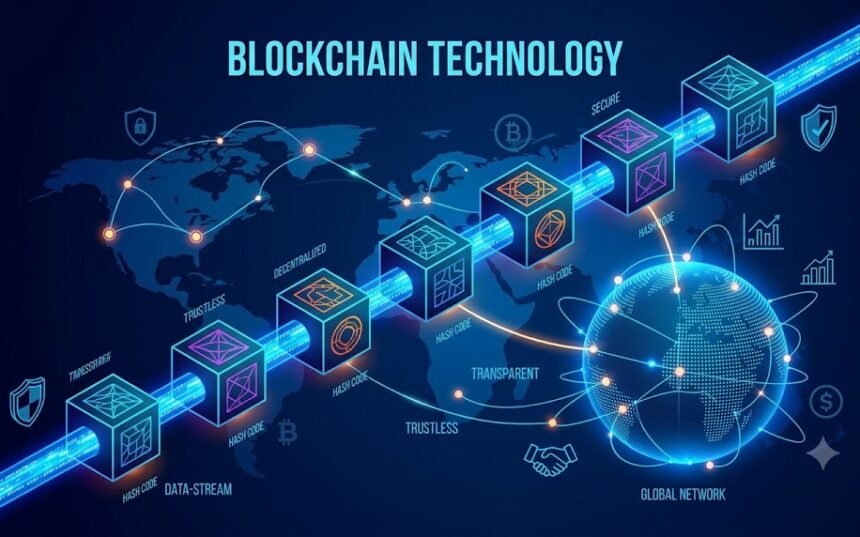
Blockchain technology represents a significant advancement in how data is stored and managed. At its core, a blockchain is a decentralized digital ledger that records transactions across a network of computers. This decentralized nature ensures that no single entity has control over the entire chain, promoting transparency and reducing the risks of fraud.
One of the fundamental components of blockchain is its consensus mechanisms, which are methods used to achieve agreement among distributed participants in a network. These mechanisms, like Proof of Work and Proof of Stake, ensure that the transactions recorded on the blockchain are valid and agreed upon by the majority of participants. This collective agreement is crucial for maintaining the integrity of the data.
In addition to decentralization and consensus, smart contracts play a pivotal role in the functionality of blockchain technology. These self-executing contracts with the terms of the agreement directly written into code enable automated transactions without intermediaries. For example, smart contracts can be utilized in various sectors such as finance, real estate, and supply chain management, simplifying processes that once required lengthy paperwork and trust in third parties.
Cryptographic security also underpins the blockchain’s reliability. Each block in the chain contains a unique hash of the previous block along with its own data, making it nearly impossible to alter once written. This feature enhances security and ensures that the blockchain remains tamper-proof.
The evolution of blockchain technology began with the introduction of Bitcoin in 2009, which highlighted its potential for secure currency transactions. Over the years, this technology has expanded beyond cryptocurrencies, with various applications emerging in numerous fields. Key milestones include the launch of Ethereum in 2015, which facilitated the implementation of smart contracts, and the rise of decentralized finance (DeFi) platforms that have further propelled blockchain adoption. As a result, the landscape of blockchain technology continues to evolve, paving the way for innovative solutions and redefining established practices.
Current Trends and Innovations in the Blockchain Space
The blockchain ecosystem is evolving rapidly, embracing numerous trends and innovations that are reshaping various industries. One of the key advancements is interoperability, which allows different blockchain networks to communicate with one another. This capability enhances the usability of blockchain technology and attracts a broader range of applications across various sectors, including finance and supply chain management.
Another significant development in the blockchain landscape is the emergence of Layer 2 solutions aimed at addressing scalability issues. These protocols operate on top of existing blockchains to improve transaction speeds and reduce costs. Among these, solutions like the Lightning Network for Bitcoin and Optimistic Rollups for Ethereum are gaining traction, enabling microtransactions and enhancing user experience in decentralized applications (dApps).
Furthermore, decentralized finance (DeFi) and non-fungible tokens (NFTs) have captured considerable attention in recent years. DeFi platforms are revolutionizing traditional finance, enabling users to lend, borrow, and trade assets without intermediaries, thereby increasing financial inclusion. Concurrently, NFTs are transforming digital ownership by providing proof of authenticity for unique digital assets, attracting artists, musicians, and game developers to explore the possibilities of blockchain technology.
Real-world applications of blockchain technology are also expanding across various industries. In healthcare, for instance, blockchain is being leveraged for secure patient data management and to ensure drug traceability. The supply chain sector benefits from enhanced transparency, streamlining operations and improving trust among stakeholders. These real-world use cases are not only demonstrating the potential of blockchain but are also influencing market dynamics and investor interest, as more individuals recognize the transformative potential of this technology.
Challenges Facing Blockchain Adoption and Solutions on the Horizon
Despite the promising potential of blockchain technology, several challenges continue to hinder its widespread adoption across various sectors. One of the foremost issues is regulatory uncertainty. Many governments and regulatory bodies are still grappling with how to approach blockchain, leading to a patchwork of laws that often create confusion for businesses seeking to integrate blockchain solutions into their operations. This regulatory ambiguity can stifle innovation, as companies may hesitate to invest in blockchain projects that could later fall afoul of changing regulations.
Security is another critical challenge. Although blockchain is celebrated for its security features, vulnerabilities remain, particularly in the applications built on top of blockchain networks. Scams and hacking incidents have highlighted the need for more robust security measures and awareness. Furthermore, as blockchain applications scale, the underlying protocols must evolve to handle increased security risks.
Energy consumption is also an essential concern, particularly with proof-of-work consensus mechanisms used by some blockchain networks. The significant energy requirements associated with mining have led to environmental criticisms and prompted the search for greener alternatives, such as proof-of-stake models. This transition could not only alleviate energy concerns but could also facilitate broader adoption among eco-conscious enterprises.
User experience presents yet another barrier; many blockchain applications feature complex interfaces that can be daunting for average users. Simplifying the user experience is crucial for encouraging the general public to embrace blockchain technology. Addressing these challenges will require collaborative efforts among stakeholders, including businesses, developers, and policymakers.
Fortunately, solutions are emerging. Initiatives aimed at developing clear regulatory frameworks are in progress across various jurisdictions, which could reduce uncertainty and improve confidence in blockchain investments. Additionally, advances in green blockchain technologies promise to reduce the environmental impact of blockchain systems. By prioritizing security enhancements and fostering user-friendly designs, the industry can enhance accessibility and boost user engagement, thereby paving the way for a more widespread adoption of blockchain technology.
The Vision for the Future: Blockchain in 5 to 10 Years
As we look forward to the next 5 to 10 years, the vision for blockchain technology is both ambitious and transformative. Forecasts suggest that we are on the brink of mainstream adoption, where sectors from finance to supply chain management will integrate blockchain solutions into their core operations. This shift is anticipated to not only improve efficiency but also enhance transparency, security, and trust among consumers and stakeholders alike.
The market for blockchain is projected to experience significant growth, driven by its potential to streamline various processes and reduce costs. For instance, industries such as healthcare may adopt blockchain to manage patient records securely, making data sharing more effective while ensuring privacy. Similarly, with the rise of digital asset management, real estate transactions may become more simplified and less susceptible to fraud, leveraging smart contracts and decentralized ledgers.
Moreover, the integration of blockchain with emerging technologies such as Artificial Intelligence (AI) and the Internet of Things (IoT) is expected to create powerful synergies. AI can enhance the decision-making processes facilitated by blockchain data, while IoT devices can significantly expand the volume of data recorded on blockchains, enabling real-time tracking and analytics. This interconnectedness will revolutionize industries, catalyzing innovations that we have yet to fully envision.
On a societal level, the impact of block-chain is projected to be profound. The democratization of data will empower individuals, giving them greater control over their personal information. Additionally, blockchain’s capability to provide secure and immutable records can foster trust in digital identities, thereby reshaping social interactions and business operations.
In conclusion, the future of block-chain technology holds immense promise. With its potential for widespread adoption, market expansion, and integration with advanced technologies, block-chain is set to become a cornerstone of our digital ecosystem, influencing both industries and daily life in unprecedented ways.